The Spiky Green Fruit Guadeloupe Calls Corossol, and How I Eat It
The first fruit I ever learned to judge with my thumb was a soursop. My mother would put one on the kitchen counter, green and hard and covered in spines, and tell me not to touch it. Every morning I pressed it anyway. Nothing. Then one day the skin gave a little under my thumb, and she smiled and reached for a knife.
Back home in Guadeloupe we call it corossol. Inside is white flesh, soft and juicy, full of shiny black seeds, and a smell that fills the room before you have even finished cutting. We drank it as juice, ate it with a spoon, and froze it into something cold for the hottest afternoons.
In the UK people ask me about soursop more than almost any other Caribbean fruit. What is it, what does it taste like, where do I find one, how do I eat it without making a mess. So here is everything I know, from the market stall to my kitchen.
What is soursop?
Soursop is the fruit of Annona muricata, a tropical tree from the Annonaceae, the custard apple family, native to the tropical Americas. The fruit is large, green and spiny, with white, juicy, fibrous flesh and many black seeds. In Guadeloupe it is corossol, in Spanish guanábana, in Brazil graviola.
It is a fruit you eat raw. Nobody in my family ever cooked a ripe one. We pulled the flesh apart, took out the seeds, and either ate it straight or turned it into a drink.
Where soursop comes from
The tree belongs to the warm lowlands of the Americas. As early as 1526, the Spanish chronicler Oviedo described soursop as abundant in the West Indies and in northern South America. Since then it has travelled a long way: today it grows from southeastern China to Australia and across the warm lowlands of eastern and western Africa.
That journey is why it has so many names. In the French-speaking islands you will hear corossol, grand corossol or corossol épineux, the spiny one. In Spanish-speaking countries it is guanábana. In Brazil it is graviola. Elsewhere you may see guyabano. Same fruit, same white flesh, many languages.
What does soursop taste like?
This is the question everyone asks, and it is a hard one to answer, because soursop does not taste like anything else in a British fruit bowl.
Botanists describe the aroma as somewhat like pineapple and the flavour as musky, gently sour to properly sour. Other writers say strawberry and apple with a sour citrus edge. I would add one more word: creamy. The flesh is soft and fibrous, almost like cotton soaked in juice, and when you blend it with milk it becomes smooth and thick.
The name tells you the balance. It is sweet, but the “sour” is real. A good ripe one is bright, a little tangy, and very refreshing. I have always said no fruit is gentler.
How big is a soursop fruit?
Bigger than most people expect. A soursop can be 10 to 30 cm long and up to 15 cm wide, and a large one can weigh several kilos. The skin starts dark green and turns slightly yellowish green as it ripens. It is covered in spines, which is where corossol épineux comes from.
One large fruit can hold anything from a few dozen to more than 200 seeds. That sounds like a lot of work, and it is a little. But the seeds come away from the flesh easily once the fruit is ripe.
How to tell when soursop is ripe
Soursop is picked when it is full grown but still firm, then left to ripen. This is exactly what my mother did on that kitchen counter.
Here is how I do it in London:
- Buy it firm if that is all you can find. Leave it at room temperature for a few days.
- Press gently with your thumb every day. When the skin yields to slight pressure, it is ready.
- Once ripe, eat it soon. It will keep two or three more days in the fridge, not longer.
Do not put a hard soursop in the fridge to ripen. It needs the warmth of the kitchen.
How to eat soursop
Cut the ripe fruit in half or into thick sections with a sharp knife. The flesh is white and comes in soft segments. Then you have three choices.
With a spoon. The simplest way. Scoop the flesh, spit out or pick out the seeds as you go. This is how I ate it as a child, standing up, juice everywhere.
As juice. Remove every seed by hand first. Press the pulp through a sieve or a colander to get the thick, creamy juice, then beat it with milk or water and sweeten it to taste. In Guadeloupe fresh corossol juice is sold by street vendors next to mango, maracudja, guava and coconut. Across the tropics people make soursop drinks the same way: in Brazil they call it champola, in Puerto Rico carato.
Frozen. Soursop ice cream is made in warm countries wherever the fruit grows. In the Bahamas people mash the pulp in water, strain it, mix it with sweetened condensed milk and freeze it in trays, stirring a few times. It is one of the best things you can do with a ripe fruit on a warm day.
A word on the seeds. Never eat them, and never put whole soursop pulp in a blender with the seeds still inside. The seeds are toxic and must not be ground into your juice. Pick them out by hand first, every single one. It takes a few minutes and it is not negotiable.
Soursop in the UK: where to buy it
Fresh soursop is not something you will find in every supermarket, but it is here. UK exotic fruit sellers sell fresh soursop online, and it is always worth asking at your local Caribbean or Latin American grocer. Like most tropical fruit, it often travels before it is fully ripe and finishes ripening at home, so use the thumb test above.
If you cannot find a fresh fruit, ask whether they have frozen pulp, and look for the name guanábana as well as soursop. Frozen pulp is the easiest way to make juice or sorbet in a British kitchen, because the seeds are already gone.
When I go looking for soursop, I usually come home with a few other things too: green plantain, a yam, maybe a breadfruit if the shop has one. A Caribbean grocer is the closest thing London has to the market in Pointe-à-Pitre.
How I bring soursop into my kitchen
In Guadeloupe soursop is a fruit for drinking and for dessert. It sits at the end of a meal of colombo or fish, not inside it. If you want to see what that meal looks like, my guide to Guadeloupean food is a good place to start.
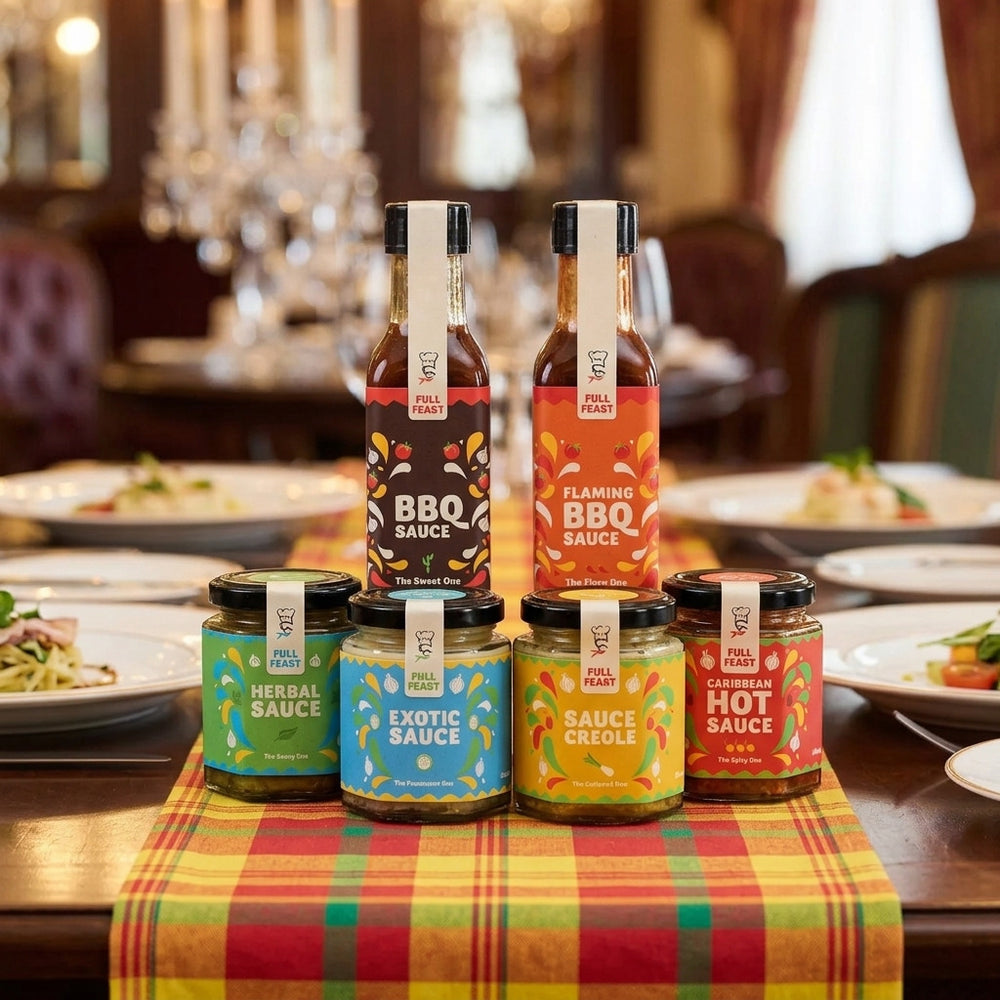
But I am a chef, and I like to play. Here is one idea of my own, not a tradition. Ripe soursop flesh, seeds removed, chopped small with red onion and a little lime, makes a soft, tangy fruit salsa for grilled fish or prawns. Stir in a spoonful of Exotic Caribbean Sauce. It is built on onion and passion fruit juice with a little chilli, so the passion fruit picks up the sour side of the soursop and the chilli gives it a gentle warmth. Spoon it over the fish straight from the grill.
If you like fruit and heat together, my chayote guide has more ideas for the pale green things you find on a Caribbean stall.
FAQ
What is soursop called in Guadeloupe? Corossol. You may also hear grand corossol or corossol épineux, the spiny corossol. In Spanish it is guanábana and in Brazil graviola.
How do you eat soursop? Wait until it is soft under your thumb, cut it open and eat the white flesh with a spoon, removing the seeds. You can also press the seeded pulp through a sieve and mix it with milk or water and a little sugar to make juice.
What does soursop taste like? Musky and gently sour, with an aroma a little like pineapple. Some people describe it as strawberry and apple with a citrus edge. The flesh is soft, creamy and fibrous.
Can you eat soursop seeds? No. The seeds are toxic. Remove every one by hand before eating or blending the flesh.
Where can I buy soursop in the UK? UK exotic fruit sellers sell fresh soursop online. It is also worth asking at Caribbean and Latin American grocers, and looking for frozen pulp under the name guanábana as well as soursop.
On the same market stall you will usually find its perfumed neighbour, and I have written about guava, the pink fruit we call goyave too.
One small thing to try this week
Find one soursop, fresh or a bag of frozen pulp. If it is fresh and hard, leave it on the counter and press it every morning, the way my mother let me.
When it is ready, make the simplest juice: seeds out, pulp through a sieve, a glass of cold milk, a little sugar. Taste it before you sweeten it more. Then pour one for someone who has never tried it, and watch their face.
JP