Twenty Minutes, One Wok, Real Scotch Bonnet Fire
It is Tuesday night. The rice is already on. The wok is heating until it smokes a little, and the kitchen smells of garlic, ginger and the sharp green note of spring onion. This is my chicken stir fry, the one I make when I come home tired and hungry and I want something with fire in it, fast.
People think of stir fry as a Chinese dish, and of course it is. But it travelled. Ask anybody from Trinidad or Jamaica about the Chinese shop down the road, and they will tell you about chow mein, fried rice and pepper shrimp with real island heat. Chinese families came to the Caribbean in the nineteenth century, and their cooking became part of ours. The wok met the Scotch bonnet, and nobody looked back.
Back home in Guadeloupe, my mother did not own a wok. She had one big black frying pan, and on busy evenings she threw shredded cabbage into it with garlic, onion and a little pepper, tossed it hard, and fed seven children in a quarter of an hour. That cabbage is in this recipe too. Crisp at the edges, sweet in the middle.
So this is a Caribbean stir fry the way I cook it now in England. Chicken thigh, because it stays juicy. Peppers, carrot and cabbage, because they are cheap and they crunch. And a sauce built on Caribbean Hot Sauce, lime and tamari, so every strip of chicken comes out shiny and hot.
Fifteen minutes of chopping. Ten minutes of cooking. Let me show you.
Recipe at a glance
- Cuisine: Caribbean (Chinese-Caribbean style)
- Prep: 15 minutes • Cook: 10 minutes • Total: 25 minutes
- Serves: 4
- Featured sauce: Caribbean Hot Sauce
- Heat level: 7/10, a proper Scotch bonnet warmth that builds
- Diet: Gluten free (with gluten free tamari), dairy free
What you’ll need
A stir fry is won or lost before the pan is hot. Everything chopped, the sauce mixed in a jug, the rice or gluten free rice noodles ready. Once the wok is going, there is no time to look for the garlic.
For the chicken
- 600 g boneless, skinless chicken thighs, cut into thin strips
- 1 tbsp gluten free tamari
- 1 tbsp cornflour
- 1 tsp Caribbean Hot Sauce
For the sauce
- 3 tbsp Full Feast Caribbean Hot Sauce
- 2 tbsp gluten free tamari
- 1 tbsp runny honey
- Juice of 1 lime
- 1 tsp cornflour
- 4 tbsp cold water
For the stir fry
- 2 tbsp vegetable oil
- 1 red pepper and 1 yellow pepper, cut into strips
- 1 large carrot, cut into thin matchsticks
- 200 g white cabbage (about a quarter), finely shredded
- 4 spring onions, whites and greens sliced separately
- 3 garlic cloves, finely sliced
- A thumb of fresh ginger (about 15 g), cut into thin matchsticks
- 1 tsp fresh thyme leaves
- A small handful of coriander and lime wedges, to serve
- Cooked rice or gluten free rice noodles, to serve (about 300 g dry rice for 4)
How I make it
- Coat the chicken. Put the chicken strips in a bowl with 1 tbsp tamari, 1 tbsp cornflour and 1 tsp Caribbean Hot Sauce. Mix with your hands until every piece has a thin, silky coat. Leave it while you chop. This is my chicken stir fry marinade, and that little bit of cornflour is what keeps the meat soft.
- Mix the sauce. In a jug, stir the 3 tbsp Caribbean Hot Sauce, 2 tbsp tamari, honey, lime juice, 1 tsp cornflour and the cold water until smooth. Cold water first, always. Cornflour thrown straight into a hot pan goes lumpy.
- Heat the wok. Put your wok or your biggest frying pan on the highest heat for a good 2 minutes, until it is almost smoking. Add 1 tbsp of the oil and swirl it round.
- Sear the chicken. Add the chicken in one layer and leave it alone for a minute. You hear the hiss, you smell the garlic and chilli in the coating. Then toss and cook for 4 to 5 minutes more until golden on the outside and white all the way through. Cut the thickest piece open to check: no pink, or 75°C on a thermometer. Tip it onto a plate.
- Fry the aromatics. Add the second tablespoon of oil. Throw in the garlic, ginger, thyme and the white parts of the spring onions. Twenty seconds, no more. The moment the garlic smells sweet, keep moving.
- Toss in the hard veg. Add the carrot and the peppers. Toss for 2 minutes. They should stay bright, with a little bite.
- Add the cabbage. In goes the cabbage. Toss it hard for 1 minute, like my mother did, so the edges catch and turn sweet.
- Bring it together. Return the chicken and any juices. Give the sauce a quick stir, because the cornflour sinks, and pour it in. Toss for 1 minute until it bubbles, thickens and coats everything in a shiny glaze.
- Finish. Take it off the heat. Scatter over the spring onion greens and the coriander. Taste. Want more fire? A few drops more Hot Sauce. More brightness? A squeeze of lime.
- Serve straight away. Spoon it over hot rice or toss it through noodles, and eat it while it is still crackling.

The role of Caribbean Hot Sauce in this dish
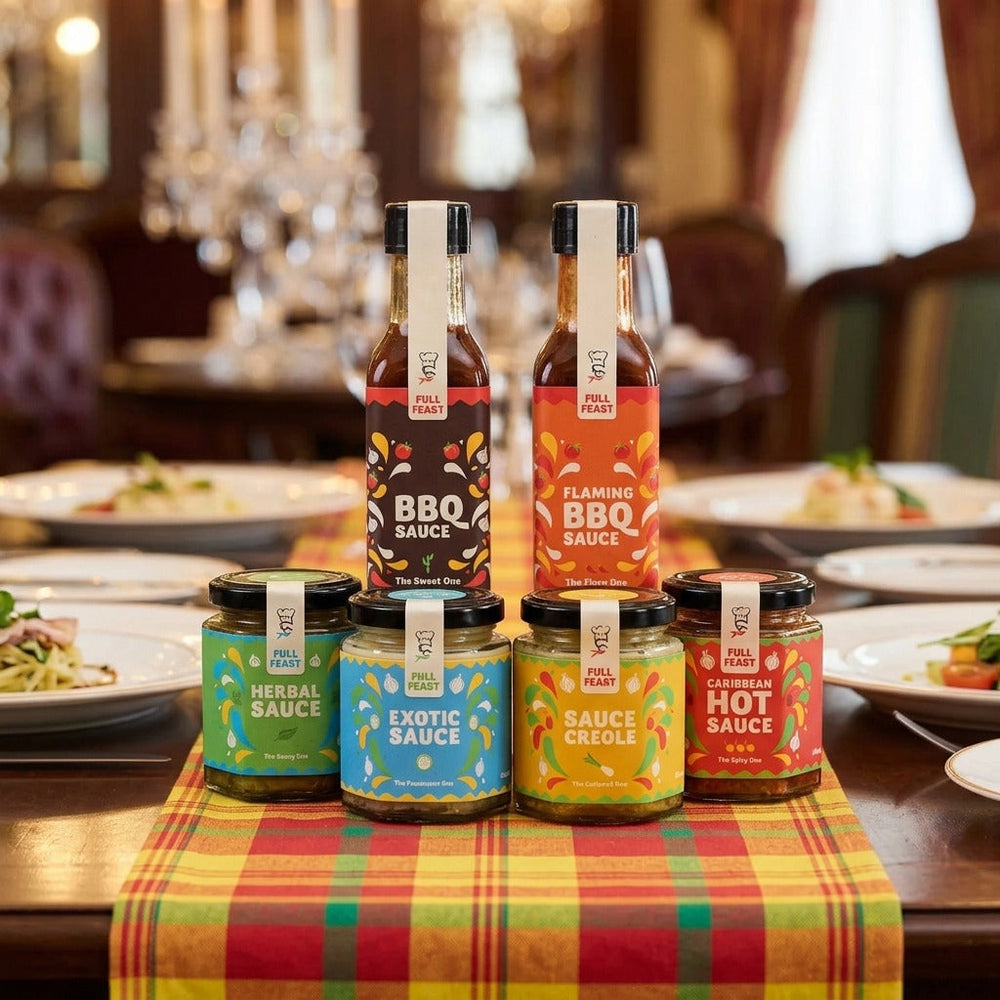
Most stir fry sauces are salty and sweet, and the heat comes from a few flakes of dried chilli. Here the heat is the heart of it. My Caribbean Hot Sauce is thick with Scotch bonnet, white onion and garlic, so when it hits the hot wok it does three jobs at once. It brings fruity chilli fire, it brings the savoury depth of cooked onion and garlic, and the vinegar in it cuts through the honey and tamari so the sauce never turns sticky and heavy.
A little goes into the coating, so the heat is inside the chicken, not just on top. The rest goes into the sauce at the end, where the lime wakes it up. If you want to know more about the pepper itself, I wrote about the Scotch bonnet on its own page.
Why is my stir fry chicken tough?
This is the question I hear most, so let me answer it properly. Three reasons, nearly always. The first is breast meat cut too thick and cooked too long: it goes dry and rubbery very fast, which is why I use thigh. The second is a cold pan: the chicken stews in its own juice instead of searing. The third is cooking the chicken twice for too long. Sear it, take it out, and when it goes back in it only needs a minute in the sauce.
The cornflour coat helps too. Chinese cooks call this velveting, and it gives you that soft, silky chicken you get from a good takeaway.
Tips from my kitchen
- Cook in batches if your pan is small. Too much chicken at once and the heat drops. Two batches of 3 minutes beat one batch of 10 that ends up grey and wet.
- Dry your veg. If you rinse the peppers or cabbage, pat them dry. Wet vegetables are the main reason a chicken stir fry turns watery.
- Slice against the grain. Look at the thigh, see which way the lines run, and cut across them. Shorter fibres, softer bite.
- Use the same sauce on other things. This chicken stir fry sauce is just as good on prawns (2 to 3 minutes) or firm tofu. If you love this kind of quick heat, my 5-minute hot sauce marinade is its cousin for the grill.
- Children at the table? Use 1 tbsp Hot Sauce instead of 3, and keep the jar on the table for the brave ones.
What to serve it with
Chicken stir fry with rice is my first choice: plain white rice or jasmine rice, so all that sauce has somewhere to go. On a Sunday, when there is more time, I serve it with rice and peas, coconut and kidney beans soaking up the glaze. Very Caribbean, very good.
For chicken stir fry with noodles, use flat rice noodles to keep it gluten free. Cook them, rinse in cold water so they don’t stick, and toss them into the wok at step 8 with an extra 2 tbsp of water in the sauce.
On the side, a few slices of fried plantain bring sweetness against the heat. And if you want something slower with the same jar, my Caribbean chicken in hot sauce is the weekend version of this weeknight dinner.

FAQ
Why is my chicken stir fry watery?
Usually the pan was not hot enough, the pan was too full, or the vegetables were wet. Each one makes the food steam instead of fry, and the water pools at the bottom. Heat the wok until it nearly smokes, cook the chicken in batches, dry the veg, and always mix your cornflour into cold water before it goes in so the sauce thickens and coats.
What is the best chicken stir fry sauce?
The best one has salt, sweet, sour and heat in balance. Mine is Caribbean Hot Sauce for the heat and savoury depth, tamari for salt, honey for sweetness and lime for sourness, thickened with a teaspoon of cornflour. Taste it in the jug before it goes in: it should make you want a spoon of rice straight away.
Can you reheat chicken stir fry?
Yes. Cool it quickly, keep it covered in the fridge and eat it within 2 days. Reheat it in a hot pan with a splash of water until it is steaming hot all the way through, or in the microwave, stirring halfway. Reheat it only once. If you are reheating rice with it, the same rule applies: cool it fast, fridge it, and heat it until piping hot.
Can you freeze chicken stir fry?
You can, but the vegetables lose their crunch, so it is better fresh. If you do freeze it, cool it fast, freeze within a day, and use it within a month. Defrost it in the fridge overnight and reheat until piping hot.
Is this chicken stir fry gluten free?
Yes, as written, as long as your tamari is labelled gluten free and you serve it with rice or rice noodles. All Full Feast sauces are lab tested gluten free. Ordinary soy sauce and egg noodles contain wheat, so swap those. For allergies: tamari is made from soya, and the Caribbean Hot Sauce label declares barley from its vinegar, so it is not for anyone with a barley allergy. The dish contains honey, so it is not vegan; use maple syrup if you need it to be.
Final word from me
My mother fed seven of us from one frying pan in fifteen minutes, and she never once made it look hard. That is the spirit of this one. Chop first, heat the wok, move fast, and taste as you go. Make it this week, on a night when you think you are too tired to cook, and tell me if you aren’t glad you did.
JP