Coconut, Kidney Beans and a Whole Scotch Bonnet, Cooked the Slow Way
I will tell you a secret about rice and peas. There are no peas in it.
The peas are beans. In Jamaica, where this pot comes from, red kidney beans are called peas, and so are gungo peas, which you might know as pigeon peas. The name came to Britain with the Jamaican families who settled here, and now you can find rice and peas on a Sunday table in Brixton, in Birmingham and in Leeds.
Back home in Guadeloupe we eat rice and red beans too, but we usually keep them apart. My mother cooked the beans on their own, slowly, in a dark sauce with onion, garlic and thyme, and the white rice sat next to them on the plate. You poured the beans over the rice yourself. When I came to England and tasted rice and peas cooked together in one pot, with coconut milk, I understood straight away why people love it. Every grain is already seasoned. It smells of thyme and allspice before you even lift the lid.
So this is my rice and peas. The Jamaican way of cooking it, which is the way Britain knows, with one thing from my side of the Caribbean: a spoon of my Caribbean Sauce Creole in the pot. It is mostly slow-cooked onion with a little green chilli, so it gives the rice a sweet, savoury base without any chopping.
The whole scotch bonnet goes in unbroken. It is there for perfume, not for fire. As long as you do not burst it, the rice stays gentle enough for a child.
Let me show you how I make it.
Recipe at a glance
- Cuisine: Caribbean (Jamaican-style, with a Guadeloupe touch)
- Prep: 10 minutes • Cook: 35 minutes, including 10 minutes resting • Total: 45 minutes
- Serves: 6 as a side
- Featured sauce: Caribbean Sauce Creole
- Heat level: 5/10 on my scale, a soft warmth. The whole scotch bonnet adds perfume, not fire, as long as it stays whole
- Diet: gluten free and vegan, if your stock is. For allergens in the sauce, check the label on the jar
What you’ll need
Use long grain rice. Basmati works if it is all you have, but long grain holds its shape better under the coconut milk and the grains come out separate. Tinned kidney beans make this a weeknight dish; if you want to cook dried beans, read the tip further down first, because raw kidney beans need proper boiling.
- 300g long grain rice
- 1 tin (400g) red kidney beans, drained and rinsed
- 1 tin (400ml) full fat coconut milk
- 300ml water or vegetable stock (check the label if you need it gluten free)
- 1 tbsp vegetable or coconut oil
- 4 spring onions, sliced, whites and greens kept apart
- 2 garlic cloves, finely chopped
- 2 tbsp Caribbean Sauce Creole
- 4 sprigs fresh thyme (or 1 tsp dried)
- 5 whole allspice berries (or ¼ tsp ground allspice)
- 1 whole scotch bonnet chilli, left whole and unbroken
- 1 tsp salt, then more to taste
- Black pepper
How I make it
-
Wash the rice. Put the rice in a sieve and rinse it under the cold tap, moving it with your fingers, until the water runs almost clear. This takes off the loose starch, and it is the difference between fluffy rice and a sticky pudding. Leave it to drain.
-
Soften the base. Warm the oil in a heavy pan with a tight lid, over a medium heat. Add the spring onion whites and the garlic and cook for 2 minutes, stirring, until they smell sweet and the garlic is soft but not brown.
-
Add the Sauce Creole. Stir in the 2 tablespoons of Caribbean Sauce Creole and let it sizzle with the onions for a minute. You will smell the onion and the green chilli open up.
-
Build the pot. Pour in the coconut milk and the water or stock. Add the drained kidney beans, the thyme, the allspice berries, the salt and a good grind of black pepper. Lay the whole scotch bonnet on top. Bring it up to the boil.
-
Taste the liquid. Before the rice goes in, taste the liquid. It should be well seasoned, a little saltier than you would want to drink, because the rice will take that salt in. Add a pinch more if it is flat.
-
Add the rice. Tip in the drained rice and stir once, gently, so it sits evenly under the liquid. Bring it back to a lively simmer.
-
Cover and leave it. Turn the heat down to the lowest it will go. Put the lid on, tightly; if your lid is loose, put a sheet of foil under it. Cook for 20 minutes and do not lift the lid. This is the part people rush, and it is the part that matters. The steam is doing the cooking.
-
Check the rice. After 20 minutes, lift the lid. The liquid should be gone and the rice tender, with little holes on the surface where the steam escaped. If it is still a little firm, add 2 tablespoons of hot water, cover again and give it 5 more minutes.
-
Rest it. Take the pan off the heat with the lid on and leave it for 10 minutes. The rice finishes cooking and firms up, and the grains separate.
-
Take out the scotch bonnet and fluff. Lift out the scotch bonnet carefully with a spoon, keeping it whole, and pull out the thyme stalks and the allspice berries if you can find them. Fluff the rice with a fork, scatter over the spring onion greens and serve.
The role of Caribbean Sauce Creole in this dish
Most rice and peas recipes start with chopping: onion, garlic, sometimes a little pepper. My Sauce Creole does most of that job for you. It is mostly onion, cooked slowly with green chilli, a little vinegar and white pepper, so a couple of spoons give the coconut milk a savoury backbone straight away.
It also brings a gentle warmth from the green chilli. Not the sharp fruity fire of the scotch bonnet, which stays whole in the pot, but a low glow underneath. The coconut rounds it off, and what you taste at the end is sweet, savoury and warm, with the thyme and allspice floating over the top.
Tips from my kitchen
Do not burst the scotch bonnet. Whole, it perfumes the rice with its fruity smell and almost none of its heat. If it splits, the heat goes everywhere. Stir gently, and lift it out with a spoon at the end.
Cooking dried beans? Soak 200g of dried red kidney beans overnight in plenty of cold water. Drain, cover with fresh water and boil them hard for at least 10 minutes, then simmer until tender, about 45 minutes to an hour. Raw or undercooked kidney beans contain a natural toxin that this boiling destroys, so never cook them in a slow cooker from raw. Keep 300ml of the cooking liquid and use it instead of the water. It turns the rice a deeper pink.
Gungo peas work too. Pigeon peas, tinned and drained, are the other classic. They are milder and a little nutty.
A heavy pan matters. A thin pan burns the bottom before the top is cooked. If yours is thin, use a heat diffuser or the smallest ring.
Do not stir after the rice goes in. Stirring breaks the grains and releases starch. One gentle stir when you add it, then leave it alone.
What to serve it with
Rice and peas is a Sunday side. Serve it with my Caribbean oxtail, my curry goat or my jerk chicken, with fried plantain on the side. If you want the whole plate, my jerk chicken with rice and peas puts them together.
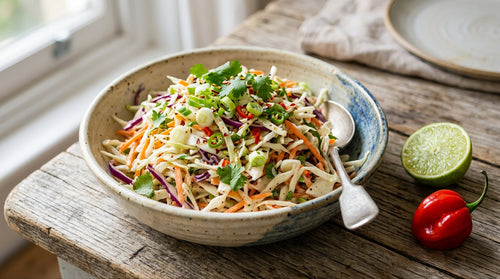
For the table, a jar of Caribbean Hot Sauce for the people who want more heat, and a crisp Caribbean coleslaw to cut through the coconut.
FAQ
Why is it called rice and peas when there are no peas?
In Jamaica, beans are called peas. Red kidney beans are the most common, and gungo peas, also called pigeon peas, are the other classic. The name stayed when the dish came to Britain.
Does rice and peas have coconut milk?
The Jamaican-style rice and peas that most people in Britain know is cooked in coconut milk, and that is how I make it here. It gives the rice its richness and its pale colour. In Guadeloupe, where I grew up, we often eat rice and red beans side by side without coconut, with the beans cooked separately in a sauce.
Is rice and peas gluten free?
Rice, kidney beans and coconut milk are all naturally gluten free, and so is my Sauce Creole. The thing to check is your stock: some stock cubes contain wheat. Use water, or a stock that says gluten free on the label, and this dish is gluten free.
Can you freeze rice and peas?
Yes. Cool it quickly, within an hour, spread out on a tray, then freeze it in a sealed container for up to a month. Defrost it in the fridge and reheat it until it is steaming hot all the way through, with a splash of water. Reheat cooked rice only once. If you are keeping it in the fridge instead, eat it within a day.
Can I make rice and peas in a rice cooker?
You can. Soften the spring onion, garlic and Sauce Creole in a pan first, then put everything into the rice cooker with the rice and let it run on its normal setting. Lay the scotch bonnet on top. Rest it for 10 minutes before you open it.
Final word from me
Rice and peas is not a difficult dish. It is a patient one. Wash the rice, season the liquid properly, put the lid on and walk away. The coconut, the thyme and the allspice do the rest, and the whole scotch bonnet sits on top and perfumes everything without anybody getting burned.
Make a big pot on Sunday. It is even better the next day, warmed up with a fried egg on top.
JP