The Green Pod Guadeloupe Calls Gombo, and How I Cook It Without the Slime
The first job my mother ever gave me in her kitchen was okra. Not cooking it, I was far too small for that. Topping it. A basin of green pods on the table, a little knife, and the instruction to take off the caps without cutting into the pod itself, because if you opened them the whole pot would go gluey. Back home in Guadeloupe we call it gombo, and I must have topped a thousand of them before I was allowed near the fire.
In the UK, okra has a reputation problem. People try it once, stewed badly, meet the slime, and never go back. That is a shame, because once you understand what the pod is doing in the pan you can make it do exactly what you want: crisp and dry, or silky and thick. Let me explain the pod, the word, the slime and the plates it belongs on.
What is okra?
Okra is the young, unripe seed pod of Abelmoschus esculentus, a tall plant in the mallow family, a cousin of hibiscus. The pods are green, ridged, tapered like a finger and picked small, at 5 to 10 cm, before they turn woody. Cooked, they taste mild and grassy, and they release a natural thickener that gives stews a silky body.
Where okra comes from, and how Guadeloupe gave French its word
Okra is African. Botanists place its origin in East Africa, in what is now Ethiopia, Eritrea and eastern Sudan, and from there it travelled through Arabia around the Mediterranean and east into Asia. It crossed the Atlantic with the slave trade: it was recorded in Brazil by 1658 and in Suriname by 1686, and the word okra first appears in English in 1679, in the colony of Virginia. That word most likely comes from Igbo, the language of south-eastern Nigeria.
Here is the part I love. The French word gombo does not come from France. The dictionaries trace it to Guadeloupe Creole in 1764, and behind that to ki-ngombo, the word for okra in the Bantu languages of the Angola region. The same root gave Louisiana its gumbo. So when a chef in Paris writes gombo on a menu, he is using a word that passed through my island on its way from Africa.
The other Caribbean word for the pod, kalalou in Haiti, comes from Kimbundu too, where it meant okra or a dish made with it. I untangled that whole family of words in my piece on callaloo, the leafy green three islands cook three ways.

Why is okra slimy?
The slime has a name, mucilage, and a purpose. The food writer Harold McGee describes it as a complex mixture of long, entangled carbohydrate molecules and proteins. Inside the pod it coats the developing seeds and keeps them from drying out, useful for a plant from hot, dry country.
Three things make it worse. Heat: the viscosity of mucilage increases as it warms, so a long stew draws out far more than a quick fry. Cutting: the mucilage is concentrated in the centre of the pod, so sliced okra gives up more than whole okra. And water: a wet pod in a covered pan steams, and steaming is the slimiest way to cook anything.
Two things tame it. Acid, which is why tomatoes, lime and vinegar turn up in so many okra dishes. And dry, fast, high heat: frying, roasting, grilling. There is a third option, the one my mother used for calalou, which is to go the other way entirely and cook the okra so long that the mucilage melts into the pot and becomes the body of the dish. That is not slime. That is the whole point.
How to prepare okra before cooking
This is what I do, and most of it comes straight from a Caribbean kitchen.
- Choose small pods. Firm, springy, bright green, no brown or yellow patches, and nothing much over 12 cm. The very large ones are stringy and tough.
- Store them dry. Unwashed, in a paper bag in the fridge, and use them within two or three days.
- Wash, then dry properly. Pat the pods with a towel. In Trinidad people slice okra for frying and leave the wheels on a cloth for a few hours, even in the sun, before they go near a pan.
- Top them carefully. Take off the cap at the stem end without opening the pod, if you plan to cook them whole.
- Keep the pan uncovered and uncrowded when frying, and add the salt near the end, because salt pulls out moisture.
- Add acid if the dish allows it: a chopped tomato, a squeeze of lime, a spoon of vinegar.
Keep okra dry and quick, or let it melt into a pot on purpose. The slime lives in the land in between.
JP
How Guadeloupe cooks gombo
On a market stall in Pointe-à-Pitre the gombos sit in a heap next to the christophines and the giraumon pumpkin: green and chilli-shaped but fatter, as the Routard guide puts it, with the honest warning that cooked, they turn gluey. Guadeloupe uses the pod two ways.
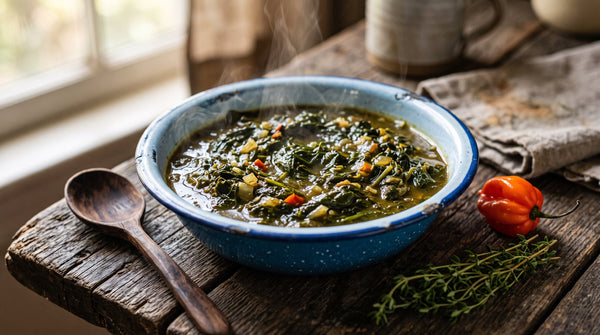
The first is the calalou, the thick green purée that Routard lists among our dishes and that I grew up eating on Sundays and at Easter. Madère leaves, or spinach in Britain, simmered down with okra, garlic, thyme and coconut milk until the okra has vanished and the pot is dark and silky. The okra is the reason it coats the spoon.
The second is quicker. In the French islands gombos are cooked à la créole, fried plain with salt and pepper, served cold in a vinaigrette, dropped into a potage, or simmered with beef, tomato and lime. There is also a dish of gombos cooked with cornmeal and butter, served beside beef, mutton or chicken, a first cousin of what Barbados calls cou-cou.

Okra across the islands: ochro, cou-cou and kalalou
Every island has a name for it and a pot for it.
- Trinidad and Tobago calls it ochro. Fry ochro is everyday food, sliced okra fried dry with onion, garlic, tomato and often salted cod, eaten with rice, roti or dumplings. Ochro rice is a one-pot of rice, okra, pumpkin and coconut milk, and okra is what gives the Trinidad callaloo its famous smooth texture.
- Barbados built its national dish on it. Cou-cou is cornmeal cooked in the water sliced okra has simmered in, the okra folded back through and butter stirred in at the end, something like a polenta, served with flying fish and plenty of gravy.
- Jamaica steams whole snapper over a bed of pumpkin, carrot and potato with Scotch bonnet, pimento and coconut milk, and drops chopped okra and water crackers in for the last five minutes.
- Haiti uses the word kalalou for okra itself and for the sauce made from it. I wrote about that table in my guide to Haitian food, from griot to the soup of freedom.
- Cuba and Puerto Rico say quimbombó, and in Brazil okra goes into caruru with prawns.
Okra, lady’s fingers, bhindi: which name is right?
They are all the same pod. In Britain it is also sold as lady’s fingers, or ladies’ fingers, for the shape. In South Asia and in every South Asian grocer in the UK it is bhindi. The Caribbean says okra, ochro or gombo depending on the island and the language, French Guiana says calou and Réunion says lalo.
The botanical name is the strangest of all: Abelmoschus comes from the Arabic abu l-misk, father of musk, for the smell of the crushed seeds, and esculentus is Latin for edible.
Finding and growing okra in the UK
Okra is easy to find now. The big supermarkets sell small fresh packs and frozen sliced okra, often labelled bhindi. Caribbean and South Asian grocers sell it loose by weight, which is where I buy mine, because I can pick the small pods and leave the big ones.
You can grow it too, with patience. The RHS says okra needs plenty of heat and sun, so in Britain it usually wants a greenhouse or polytunnel, though it may fruit on a hot patio in a long summer. Soak the seeds in warm water for two hours, sow indoors in March or April, keep them above 16°C, and plant out in late May or June. Pods come from midsummer until the first frost. Pick them at 5 to 10 cm, and wear long sleeves: the plant has short hairs that make bare skin itch, as every Caribbean child sent to pick okra for the Sunday pot knows.
How I cook okra at home
Three recipes on this site use the pod, or the pots it belongs in.
- My Guadeloupe callaloo, the green soup my mother simmered every Sunday is the calalou of this post: spinach and spring greens, 150 g of sliced okra, coconut milk and a whole Scotch bonnet floating on top. It is where okra does its best work.
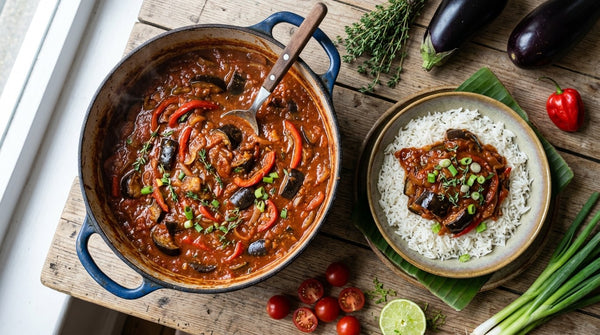
- My Caribbean aubergine stew, my mother’s Friday pot from Guadeloupe is the tomato, thyme and allspice base we also cook gombos in. Add a handful of topped whole pods for the last 15 minutes and you have gombos à la créole.
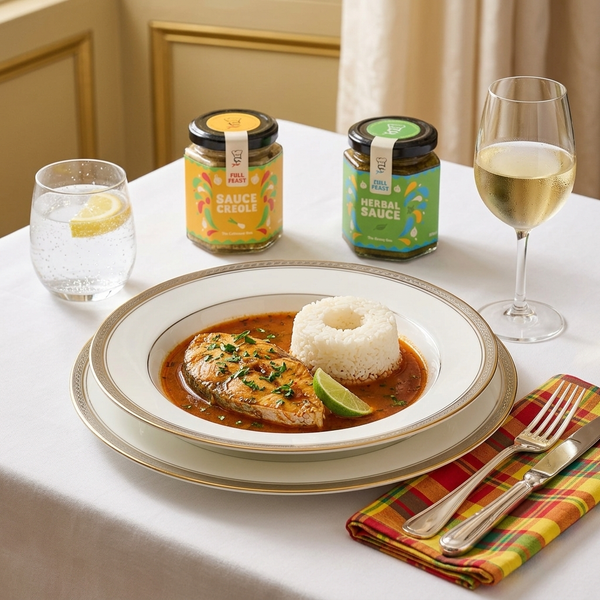
- My court-bouillon de poisson, the Creole fish stew my mother made on Fridays is the fish that sits beside a pan of fried okra on a Guadeloupe table, and the sauce it swims in is exactly what the pods want.
The sauce for a pan of gombos
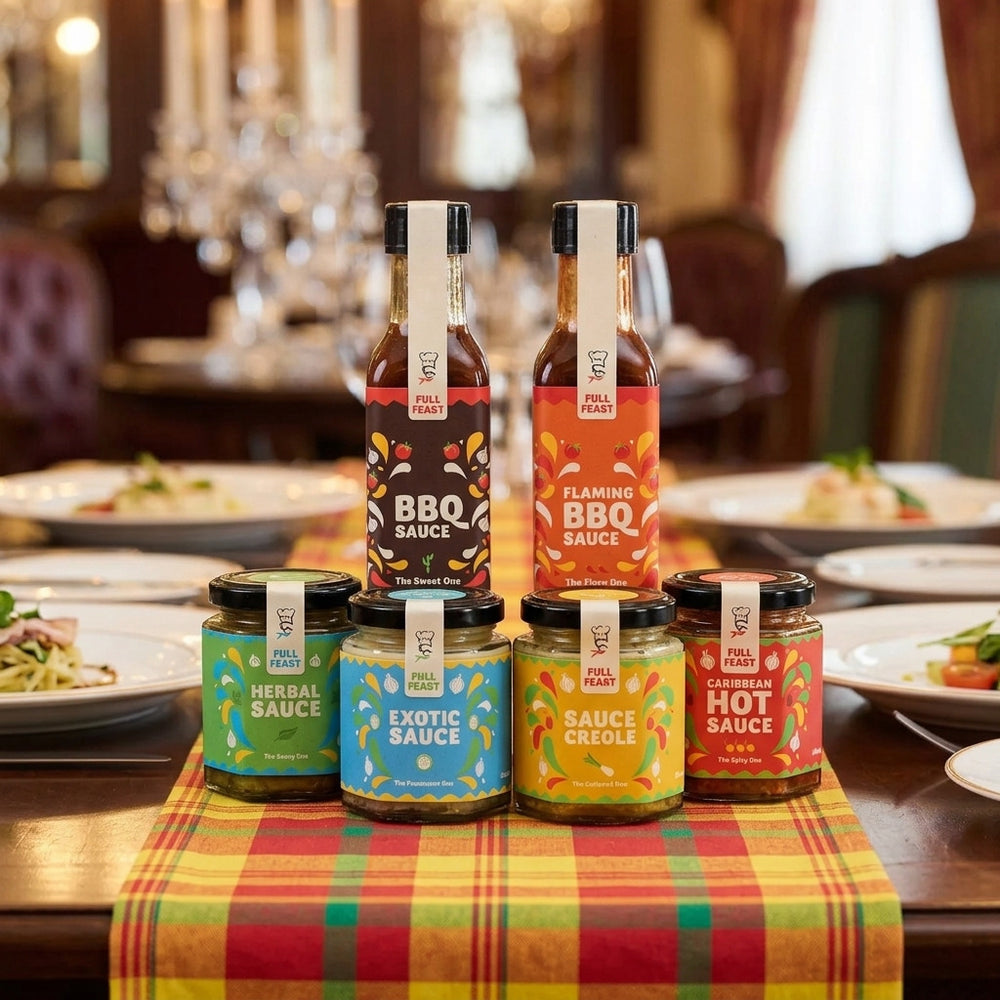
Fried okra needs onion, a little green heat and something sharp. In Guadeloupe that was my mother’s onions softened in oil with a little green chilli. In my kitchen in Britain it is a spoon of Caribbean Sauce Creole, which is onion first and foremost, 68 per cent of the jar, with green chilli, a little vinegar, salt and white pepper. There is no tomato in it and no garlic, so it does not fight the dish; it just does the onion work for you.
Fry your dried okra wheels hot and uncovered until the edges catch, stir through a tablespoon of the sauce for the last minute, and finish with lime. The vinegar in the sauce is the acid that keeps the pan clean.
FAQ
What is okra vegetable? Okra is the young seed pod of Abelmoschus esculentus, a plant in the mallow family related to hibiscus. It is picked small and green and cooked as a vegetable, though botanically the pod is a fruit. It is also called lady’s fingers, bhindi, ochro and gombo.
Is lady finger and okra the same thing? Yes. Lady’s fingers, or ladies’ fingers, is the British name for okra, after the shape of the pod. Bhindi is the South Asian name for the same vegetable.
How do you prepare okra before cooking? Wash the pods, dry them thoroughly, and trim the stem cap without cutting into the pod if you plan to cook them whole. Slice them only if the dish wants the thickening. Fry them hot and uncovered, salt at the end, and add a little acid such as tomato or lime.
Can I eat okra seeds? Yes. The seeds are eaten with the pod in every okra dish, and when the pod is fried they add a pleasant crunch. Roasted and ground, okra seeds have even been used as a caffeine-free coffee substitute.
What does okra taste like? Mild and grassy, somewhere between a green bean and an aubergine. Raw or quickly fried it is crunchy. Stewed slowly it softens and thickens the dish around it.
One small thing to try this week
Buy 250 g of the smallest okra you can find. Wash it, dry it with a towel, and leave it on the cloth while you make a cup of tea. Top the pods, slice them into rounds, and fry them in a wide pan with two tablespoons of hot oil and half a sliced onion. Do not cover the pan, do not stir too often, and let the edges go brown.
Five minutes in, add a chopped tomato, a pinch of salt and a squeeze of lime, and give it two more. Eat it next to an egg, or with rice. If it is slimy, you crowded the pan or you cut it wet. Try again. My mother never let me off either.
JP