The Jamaican Sunday Pot I Make With the Heat of My Island
I will tell you a secret about brown stew chicken. It is not from my island. In Guadeloupe we have our own browned chicken, the fricassée my mother made on Sundays, and for the first twenty years of my life I thought every Caribbean kitchen cooked chicken the way she did. Then I came to London.
The first time I ate brown stew chicken was in a catering kitchen in south London, years before Full Feast existed. One of the cooks I worked beside was Jamaican, and on a slow afternoon she put a pot on for the staff. I watched her tip sugar into hot oil and let it go dark, darker than I would have dared, until it smelled of caramel and something almost burnt. Then the chicken went in, and the whole kitchen turned its head.
What came out an hour later was nothing like my mother’s pot and everything like it at the same time. Dark, sticky, sweet at the edges, with thyme and pimento running through it and a whole Scotch bonnet sitting in the gravy like a warning. We ate it standing up, with rice and peas. I asked her to show me twice more before she let me make it alone.
That is the thing about the Caribbean. Every island has its Sunday pot. The names change, the sugar goes in at a different moment, the pepper is a different pepper. But the idea is the same: brown the meat properly, build a gravy from what is left in the pot, let it go slow, and feed everybody. This is my version. The method is hers, Jamaican through and through. The heat is mine, from the Scotch bonnet sauce I make from the peppers of my island. She would approve, I think. She always said my mother’s chicken needed more pepper.
Recipe at a glance
- Cuisine: Caribbean (Jamaican, cooked by a Guadeloupean)
- Prep: 20 minutes, plus at least 2 hours marinating • Cook: 60 minutes • Total: 80 minutes
- Serves: 4
- Featured sauce: Caribbean Hot Sauce
- Heat level: 7/10, a proper Scotch bonnet warmth that builds with every spoon of gravy
- Diet: Dairy free, gluten free as written (use a gluten free stock cube)
What you’ll need
The ingredient list looks long, but most of it is the marinade, and the marinade is where this dish lives. Bone-in thighs, skin off, are the right cut: the bone gives the gravy its body, and without the skin the sugar can grip the meat and colour it.
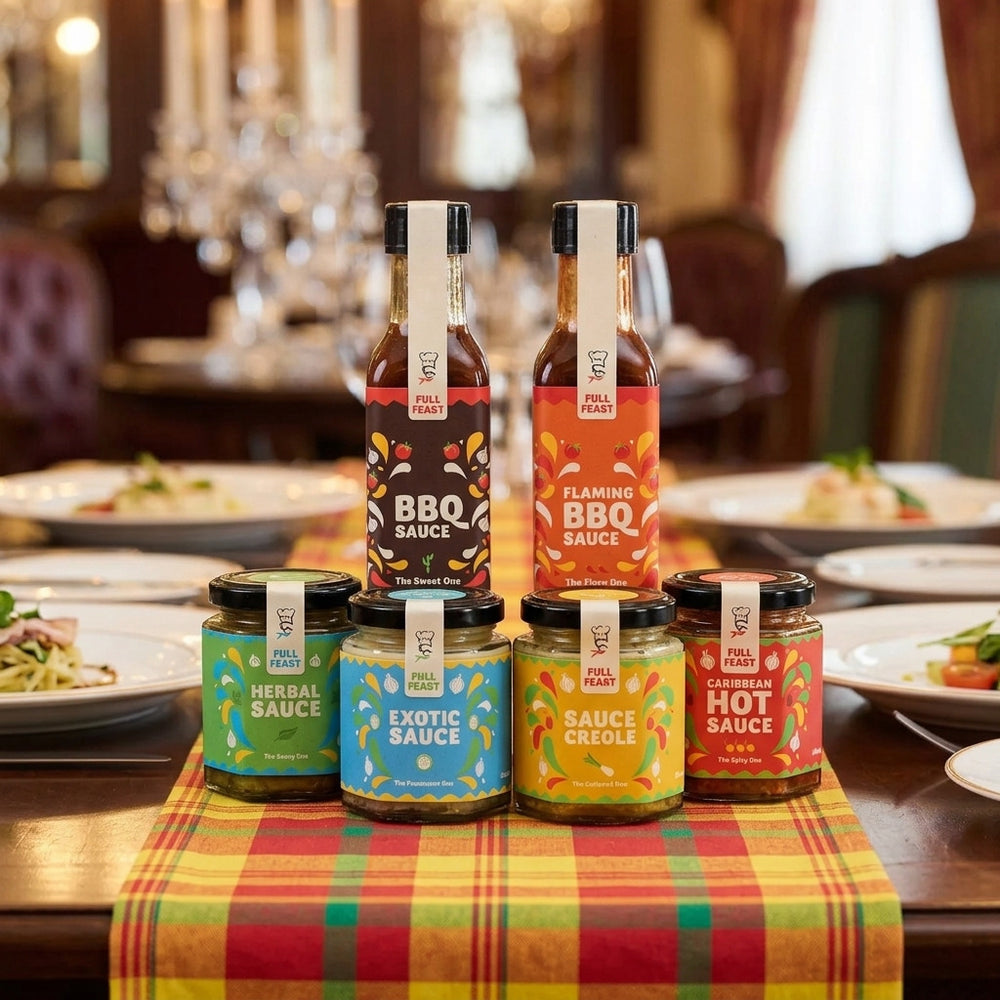
For the heat I use my Caribbean Hot Sauce. It is mostly Scotch bonnet and white onion, with a little garlic and vinegar, which is exactly what a Jamaican cook would be chopping into the pot by hand. Two spoons in the marinade, two more in the gravy, and the chicken carries the pepper all the way through rather than just sitting next to it.
For the chicken and marinade:
- 8 bone-in chicken thighs, skin removed (about 1.2 kg)
- 1 lime, juiced
- 3 spring onions, finely sliced
- 4 garlic cloves, crushed
- 20 g fresh ginger, finely grated (a thumb-sized piece)
- 5 sprigs fresh thyme, leaves stripped
- 1 tsp ground allspice (pimento, if you are buying it in a Caribbean shop)
- 1 tsp salt
- 1 tsp freshly ground black pepper
- 2 tbsp Full Feast Caribbean Hot Sauce
For the stew:
- 2 tbsp vegetable oil
- 2 tbsp soft dark brown sugar
- 1 large onion, sliced
- 2 carrots, sliced into thick coins
- 1 red pepper, deseeded and sliced
- 2 tbsp tomato ketchup
- 400 ml hot chicken stock (a gluten free cube if you need it)
- 2 bay leaves
- 2 tbsp Full Feast Caribbean Hot Sauce, plus more to finish
- A few sprigs of thyme and a sliced spring onion, to serve
How I make it
-
Marinate the chicken. Put the thighs in a large bowl with the lime juice, spring onions, garlic, ginger, thyme leaves, allspice, salt, pepper and 2 tablespoons of hot sauce. Use your hands. Work it into every piece, cover, and leave it in the fridge for at least 2 hours. Overnight is better.
-
Scrape and dry. Take the chicken out 30 minutes before cooking. Scrape the bits of spring onion and garlic off each piece back into the bowl and keep that marinade; it goes into the gravy later. Pat the chicken dry with kitchen paper. Wet chicken will not take the sugar.
-
Burn the sugar, but only just. Put the oil and the brown sugar in a wide, heavy pot over a medium heat. The sugar will sit there, then melt, then foam, then start to darken from gold to the colour of an old penny. This takes 3 to 4 minutes. The moment it smells of deep caramel and the first wisp of smoke rises, you are there. One breath later and it is bitter, and there is no saving it.
-
Brown the chicken in the sugar. Lay in half the thighs, flat side down. They will spit and the sugar will cling to them. Leave them alone for 3 minutes, turn, and give them 3 more, until every side is a dark mahogany. Lift them onto a plate and do the second batch. Do not crowd the pot; this is the step that gives the dish its name and its colour.
-
Soften the vegetables. Turn the heat down a little. Add the onion, carrots and red pepper to the same pot with all the reserved marinade. Scrape the bottom as you stir; those dark sticky bits are the best part. Cook for 6 to 8 minutes until the onion is soft and starting to colour.
-
Build the gravy. Stir in the ketchup and 2 tablespoons of hot sauce, then pour in the hot stock and drop in the bay leaves. Bring it up to a bubble and scrape the pot one last time so nothing is stuck.
-
Return the chicken and go slow. Put the thighs back in with any juices from the plate, pushing them down so the gravy comes most of the way up. Bring to the boil, then lower the heat as far as it goes, cover, and let it simmer for 35 minutes. Turn the pieces once halfway through.
-
Reduce until it clings. Take the lid off and let it bubble gently for 10 to 15 minutes more. The gravy should go from loose to glossy, dark and thick enough to coat the back of a spoon. The chicken should reach 75°C at the bone and the meat should be pulling away.
-
Taste, rest, serve. Fish out the bay leaves. Taste the gravy. It wants to be sweet at the front, savoury underneath, with the pepper arriving last. Add more hot sauce if it needs it. Let it rest for 5 minutes off the heat, then scatter over the thyme and spring onion and bring the pot to the table.

The role of Caribbean Hot Sauce in this dish
A Jamaican brown stew gets its heat from a Scotch bonnet, usually dropped in whole so it perfumes the gravy without blowing the roof off. I do it differently, because I have a jar of that pepper already made. My Caribbean Hot Sauce is thick with Scotch bonnet and white onion, sharpened with a little vinegar and garlic. It does two jobs here.
In the marinade it carries the pepper into the meat itself, so the chicken is warm from the inside rather than just coated. In the gravy it does what the whole pepper would do, but evenly, and with the onion already softened into it. The sweetness of the burnt sugar and the sharpness of the sauce pull against each other, and that tension is what makes you go back for a second plate. Taste as you go. Four tablespoons gives you a 7 out of 10; three gives you a warm, family-table version; five is for the people who ask for the pepper on the side and then eat it all.
Tips from my kitchen
- Judge the sugar by smell, not by the clock. You are looking for the colour of a dark penny and the smell of deep caramel. If it smells acrid or goes black, throw it away, wipe the pot and start again.
- Dry chicken, hot pot, no crowding. Three rules, one result: a proper dark crust that the sugar sticks to. If the pieces are touching, they steam, and the gravy will be pale.
- Let the gravy reduce with the lid off. The most common mistake I see is serving it too soon. A brown stew gravy should be glossy, not soupy. The last 15 minutes uncovered is what gets it there.
- It is better the next day. Make it on Saturday, reheat it gently on Sunday, and nobody will know you had an easy afternoon.
- If you want to go slower, this works in a slow cooker. Do steps 3 to 6 on the hob, then transfer everything to the slow cooker on low for 5 to 6 hours and reduce the gravy in a pan at the end. The browning cannot be skipped; that is the dish.
What to serve it with
Brown stew chicken with rice and peas is the plate. There is no argument to be had. My rice and peas, cooked the slow way with coconut and a whole Scotch bonnet, is what I put next to it, and the gravy goes over both. Plain white rice is fine on a weeknight, but on a Sunday make the effort.
For something sweet to cut through the gravy, fried plantain, the twice-fried bananes pesées of my island, is my choice. Something cool and crunchy on the side helps too: my Caribbean coleslaw, with no mayonnaise and plenty of lime, does the job. If you want to know more about the pimento that runs through the marinade, I wrote about what allspice is and why we use so much of it in Caribbean cooking.

FAQ
Why is my brown stew chicken bitter?
The sugar went too far. There is a narrow window between dark caramel and burnt, and it closes in seconds. Melt the sugar over a medium heat, not high, and pull it the moment it smells of deep caramel and the first thread of smoke appears. If it goes black, do not try to rescue it. Wipe the pot and start again.
Why is my brown stew chicken watery?
Usually one of three things: too much stock, the chicken was not dried before browning, or the lid stayed on until the end. Keep the stock to 400 ml for 8 thighs, pat the meat dry, and give the gravy its last 10 to 15 minutes uncovered so it reduces and goes glossy. If it is still loose, lift the chicken out and boil the gravy hard for a few minutes on its own.
Can you make brown stew chicken without ketchup?
Yes. The ketchup is there for a touch of sweetness, a little acid and some body. Swap it for 1 tablespoon of tomato purée plus a teaspoon of brown sugar and a splash of white wine vinegar. The gravy will be a little less glossy, so give it an extra 5 minutes of reducing at the end. As written, the dish contains no gluten, dairy or nuts; the only thing to check is your stock cube, which often contains celery.
What is the difference between brown stew chicken and jerk chicken?
They are cousins, not twins. Jerk chicken is marinated in a wet paste heavy with allspice, thyme and Scotch bonnet, then grilled or roasted dry over high heat, so it comes out charred at the edges with the marinade cooked onto it. Brown stew chicken shares the thyme, allspice and pepper, but the chicken is browned in sugar and then simmered slowly in a thick gravy. One is fire and smoke. The other is a pot and a spoon.
Can you freeze brown stew chicken, and can you add potatoes?
Both yes. Cool it fully, freeze in portions with the gravy, and reheat gently in a pan with a splash of water until piping hot. For potatoes, add 2 medium potatoes cut into quarters at step 7 with the chicken; they soak up the gravy. Add a little extra stock if the pot looks tight.
Final word from me
This is not my mother’s chicken, and I will never pretend it is. It is the dish a Jamaican cook taught me in a London kitchen, and I have cooked it many times since with my own pepper in the pot. That is how the Caribbean works: we borrow from each other, we argue about the sugar, and then we sit down and eat. Make it this Sunday. Let the sugar go dark, let the pot go slow, and put the rice and peas beside it.
JP