Garlic, Tomatoes and the Heat of My Island
I will tell you a secret about prawn linguine. Most people get it wrong, and it is never the prawns that are the problem. It is the pan. They cook the prawns too long, they drain the pasta into the sink like it is dishwater, and then they wonder why the sauce slides off the linguine and sits in a puddle at the bottom of the bowl.
I learned this dish in a London kitchen, years before Full Feast, from an Italian cook who was twice my age and half my patience. He watched me make it the first time and said nothing. Then he took the pan from me, tipped a ladle of the cloudy pasta water back in, shook it over the flame for thirty seconds, and the sauce went from thin to glossy in front of my eyes. It clung to every strand. I have never drained pasta in a sink since.
What he did not have, and what I could not stop thinking about, was heat. Back home in Guadeloupe we cook prawns with garlic and chilli and tomato too, in a pot, with rice beside it. The ouassous from our rivers are big freshwater prawns, and they go into a fricassée that smells of garlic, chives and pepper. So I did what any boy from the islands does with a dish from somewhere else. I kept his method and put my mother’s pepper in it.
That is the prawn linguine I cook on a Friday night when the week has been long. King prawns, cherry tomatoes that burst in the pan, garlic sliced thin, and my Scotch bonnet sauce stirred into the tomatoes so the heat runs through the whole bowl. Forty minutes, one pan, one pot. The Italian would not approve of the pepper. He would approve of the sauce clinging to the linguine.
Recipe at a glance
- Cuisine: Caribbean fusion (an Italian pasta with Guadeloupe heat)
- Prep: 15 minutes • Cook: 25 minutes • Total: 40 minutes
- Serves: 4
- Featured sauce: Caribbean Hot Sauce
- Heat level: 7/10, a proper Scotch bonnet warmth that builds through the bowl
- Diet: Dairy free, pescatarian. Not gluten free as written (the linguine); use a gluten free linguine and it is.
What you’ll need
Buy raw king prawns, not cooked ones. Raw prawns go into the pan grey and come out pink and sweet, and that minute of cooking is where the flavour comes from. If you can find them with the shells on, even better: the shells make a ten-minute stock that turns a good prawn linguine into a serious one. If they come peeled, do not worry, the pasta water does most of the work.
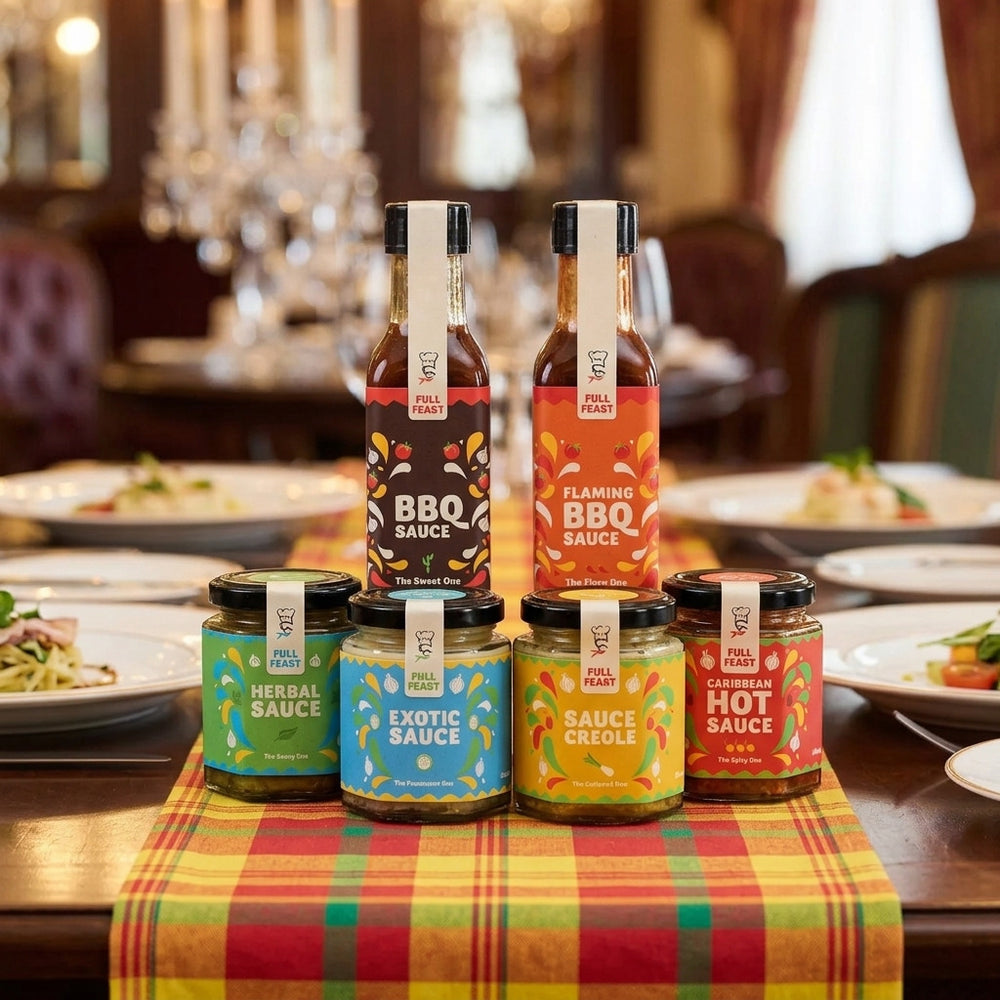
For the heat I use my Caribbean Hot Sauce. It is mostly Scotch bonnet and white onion, with garlic, a little vinegar and white pepper. Stirred into the tomatoes it does the job of a fresh chilli and half an onion at once, and the vinegar in it lifts the tomatoes the way a squeeze of lemon would.
For the prawns and the stock (optional):
- 500 g raw king prawns, peeled and deveined, shells kept if you have them
- 1 tbsp olive oil (for the shells)
- 300 ml water
For the linguine:
- 400 g dried linguine
- 3 tbsp olive oil, plus a little extra to finish
- 5 garlic cloves, sliced thin
- 400 g cherry tomatoes, halved
- 2 tbsp tomato purée
- 100 ml dry white wine (or the prawn stock, or water)
- 3 tbsp Full Feast Caribbean Hot Sauce
- 1 lime, zest and juice
- 3 spring onions, finely sliced
- A small bunch of flat-leaf parsley, chopped, plus a few basil leaves if you have them
- Salt and freshly ground black pepper
How I make it
-
Make a quick stock, if you have shells. Heat 1 tablespoon of oil in a small pan over a medium-high heat and add the prawn shells. Stir them for 2 minutes until they turn pink and smell toasted, then pour in 300 ml of water. Simmer for 10 minutes while you get on with everything else, then strain. You want about 150 ml of orange, sweet-smelling stock. If you have no shells, skip this and use the wine and pasta water.
-
Put the pasta water on. Fill your biggest pot with water, salt it well (it should taste like the sea), and bring it to a rolling boil. Do not add the pasta yet. The sauce comes first, and the pasta goes in when the sauce is five minutes from ready.
-
Dry the prawns and season them. Pat the prawns dry with kitchen paper. Wet prawns steam instead of frying. Season them with a pinch of salt and the zest of the lime and set them aside.
-
Start the sauce. In a wide frying pan, warm the 3 tablespoons of olive oil over a medium heat. Add the sliced garlic and let it sizzle gently for a minute, until it smells sweet and the edges turn the palest gold. Do not let it brown. Brown garlic is bitter and there is no way back.
-
Burst the tomatoes. Turn the heat up to medium-high and add the cherry tomatoes, cut side down. Leave them for 2 minutes so they catch a little, then stir and press them with the back of the spoon so they collapse and let go of their juice. Cook for 5 minutes until you have a rough, bright red sauce.
-
Add the purée, the wine and the hot sauce. Stir in the tomato purée and cook for a minute to take the raw edge off. Pour in the wine (or 100 ml of the prawn stock) and let it bubble for 2 minutes. Now stir in the 3 tablespoons of Caribbean Hot Sauce. The pan will smell of Scotch bonnet and onion straight away. Lower the heat and let it simmer gently.
-
Cook the linguine. Drop the pasta into the boiling water and cook it for 1 minute less than the packet says. Before you lift it out, scoop a large mug of the cloudy cooking water and keep it. This water is the sauce. Do not tip it down the sink.
-
Cook the prawns, and watch them. While the pasta cooks, turn the heat under the sauce up to medium-high and add the prawns in one layer. Give them 1 to 2 minutes, turn them, and give them 1 to 2 minutes more. They are done the moment they are pink and opaque all the way through, with the tails curled into a loose C. A prawn curled into a tight O has gone too far. Add the prawn stock if you made it, and the lime juice.
-
Bring it together in the pan. Lift the linguine straight from the pot into the sauce with tongs, dripping and all. Add half the mug of pasta water and toss everything over the heat for a minute. The starch in the water and the oil in the sauce come together and the sauce turns glossy and grips the pasta. If it looks dry, add more water a splash at a time. If it looks loose, keep tossing; it tightens fast.
-
Finish and serve. Take the pan off the heat. Stir through the spring onions, the parsley, the basil and a last thread of olive oil. Taste. It wants salt, pepper, and perhaps another squeeze of lime. Twist it into warm bowls with the prawns sitting on top, and eat it straight away. Prawn linguine does not wait for anybody.

The role of Caribbean Hot Sauce in this dish
An Italian cook puts a pinch of chilli flakes into the oil with the garlic, and the heat sits in the fat. I do it differently. My Caribbean Hot Sauce goes into the tomatoes once they have collapsed, and because it is thick with Scotch bonnet and white onion, it melts into the sauce rather than floating on it. The onion gives the tomatoes body. The vinegar sharpens them. The Scotch bonnet gives that fruity, floral heat no chilli flake can give, the kind that arrives after you swallow and sends you back for the next forkful.
Three tablespoons is my Friday night amount, a 7 out of 10. Two gives you a gentle, family-table bowl. Four is for the people who ask for the jar on the table and then use it. Whatever you choose, add it with the tomatoes and not at the end, so the pasta water can carry it onto every strand.
Tips from my kitchen
- Buy raw, buy big. King prawns, raw, about 16 to 20 to 500 g. Smaller prawns overcook before they colour. Frozen ones go in the fridge overnight to thaw, then get dried well.
- The pasta water is not optional. Salt it properly, keep a mug of it, and add it to the pan in splashes. This is how I make my herbal pasta primavera cling the same way, and it works with any sauce.
- Garlic sliced, not crushed. Crushed garlic burns in the time it takes to find the tomatoes. Thin slices soften, sweeten and stay where they belong.
- Cook the pasta one minute short. It finishes in the sauce, drinking it in. Pasta cooked all the way in the water goes soft in the pan.
- Prawns last, always. They need 3 to 4 minutes in total. Everything else in the pan can wait for them. They cannot wait for anything.
What to serve it with
A bowl of prawn linguine wants very little beside it. A green salad with my spicy salad dressing, the same jar of hot sauce whisked with lime and oil, is the right amount of company. A piece of warm bread for the last of the sauce, and a cold glass of something dry.
If you are feeding a crowd, start with my garlic prawns, fifteen minutes from cold pan to table, with the herb sauce and no heat, so the linguine can bring the pepper afterwards. On a Sunday with time for a pot rather than a pan, the same prawns become my Caribbean prawn curry, with rice instead of pasta. And if you want to know the pepper in this bowl better, I wrote about what a Scotch bonnet actually is.

FAQ
Why are my prawns rubbery?
They cooked too long. A raw king prawn needs 3 to 4 minutes in a hot pan, turned once, and it is done the moment it is pink and opaque through the middle. Every minute after that squeezes the moisture out and tightens it up. Cook them last, in one layer, over a proper heat, and take the pan off as soon as they curl into a loose C.
Can you make prawn linguine with cooked prawns?
You can, but the dish loses something. Cooked prawns have been through the heat once, so they only need warming, and they never give the sauce the sweetness raw prawns leave in the pan. If cooked prawns are what you have, add them with the pasta at step 9, toss for one minute to heat them through, and no longer.
How do you make prawn linguine sauce stick to the pasta?
Pasta water. Cook the linguine in well-salted water, keep a mug of it, and finish the pasta in the pan with the sauce, adding the water in splashes while you toss. The starch binds the oil and the tomato juice into something glossy that coats every strand. Draining the pasta in a colander and pouring sauce over it in the bowl is why so many prawn linguines end up thin and watery.
Can you reheat prawn linguine?
Not well, and I would not. The prawns go rubbery the second time through and the pasta goes soft. If you do have leftovers, keep them covered in the fridge, eat them the next day, and reheat gently in a pan with a splash of water until piping hot all the way through. Never reheat it more than once.
What is in this dish for allergies, and what can I swap?
As written it contains crustaceans (the prawns), gluten from wheat (the linguine) and sulphites (the wine). Swap the linguine for a gluten free one and it is gluten free. Swap the wine for the prawn stock or water and there are no sulphites. The dish has no dairy and no nuts. My Caribbean Hot Sauce is lab tested gluten free and vegan, so it changes none of this.
Final word from me
An old Italian taught me the method and my mother taught me the pepper, and this is what happened when the two met in my pan. Make it on a Friday. Put the pasta water on first, slice the garlic thin, and stand over the prawns like they owe you money. Forty minutes from now you will have a bowl of prawn linguine that clings, that glows, and that carries the heat of my island to the last twist of the fork.
JP