Crisp Skin, Maracudja Glaze, Half an Hour
When I was a boy in Guadeloupe, there was a vine on the back fence that nobody planted. It just arrived, the way things do on the island, and by the time I was old enough to be trusted with a knife it had swallowed half the fence and most of the neighbour’s washing line. Maracudja. That is what we call passion fruit back home. Ugly little things, wrinkled and purple, and inside them something so bright it makes you close one eye.
My mother used them for everything. Juice for the seven of us. Punch for the adults, with white rum, when it was somebody’s birthday. And once or twice a year, when there was a reason, she spooned that pulp into a pan with meat and let it go sticky and dark. I remember standing at her elbow watching the sauce turn from thin and yellow to something that clung to the back of the spoon, and thinking that was a kind of magic I would like to learn.
Duck came later. Back home we ate chicken, we ate pork, we ate whatever came off the fishing boats in the morning. It was only after I came to England and started cooking properly for other people that I put the two together and understood they had been waiting for each other the whole time. Duck is rich and dark and fatty. Passion fruit is sharp and clean. One cuts the other. In the French islands they have known this for generations, magret de canard aux fruits de la passion, and it is on every good table in Pointe-à-Pitre when somebody is celebrating.
Here is the thing people get wrong about duck breast. They are frightened of it. They think it is chef food. It is not. It is the easiest expensive thing you will ever cook, because the duck does almost all of the work itself. You put it in a cold pan and you leave it alone. That is most of the recipe.
Let me show you how I make it. The proper way. With my Exotic Caribbean Sauce doing the job my mother’s vine used to do.
Recipe at a glance
- Cuisine: French Caribbean (Guadeloupe)
- Prep: 10 minutes • Cook: 25 minutes • Total: 35 minutes
- Serves: 4
- Featured sauce: Exotic Caribbean Sauce
- Heat level: 3/10, fruity first, with a gentle warmth behind it
- Diet:Dairy free
What you’ll need
Buy the best duck you can. This is a short recipe with nowhere to hide, so the bird matters more than usual. Look for breasts with a thick even layer of white fat and skin that is dry, not damp. Two breasts will feed two people properly, four will feed four, and the method does not change.
There is no butter and no flour in this. The duck brings its own fat, more than you will know what to do with, and the sauce thickens on sugar and reduction alone. So it is naturally dairy free, which is useful when you cannot remember who eats what.
For the duck
- 4 duck breasts, skin on, about 175g to 200g each
- 1 tsp fine sea salt
- 1 tsp ground allspice
- ½ tsp freshly ground black pepper
- Zest of 1 lime
- 2 garlic cloves, crushed flat with the side of a knife
- 4 sprigs of thyme
For the maracudja glaze
- 5 tbsp Exotic Caribbean Sauce
- 2 tbsp runny honey (or 2 tbsp soft brown sugar)
- Juice of 1 lime
- 1 tbsp dark rum, optional but good
For the pan sauce
- 1 banana shallot, finely chopped
- 150ml chicken stock
- 1 fresh passion fruit, halved, optional
- 2 spring onions, green parts sliced, to finish
To serve
- Rice, sweet potato mash, or a green salad with something sharp in the dressing
How I make it
1. Score the skin. Put a breast skin side up on the board and cut lines through the fat about 1cm apart, then cut again the other way to make diamonds. Go through the fat but stop before the meat. If you see pink, you have gone too far. This is not decoration, it is drainage: the cuts let the fat run out instead of sitting there being soft.
2. Dry and season. Pat both sides with kitchen paper until the skin squeaks a little. Wet skin steams, dry skin crisps. Rub the salt into the skin, getting it down into the cuts, then turn the breasts over and rub the flesh side with the allspice, pepper and lime zest. Leave them on a plate for 20 minutes while you chop the shallot and mix the glaze. If you have longer, leave them uncovered in the fridge for a few hours and the skin gets drier still.
3. Mix the glaze. In a small bowl stir together the Exotic Caribbean Sauce, honey, lime juice and rum. Taste it. It should be sweet, then sharp, then warm at the back. Set it aside where you can reach it.
4. Start cold. Put the breasts skin side down in a large heavy frying pan that is completely cold. No oil. Now turn the heat to medium low. This is the part everybody wants to skip and nobody should. A hot pan seizes the fat and traps it. A cold pan warms it slowly and it runs out like water.
5. Render, and be patient. Leave them for 12 to 14 minutes. Do not move them, do not poke them. What you want is a steady quiet sizzle, not a violent one. Two or three times, tip the pan and spoon the fat into a jar. You will get a lot, and that fat roasts the best potatoes of your life. When the skin is deep golden and hard to the touch, this side is done.
6. Turn them. Flip the breasts and add the garlic and thyme to the pan. Cook the flesh side for 2 to 3 minutes, spooning the hot fat over the top as you go.
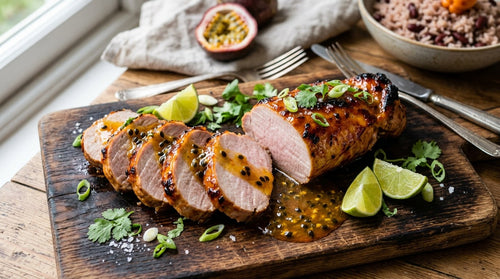
7. Glaze. Spoon about half the glaze over the breasts, turn them once or twice so it coats, and let it bubble for no more than 1 minute. It has sugar in it and sugar catches fast, so keep everything moving and keep your eyes on the pan. The skin should go glossy and dark at the edges.
8. Check and rest. For pink and tender, which is how duck is meant to be eaten, take it off at 56°C to 58°C in the thickest part. For no pink at all, take it to 68°C, and accept it will be firmer. Lift the breasts onto a warm plate, skin side up so it stays crisp, and rest them for 6 to 8 minutes. They keep cooking while they sit. Do not cover them tightly with foil or you will undo all that work on the skin.
9. Build the pan sauce. Pour off all but about a teaspoon of the fat. Put the pan back on medium heat, add the shallot and soften it for 2 minutes. Pour in the stock, scraping up everything stuck to the bottom, then add the rest of the glaze. Let it bubble for 3 to 4 minutes until it coats the back of a spoon. Take it off the heat and stir in the pulp of the fresh passion fruit if you are using it, along with any juice that has run out of the resting duck.
10. Slice and serve. Cut each breast across into slices about 1cm thick, on a slight angle. Fan them out, spoon the sauce around them rather than over them so the skin stays crisp, and scatter the spring onion greens on top.
The role of Exotic Caribbean Sauce in this dish
This sauce is not a condiment here. It is the glaze, and without it you would be standing at the hob making a gastrique from scratch with sugar and vinegar and a lot of nerve.
What it brings is passion fruit that has already been balanced. Fresh maracudja alone is all acid and perfume and no body, so it slides off the meat and pools on the plate. My Exotic Caribbean Sauce carries a little sweetness and a gentle chilli with the fruit, so when it meets the honey and the hot duck fat it thickens, clings, and goes lacquered rather than watery.
And then the heat. It is small, a 3 out of 10, which is exactly what you want against duck. A fierce chilli would fight the meat. This one just lifts the back of your throat a second after the sweetness lands, so each mouthful finishes clean and you go straight back for another. That is the trick of a rich dish: it has to make you hungry again while you are still eating it.
Tips from my kitchen
Do not throw away the fat. Strain it into a jar and keep it in the fridge for a month. Potatoes roasted in duck fat, with thyme and salt, will make you a better cook by association.
A cold pan is not a mistake. I have watched people put duck into smoking oil because that is what they were taught to do with steak. Duck is not steak. Duck comes with its own fat and your only job is to persuade it to leave.
Glaze at the end, never at the start. Anything with sugar in it goes on in the last minute. Put it on early and you will have a black pan and a bitter dinner, and you will blame the duck, which will not be fair.
Rest it longer than feels right. Six to eight minutes on a warm plate. Cut it straight out of the pan and the juice runs onto the board instead of staying in the meat. I set a timer, because I am as impatient as anybody.
Buy a thermometer. It takes the guessing out of every expensive piece of meat you will ever cook, and duck breasts vary in thickness more than people realise, so time alone will lie to you.
What to serve it with
Back home this would go with rice, and rice is still my answer most nights. Plain long grain, or coconut rice if there is a reason to celebrate. Sweet potato mash is the other one I make often, because the sweetness agrees with the glaze and the orange against the dark duck looks like the island on a plate.
For greens, keep them sharp. A watercress salad with plenty of lime in the dressing, or green beans blanched hard and tossed while hot with a spoon of Fresh Herbal Sauce, which has no heat in it at all and is all herbs and brightness. It resets your mouth between rich mouthfuls.
If you want something to start with, put a bowl of crisps or plantain on the table with my Caribbean Hot Sauce alongside. Let the hot one live at the beginning of the meal and let the fruity one have the duck to itself.
FAQ
How long do you cook duck breast for?
About 12 to 14 minutes on the skin, starting in a cold pan on medium low heat, then 2 to 3 minutes on the flesh side and a final minute in the glaze. But time is a guide and thickness is the truth. A thin breast can be ready in 18 minutes, a thick one wants 25. Go by temperature and you will never be wrong.
Can duck breast be pink in the middle?
Yes, and it should be. Duck is poultry but it behaves like red meat, and a whole muscle like the breast is safe cooked to medium the way beef is. I take mine off the heat at 56°C to 58°C and let it climb a couple of degrees while it rests. If you would rather have none at all, go to 68°C, but cook it gently and rest it properly because it dries out quickly past that point.
Why is my duck skin not crisp?
Three reasons, and it is nearly always the first. The skin was wet when it went in, so pat it dry properly. Or the pan started hot instead of cold, which seals the fat inside. Or it did not have long enough, because 14 minutes feels like a very long time when you are standing over it. Pour the fat off as it collects too, because skin sitting in a puddle is frying, not rendering.
What is the best sauce for duck breast?
Something fruity with an edge to it. Duck is rich, so a sauce made of more richness has nowhere to go. Passion fruit is the one I keep coming back to because it is sweet and sour in the same mouthful, which is why I built my Exotic Caribbean Sauce around it. Mango works too, but the principle stays the same: cut the fat, do not add to it.
Can I cook this on the barbecue?
You can, and it is very good, but keep it away from the flames. Render the breasts skin side down over indirect heat with the lid on so the fat drips away from the coals, then finish over direct heat for a minute a side, and brush the glaze on right at the end. Duck fat and open flame are a fire waiting to happen, so keep the lid handy.
Final word from me
There is a vine still growing on that fence in Guadeloupe as far as I know, and it is still nobody’s. I like that. The best flavours in my cooking arrived the way that vine did, uninvited and then permanent.
Cook this one when you want to feed somebody properly without spending your whole evening at the hob. Put the duck in a cold pan, pour yourself something, and let it work. Then glaze it, rest it, and bring it to the table whole so people see it before you slice it.
Take your time with it. That is all it asks.
JP