My Overnight Marinade, for the Oven or the Barbecue
Before I give you my jerk chicken recipe, you should know whose dish it is. Not mine, and not my island’s. Jerk belongs to Jamaica.
Long before the Spanish or the British arrived, the Taíno people of Jamaica cooked meat slowly on raised wooden frames over a low fire. The Spanish wrote down their word for that frame as barbacoa, and that is where your barbecue comes from. Later the Maroons, Africans who escaped slavery and built free lives in the Jamaican mountains, took up that way of cooking. They hunted wild hog, seasoned it with pimento and hot pepper, and cooked it slow over pimento wood. Pimento is what Jamaica calls allspice, the berry and the tree both. Pork came first. Chicken came later, and now it is the one the whole world asks for. At Boston Bay, in Portland on the north-east coast, the roadside jerk pits still cook over pimento wood, and people often call the place the birthplace of jerk.
Back home in Guadeloupe we have a cousin of this dish. Poulet boucané: chicken marinated in lime, garlic, cive (our spring onion) and hot pepper, then cooked slowly under a lid while bagasse, the crushed stalks left from the sugar cane, smokes on the coals. You buy it from stalls by the road. Boucan is a word the French took from the Tupi language of Brazil, for a wooden frame used to smoke meat. The French who lived by it in the islands were called boucaniers, and English turned that into buccaneers. Different island, same idea: meat that spends a long night in its seasoning and a long time near the smoke.
So this is my jerk chicken. I keep what makes it jerk, the allspice and thyme and scotch bonnet heat. And I cook it the way a Guadeloupe-raised cook cooks anything: lime and garlic first, a night in the fridge, no rushing. The scotch bonnet heat comes from my Caribbean Hot Sauce, blended straight into the marinade. Then you choose. The oven, for a wet Tuesday in October. Or the barbecue, for the first warm Saturday.
Let me show you how I make it.
Recipe at a glance
- Cuisine: Caribbean (Jamaican jerk, cooked by a Guadeloupe hand)
- Prep: 25 minutes • Cook: 45 minutes • Total: 1 hour 10 minutes, plus overnight marinating
- Serves: 4
- Featured sauce: Caribbean Hot Sauce
- Heat level: 7/10, building and warm, with easy ways to turn it down
- Diet: dairy free (not gluten free as written, the sauce contains barley)
What you’ll need
The list looks long. Most of it is the blender’s work. Buy bone-in, skin-on thighs and drumsticks: they stay juicy through a long cook, and the skin is where the char lives. Breast meat dries out before the marinade has had its say.
Allspice is the backbone. It is the reason jerk tastes like jerk and not like any other spicy chicken. If you have whole berries, toast them in a dry pan for a minute and grind them, the difference is real. I wrote more about the one berry that tastes like three spices if you want to know it better.
This recipe is the fresh marinade, the overnight one. If you would rather keep a jar of jerk seasoning ready for quicker nights, make my homemade jerk seasoning and keep it in the cupboard.
For the chicken
- 1.5 kg bone-in, skin-on chicken thighs and drumsticks (8 to 10 pieces)
For the jerk marinade
- 6 spring onions, trimmed and roughly chopped
- 1 small onion, roughly chopped
- 6 garlic cloves, peeled
- 20 g fresh ginger (about a thumb), peeled and roughly chopped
- Leaves from 12 sprigs fresh thyme (about 2 tbsp), or 2 tsp dried
- 1 tbsp ground allspice, or 1 tbsp whole berries, toasted and ground
- ½ tsp ground cinnamon
- ½ tsp freshly grated nutmeg
- 1 tsp freshly ground black pepper
- 2 tbsp soft dark brown sugar
- 2 tsp fine sea salt
- Juice of 2 limes (about 60 ml)
- 3 tbsp vegetable or rapeseed oil
- 4 tbsp Caribbean Hot Sauce
For the basting glaze
- 3 tbsp of the marinade, set aside before it touches the chicken
- 1 tbsp Caribbean Hot Sauce
- 1 tbsp honey
- Juice of ½ lime
To finish
- 1 lime, cut into wedges
- 2 spring onions, finely sliced
For the barbecue (optional)
- 2 chunks pimento wood, or a small handful of whole allspice berries soaked in water for 30 minutes
How I make it
Read it through once before you start. The night before is the same for everybody. After that, follow the oven steps or the barbecue steps, then finish together at step 11.
The night before
-
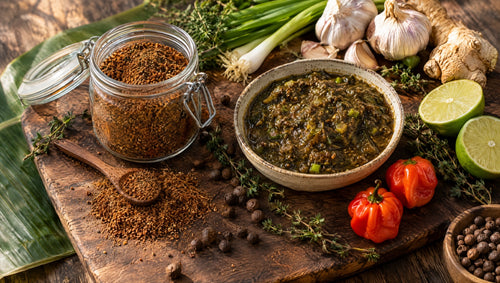
Blend the marinade. Put the spring onions, onion, garlic, ginger, thyme, allspice, cinnamon, nutmeg, black pepper, sugar, salt, lime juice, oil and the 4 tbsp of Caribbean Hot Sauce into a blender. Blitz to a thick, rough paste, dark green and flecked with brown. Lean over the jug and breathe in. That smell is the whole dish. Now spoon 3 tbsp of it into a small jar, lid on, into the fridge. That is your basting glaze for tomorrow, and it never touches raw chicken.
-
Slash the chicken. Pat every piece dry with kitchen paper. With a sharp knife, cut two or three deep slashes into each one, through the skin and right down to the bone. Do not be polite about it. Those cuts are the doors the marinade walks through.
-
Rub it in and leave it overnight. Put the chicken in a large bowl or a strong food bag and pour over the marinade. Use your hands. Push it into every slash and under the skin where you can. Cover it and put it at the bottom of the fridge for at least 4 hours, and ideally 12 to 24. This is the part you do not rush. The salt works its way into the meat overnight, and through those slashes the flavour reaches the bone instead of sitting on the skin.
-
Take it out early. Thirty minutes before you cook, lift the chicken out of the fridge. Cold chicken on high heat burns outside before it cooks inside. While it sits, make the glaze: stir the 3 reserved tablespoons of marinade with the 1 tbsp of Caribbean Hot Sauce, the honey and the juice of half a lime.
In the oven
-
Get the oven hot. Heat it to 220°C (200°C fan). Line a large roasting tray with foil and set a wire rack on top. Scrape the thickest clumps of marinade off the chicken with the back of a knife, leaving a thin coat, then lay the pieces skin side up on the rack with space between them.
-
Roast it. Put the tray in the middle of the oven for 35 to 40 minutes. Leave the door shut. The skin darkens, the edges start to catch, and the kitchen fills with allspice. Drumsticks usually want the full 40.
-
Glaze and char under the grill. Take the tray out and switch to a hot grill. Brush the glaze over every piece, then slide the tray under the grill for 3 to 5 minutes, until the glaze bubbles and the edges blister black in places. Stand there and watch. Then go to step 11.
On the barbecue
-
Build two zones. On charcoal, bank the lit coals to one side and leave the other side empty. On gas, light one side and leave the other off. Close the lid and aim for around 180°C on the cool side. If you have pimento wood or soaked allspice berries, drop them onto the hot coals now (on gas, put them in a smoker box or a foil parcel pierced with holes, over the lit burner). The smoke is the closest thing to Boston Bay you will get in a British garden.
-
Cook it slowly, lid down. Lay the chicken skin side up on the cool side, away from the flames. Close the lid. Cook for 35 to 40 minutes, turning the pieces every 10 minutes so they colour evenly. After 25 minutes, start brushing them with the glaze, two or three times before they come off the cool side.
-
Char it over the coals. Move the chicken over the hot side for 2 to 3 minutes each side, until it is marked and blistered dark at the edges. If the fat flares up, move the piece back to the cool side for a moment. Then go to step 11.
However you cooked it
-
Check it at 75°C. Push a probe thermometer into the thickest part of the biggest thigh, not touching the bone. You want 75°C. If you have no thermometer, cut into the thickest piece at the bone: the juices must run clear, with no pink. Give any piece that is not there another few minutes.
-
Rest and serve. Lift the chicken onto a board, cover it loosely with foil and leave it for 5 to 10 minutes. The juices settle back into the meat. Squeeze over the lime wedges, scatter the sliced spring onions, and take it to the table while it still smells of smoke.
The role of Caribbean Hot Sauce in this dish
Most jerk recipes ask you to blend in raw scotch bonnets. That works, but fresh bonnets are a gamble. One pepper is gentle and the next one from the same bag takes the roof off your mouth.
My Caribbean Hot Sauce is built on scotch bonnet. It is the first ingredient on the label, about 40 percent of the jar, followed by onion, oil, vinegar and garlic. So the heat that goes into your marinade is the same every time, and it comes with body. It is thick, it clings in the slashes, and the oil helps the chilli spread through the marinade instead of sitting in hot little pockets.
It works twice here. In the marinade it is the deep heat, the slow one that builds while you eat. In the glaze, brushed on at the end with honey and lime, it meets the grill or the coals and turns into the dark sticky edges that people fight over.
One honest note: the sauce contains barley, from its vinegar, so this jerk chicken is not gluten free as written. And if you want to understand the chilli itself, I wrote about what a scotch bonnet is and why Caribbean cooking leans on it.
Make this jerk chicken recipe milder or hotter
Jerk should be hot. It does not have to hurt.
Milder. Use 2 tbsp of Caribbean Hot Sauce in the marinade instead of 4, and leave it out of the glaze. If children are at the table, blend the marinade without any hot sauce, take a third of it out for their pieces, then stir 3 tbsp of the sauce into the rest. Same allspice and the same smell, with a fraction of the fire. For anyone who wants flavour with only a whisper of heat, put a jar of Exotic Caribbean Sauce on the table, passion fruit with a soft warmth behind it, or Fresh Herbal Sauce, all herbs and no heat at all.
Hotter. Add one or two fresh scotch bonnets to the blender, stalks off, seeds in if you are brave. Wear gloves and wash the jug well afterwards. Or keep the marinade as written and use 2 tbsp of Caribbean Hot Sauce in the glaze instead of 1. Then put the jar on the table. It always ends up there anyway.
Tips from my kitchen
Lift it off the tray. In the oven, the rack lets the heat reach every side. Chicken sitting in its own juices stews instead of charring, and you lose the edges that make jerk worth eating.
Black edges, not black chicken. Proper jerk has char on it, so do not panic when you see it. But there is sugar in the marinade and honey in the glaze, so thick clumps burn long before the meat is done. Scrape them off, keep the glaze for the end, and stay with it: the line between charred and burnt is a couple of minutes.
Buy a probe thermometer. It costs less than a takeaway and it ends all the guessing. 75°C in the thickest part, away from the bone, and you never serve pink chicken or dry chicken again.
Never baste with the marinade the chicken sat in. That is why we set 3 tablespoons aside at the start. What is left in the bowl after the chicken comes out goes in the bin, not on the food.
What to serve it with
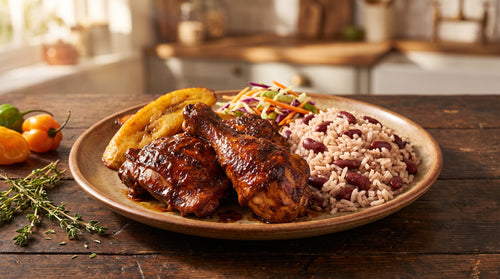
Rice and peas comes first, always. I gave my full Sunday version, with coconut milk, kidney beans and a whole scotch bonnet sitting in the pot, in jerk chicken, rice and peas, so I will not repeat it here. Make the chicken from this page and the rice from that one, and you have the plate.
Then something sweet against the heat. Fried plantain, soft in the middle and caramelised at the edges, is the best partner jerk has. Then something cold and sharp, like my Caribbean coleslaw with its lime and fresh herbs, to cool the mouth between bites.
If the barbecue is lit, throw some corn cobs on the hot side while the chicken cooks slowly on the other. And put out plenty of napkins. Jerk is eaten with the hands.
FAQ
How long should I marinate jerk chicken?
At least 4 hours, and overnight is better. Somewhere between 12 and 24 hours is the sweet spot. I would not go much past a day, because the lime starts to change the texture of the surface and it turns soft and chalky. Keep it covered at the bottom of the fridge the whole time.
What temperature do I cook jerk chicken at in the oven, and for how long?
220°C (200°C fan), on a rack over a lined tray, for 35 to 40 minutes for bone-in thighs and drumsticks. Then brush with the glaze and give it 3 to 5 minutes under a hot grill. The time is a guide. The thermometer is the truth: 75°C in the thickest part.
Why is it called jerk chicken?
The word is usually traced back to charqui, a Spanish word taken from Quechua, the language of the Andes, for dried meat. It is the same root that gave English the word jerky. In Jamaica it came to mean the seasoning and the slow smoky cooking together. And yes, it is Jamaican through and through. It began with wild hog cooked by the Maroons in the hills, and chicken came later.
Can I make jerk chicken with chicken breast?
You can, but it is less forgiving. Use skin-on breast fillets if you can find them, marinate for 4 to 12 hours, and roast at 220°C (200°C fan) for 20 to 25 minutes before glazing. Take them out at 75°C in the very centre and rest them well. Boneless thighs take about the same time and stay much juicier, so that is what I would choose.
Is this jerk chicken gluten free?
Not as written. My Caribbean Hot Sauce contains barley, from its vinegar, so I cannot call this recipe gluten free. If you are cooking for someone who has to avoid gluten, leave the sauce out of both the marinade and the glaze, blend one or two fresh scotch bonnets into the marinade for the heat instead, and check the label on every spice you use.
Final word from me
Jerk is not mine, and I cook it with respect for that. But a long night in the marinade and a fire that is not rushed belong to every island in the Caribbean, mine included.
Make the marinade tonight. Tomorrow, choose the oven or the coals, and cook it until the edges are dark and the whole house smells of allspice. Then tell me how it went. I always want to know.
JP