Green Fig, Saltfish and a Creole Kitchen That Speaks My Language
The first time I heard St Lucian Kwéyòl in London, I turned round in the queue. Two women behind me were talking about what to cook on Sunday, and I understood almost every word. Not English. Not French. My language, or very nearly, with a different music in it.
That is how St Lucia food reaches me. It is the cooking of an island that speaks like my island and puts green bananas and salt cod on the table like my mother did. The names change a little. The pot does not.
St Lucia sits just south of Martinique, in the same chain of islands as Guadeloupe. Today it is English-speaking, with Kwéyòl at home. Its food tells you the rest of the story, plate by plate. So let me walk you through it the way I would if you came to my kitchen: breakfast first, then the Saturday pot, then the party food, then what to cook in Britain.
What is St Lucia food?
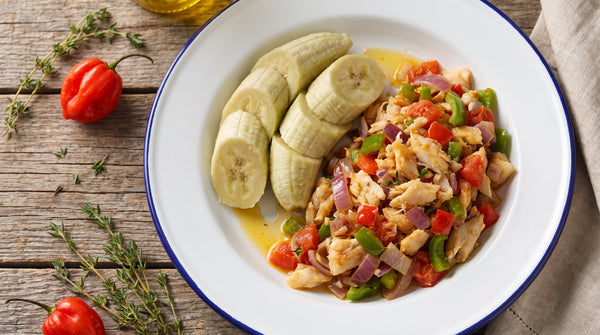
St Lucia food is Creole cooking built from French, East Indian and British influences on top of the island’s own fruit and roots. The national dish is green figs and saltfish: green bananas boiled until tender, served with salt cod cooked down with onion, tomato and peppers. Bouyon, accra, bakes and cocoa tea complete the everyday table.
Where St Lucian cuisine comes from
Before any European ship arrived, Kalinago and Arawakan-speaking peoples lived on the island and ate its fruits and roots. Then came the long tug of war. England and France fought over St Lucia 14 times, and the island changed hands again and again until the British secured it in 1814. It became independent on 22 February 1979.
The first European settlers were French, and they left more than a name. They left a language, Kwéyòl, which most St Lucians still speak, and a way of cooking that any Guadeloupean recognises: slow pots, fresh herbs, salt cod, a pepper on the side. The British left English and a taste for bread at breakfast. East Indian families brought their own spices and dishes.
That is why the island’s spice list reads like a map. Garlic, cinnamon, nutmeg, cocoa, parsley, cloves and allspice all turn up, next to thyme, spring onion and Scotch bonnet. If you want to see how the same warm spices travel across the whole region, my guide to Caribbean spices lays them out one by one.
The St Lucia national dish: green figs and saltfish
Here is the first surprise for a British visitor. A “fig” in St Lucia is not a fig. Green figs are green bananas, the unripe ones, firm and starchy, boiled in their skins or peeled and boiled like potatoes. Bananas became the island’s big crop, and they are still its main harvest.
The saltfish is salted cod, brought by Europeans and preserved to survive long ocean journeys. It became everyday food for the whole island. Cooks soak it, flake it and cook it slowly with onions, tomatoes and peppers until the kitchen smells of the sea and the garden at once. On the plate, the green figs are firm yet soft, not sweet at all, and they drink up the sauce. The tourism board says it well: this is food made to last, not to impress.
Breadfruit and saltfish is the popular alternative, and the same pairing works with almost any starchy root. If salt cod is new to you, my guide to saltfish explains how the fish crossed an ocean and how to soak it properly.

How Guadeloupe cooks the same plate
In Guadeloupe we call the green banana ti-nain, and the salt cod morue. Ti-nain morue was the food of my childhood, boiled bananas, flaked cod, garlic, lime and a little heat. When I first ate green fig and saltfish, I laughed, because it was my mother’s plate under another name.
The differences are small and they are worth tasting. St Lucian saltfish leans on tomato and sweet peppers, so it comes out redder and softer. Mine is sharper, with more garlic and a squeeze of lime at the end. Both are breakfast food, both are cheap, both fill you until lunch.
The same family likeness runs through the language. Ethnologue puts comprehension between Guadeloupean and St Lucian Creole at around 90%. The spelling gives the accent away: St Lucia writes “dj” and “tj” where we in Guadeloupe write “gy” and “ky”. If you want to hear more of it, my piece on Guadeloupe Creole has the words you will meet in the kitchen.
Green fig and saltfish is my mother's plate under another name. Two islands, one pot, a slightly different accent.
JP
Traditional St Lucia food from morning to night
Breakfast in St Lucia is serious. The Folk Research Centre lists what you find early in the morning, and it reads like a feast:
- Bakes and floats: fried dough rounds, eaten with saltfish, cheese or eggs. There are roast bakes too.
- Bread and smoked herring: local bread with saltfish or smoked herring, or herring with breadfruit for a heavier start.
- Cocoa tea: a spiced hot drink made with local cocoa, spices and milk or water, poured at breakfast.
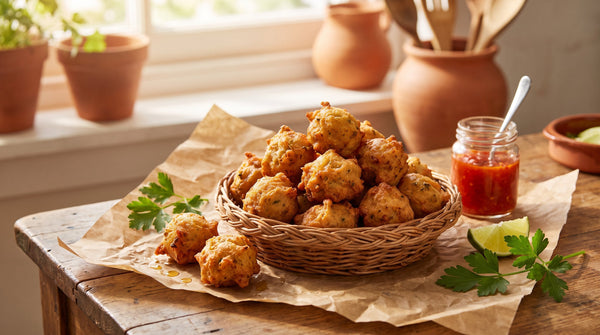
- Accra: saltfish fritters, sold by vendors and loved at Easter. Guadeloupe fries the same thing as accras de morue.
- Souse, cucumber and fried fish: the fresh, sharp side of the table.
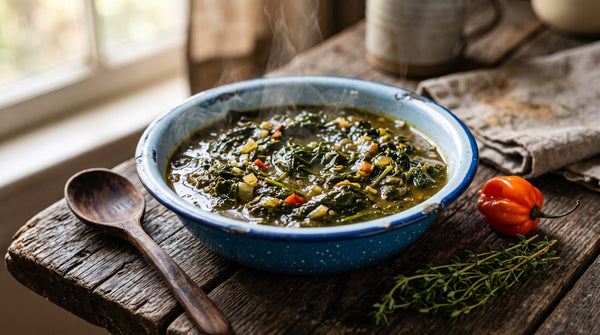
Then there is bouyon, the Saturday pot. It is a thick, one-pot soup of red beans with meat, ground provisions and vegetables, often cooked on Saturdays for the family. The Folk Research Centre notes that slow cooking gives bouyon and callaloo their best taste, and on festival days it is served in calabash bowls.
The traditional kitchen has its own words. A kanawi is an earthen pot, a chòdyè is a steel pot, and fouyé difé is the three-stones method, the pot balanced over wood or coals.
St Lucian street food: Friday fish and lambi
St Lucia eats outside on Fridays. In the fishing village of Anse La Raye, the Friday fish fry grills the day’s catch in the open air. Up north, the Gros Islet Friday night street party fills with stalls grilling snapper and mahi-mahi, and people eat standing up or at shared tables.
Look out for lambi, which is conch. Cooks pound it tender, pan-fry it and finish it Creole style with spices and vegetables. It turns up at barbecues and street parties.
For bread of a different kind, the west coast bakes cassava bread. Plas Kassav, a family bakery near Canaries, is the famous stop. Guadeloupe has its own cassava flatbreads too, and my cassava guide shows how the same root becomes flour, bread and a fierce avocado dish.

Jounen Kwéyòl and National Day: the food calendar
Two dates matter most. Jounen Kwéyòl, Creole Day, falls on the last Sunday of October and has been held every year since 1984. Cooks start as early as 4:40 in the morning, often over three stones, and most of the food is eaten from lunchtime. The table is the island’s whole story: roasted breadfruit, crab callaloo, green fig and saltfish, bouillon of red beans or lentils with pumpkin, coupe (a spiced sweetbread), cocoa tea, sorrel and golden apple juice.
The second date is coming. St Lucia’s National Day is 13 December, the feast of Saint Lucy. Her name comes from the Latin for light, so the island opens its Christmas season the evening before with the Festival of Lights and Renewal: Castries strung with lights, a lantern competition and fireworks. In Guadeloupe, Advent means chanté Nwèl and the pork pot. I like the idea of a neighbour lighting lanterns while we sing.
How to cook St Lucia food at home in the UK
You can make most of this in a British kitchen. Green bananas come from Caribbean grocers and online shops that deliver across the UK. Peel them with a small knife, because an unripe banana will not peel like a yellow one. Big supermarkets sell boneless saltfish packs; check the label for the fish.
Start with these recipes from my kitchen, all close cousins of the St Lucian table:
- My green banana and saltfish is ti-nain morue, the Guadeloupe twin of green figs and saltfish. Add tomato and sweet pepper to the saltfish and you are in Castries.
- My accras de morue are the saltfish fritters St Lucia calls accra. Make a double batch for breakfast.
- My Guadeloupe callaloo soup is the slow green pot you will find next to bouyon on Creole Day.
For bouyon, think of it as a red bean soup that eats like a meal: beans, a little salted meat, yam or dasheen, carrot, pumpkin, thyme and spring onion, all in one pot over a low heat for as long as you can wait.
The sauce I put beside it
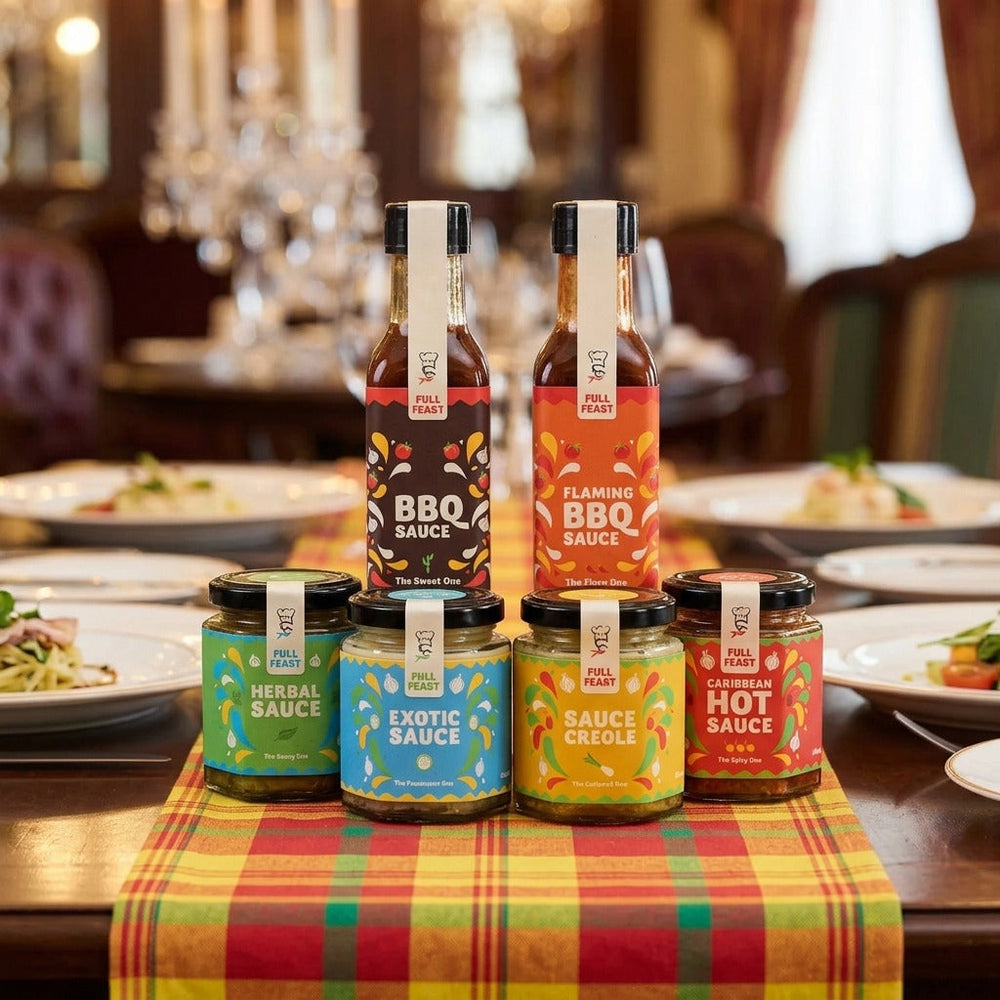
Every St Lucian table I have read about has pepper sauce on it, so people can choose their heat. That is exactly how I serve green figs and saltfish. A spoon of Full Feast Caribbean Hot Sauce on the side: Scotch bonnet, white onion and garlic, sharp with vinegar. It wakes up the saltfish and cuts through the starch of the bananas without hiding them.
Stir a little into the saltfish while it cooks if your family likes it hot. Keep the jar on the table if they do not. The same spoon works on accras, on grilled fish from the barbecue, and in the last ladle of a bean soup.
FAQ
What food is Saint Lucia known for? Green figs and saltfish above all, which is green bananas with salt cod. After that: bouyon, accra, bakes, cocoa tea, crab callaloo, lambi and grilled Friday fish.
What is Saint Lucia’s national dish? Green figs and saltfish. Boiled green bananas are served with salted cod cooked slowly with onions, tomatoes and peppers. Breadfruit and saltfish is a popular alternative.
Why are green bananas called figs in St Lucia? It is simply the local name. A green fig in St Lucia is an unripe banana, cooked as a starch, and a green fig salad is made with green bananas, not figs.
What is bouyon in St Lucia? A thick one-pot soup of red beans with meat, ground provisions and vegetables, cooked slowly and often made on Saturdays for the family.
Is St Lucian food spicy? The cooking itself is fragrant rather than fiery: thyme, garlic, spring onion and warm spices. The heat comes from Scotch bonnet and pepper sauce, usually on the table so everyone adds their own.
One small thing to try this week
Buy four green bananas and a small pack of saltfish. Soak the fish the night before, changing the water once or twice.
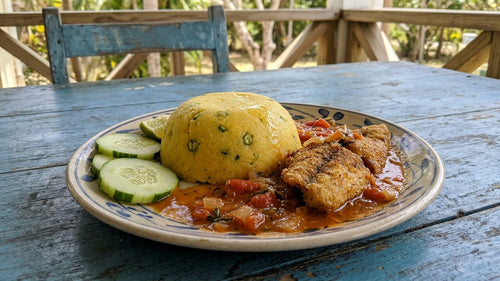
The next morning, boil the peeled bananas until a knife slides in. Flake the fish into a pan of softened onion, tomato and sweet pepper, and let it cook down slowly. Put the two side by side with sliced cucumber and avocado, and a little hot sauce for whoever wants it.
That is breakfast in St Lucia, and breakfast in my mother’s kitchen too. Eat it slowly. It was made to last.
JP