The Christmas Legume Guadeloupe Calls Pois d’Angole, and How I Cook It
In my mother’s kitchen there was one smell that told you Christmas was close, even before the singing started. Pigeon peas. Pois d’Angole, we say back home in Guadeloupe. A big pot of them on the stove, slowly going soft, while the pork waited its turn.
The rest of the year, we ate red beans, lentils, every kind of pea you can name. But pois d’Angole belonged to December. When you saw them in the market and in the pot, you knew.
In Britain, most people have never cooked one. Some know them as gungo peas from a Jamaican pot of rice and peas. Others have bought split toor dal without knowing it is the same plant. So let me tell you what pigeon peas are, why they carry so many names, and how I cook them when the cold comes and I want a little Christmas from home.
What are pigeon peas?
Pigeon peas are the seeds of Cajanus cajan, a woody, drought-hardy shrub of the pea family. They are eaten young and green as a vegetable, or dried as a pulse. Small, round and mild, with a nutty taste, they are called gungo peas in Jamaica, gandules in Puerto Rico and pois d’Angole in Guadeloupe.
What is another name for pigeon peas?
This is the question everyone asks, and the honest answer is: it depends on which island, or which continent, you are standing on. Few foods have collected as many names.
- Pois d’Angole: Guadeloupe, Martinique and the rest of the French Caribbean. In our Creole you will also hear pwadibwa, and in French pois cajan or pois-congo.
- Gungo peas: Jamaica, and the Jamaican shops of London and Birmingham.
- Gandules or guandules: Puerto Rico and the Dominican Republic.
- Pwa kongo: Haiti.
- Arhar, tur or toor: India, where the split, skinned seed is toor dal.
- Congo pea, Angola pea, red gram, no-eye pea: older English names you still see on packets.
The English name probably comes from Barbados, where the seeds were used to feed pigeons. And the African names, Angola and Congo, are not an accident. They point to where the plant was grown before it crossed the Atlantic, and to the people who carried it. The Spanish word gandul itself comes from Kikongo or Kimbundu, languages of Central Africa.
So when my mother said pois d’Angole, the pea of Angola, she was saying a whole history in two words without thinking about it.
Where pigeon peas come from
The plant is old. India is thought to be its first home, and it was being farmed in peninsular India by at least 2800 BCE. Seeds have been found in Egyptian tombs from around 2200 BCE, so it reached Africa early, and West Africa became a second great centre for it.
From Africa it came to the Americas around the 17th century, through the transatlantic slave trade. That is how a pea from India ended up as the Christmas dish of a small island in the French Caribbean.
The genus name, Cajanus, has travelled too. It comes from the Malay word katjang, which simply means legume.

The plant: a shrub, not a vine
People expect a pea to climb. This one does not. The pigeon pea grows as a woody shrub, usually one to two metres tall and sometimes up to four. It is a short-lived perennial: it can keep going for a few years, though farmers often treat it as an annual.
What makes it special is how little it asks for. It is very drought resistant and will grow where less than 650 mm of rain falls in a year. Like other legumes, it fixes nitrogen from the air, so it feeds the soil it stands in. You can understand why it travelled so well across hot, dry places.
The young seeds inside the pods are green with small brown flecks. Left on the plant, they dry hard. Most of the world’s crop is harvested dry, and India grows by far the most, with about 72% of the world’s pigeon pea fields.
What do pigeon peas taste like?
Milder than a kidney bean and firmer than a lentil, with a gentle nutty flavour. The fresh green ones are the sweetest. To me they sit somewhere between a garden pea and a young broad bean, and they hold their shape in the pot.
Dried pigeon peas are deeper in flavour. Even when they are fully cooked, the skin stays a little firm and the pea stays whole. That is exactly why we love them in rice: they do not collapse into mush, they sit in every spoonful like small jewels.
Split toor dal is another thing again. With the skin removed it simmers down soft, and it is one of the most loved pulses in Indian dal.
A pea that came from India, through Africa, to my mother's Christmas pot. Every spoonful carries the whole journey.
JP
Pois d’Angole at Christmas in Guadeloupe
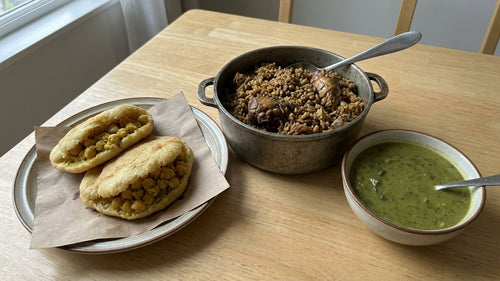
In Guadeloupe and Martinique, pois d’Angole is the classic side for the Christmas main dish, and we eat it almost only at that time of year. That is what makes it precious. You wait eleven months for it.
The French Antilles Christmas table is a pork table. Boudin, pâté and ragoût, the pork stew, are the dishes of resistance, and the ham comes out too. Pois d’Angole sits next to the ragoût, cooked with rice or on its own in a sauce, sometimes in a soup with a few pieces of salted meat. You can read the rest of the menu in my piece on what Christmas in the Caribbean actually tastes like. Yams often share the plate, and if you have never cooked one, start with my guide to what a yam is and why it is not a sweet potato.
The demand is real. On Christmas Eve 2022, cooks in Guadeloupe were reported struggling to find local pois d’Angole at the markets. Everyone wants them in the same week. In Anse-Bertrand, the town and the Parc national de la Guadeloupe even hold a Journée des Pois, a day for the island’s peas.

Pigeon peas across the islands
Guadeloupe is not alone. Across the Caribbean, this pea turns up at the festive table again and again:
- Puerto Rico: arroz con gandules, rice with pigeon peas and sofrito, especially at Christmas.
- Jamaica: rice and peas made with gungo peas instead of kidney beans, again especially at Christmas.
- Dominican Republic: moro de guandules, rice and green pigeon peas, a holiday dish.
- Trinidad and Tobago, Grenada: pelau, a one-pot of rice, pigeon peas and beef or chicken, sometimes with pumpkin. If Trinidad’s table interests you, my piece on Caribbean roti tells another part of its story.
- The Bahamas: peas ‘n rice, made with dried, light brown pigeon peas.
Different languages, different spices, the same little pea holding the party together.
Are pigeon peas beans?
In the kitchen, we treat them like beans, and in Jamaica every bean is called a pea anyway. Botanically, pigeon peas, garden peas, chickpeas and kidney beans are all legumes from the same big family. The pigeon pea is its own species, Cajanus cajan, so it is neither a garden pea nor a chickpea, whatever the tin says.
How long do pigeon peas need to soak?
It depends which kind you bought:
- Tinned green pigeon peas: no soaking at all. They are canned fresh and cooked. Drain, rinse and use, like any tinned pulse.
- Dried whole pigeon peas: soak for at least six hours, or overnight. Drain, cover with fresh water and simmer until tender, about 45 minutes to an hour. They will stay a little firm outside, which is normal. Unsoaked, they need two hours or more.
- Toor dal (split): no soaking needed. Rinse well and simmer, covered, for about 45 minutes until soft.
Always cook dried pulses all the way through before eating, and keep the cooking water if you are making rice: it carries the flavour.
How to cook pigeon peas
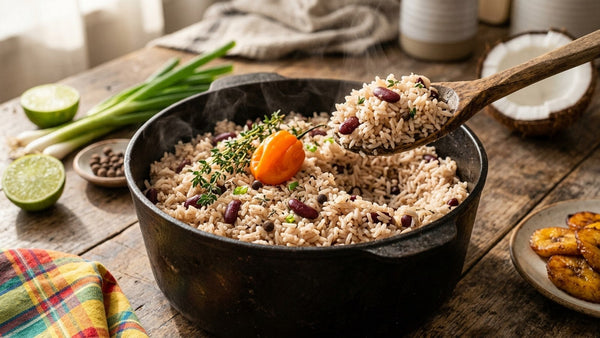
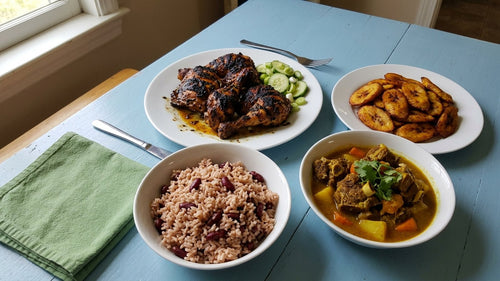
The easiest way in is a pot of rice and peas. My rice and peas recipe uses red kidney beans, but swap in a drained tin of gungo peas and you have the Jamaican Christmas version: coconut, a whole Scotch bonnet, and peas that stay whole.
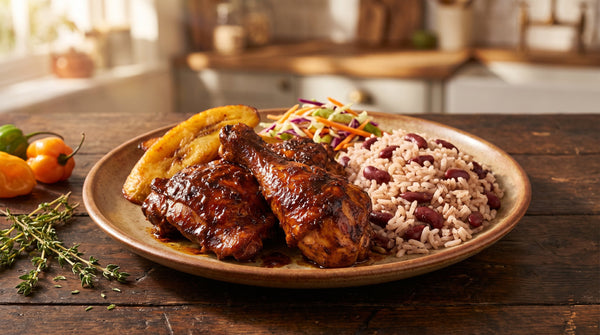
For a full Sunday plate, put that rice next to my jerk chicken with rice and peas, and use pigeon peas in the rice.
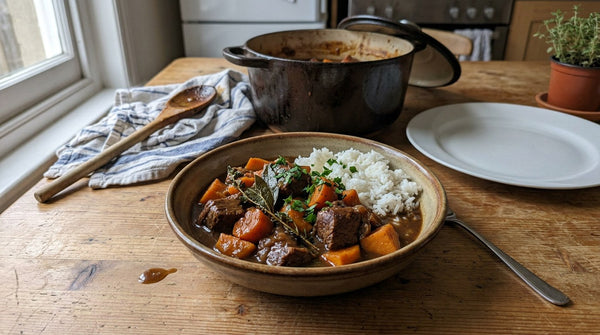
And for the Guadeloupe way, you need a slow stew beside them. Our Christmas ragoût is pork, but the method is the same as my mother’s Caribbean beef stew: brown the meat well, add onion, garlic and herbs, then let it go low for hours. Serve the pois d’Angole with white rice and spoon the stew sauce over both.
The heat I add to the pot
When I cook pois d’Angole on their own, I start with onion and garlic softened in a little oil, add the cooked peas with some of their water, and let them simmer until the sauce thickens. A thyme sprig and a spring onion go in with them.
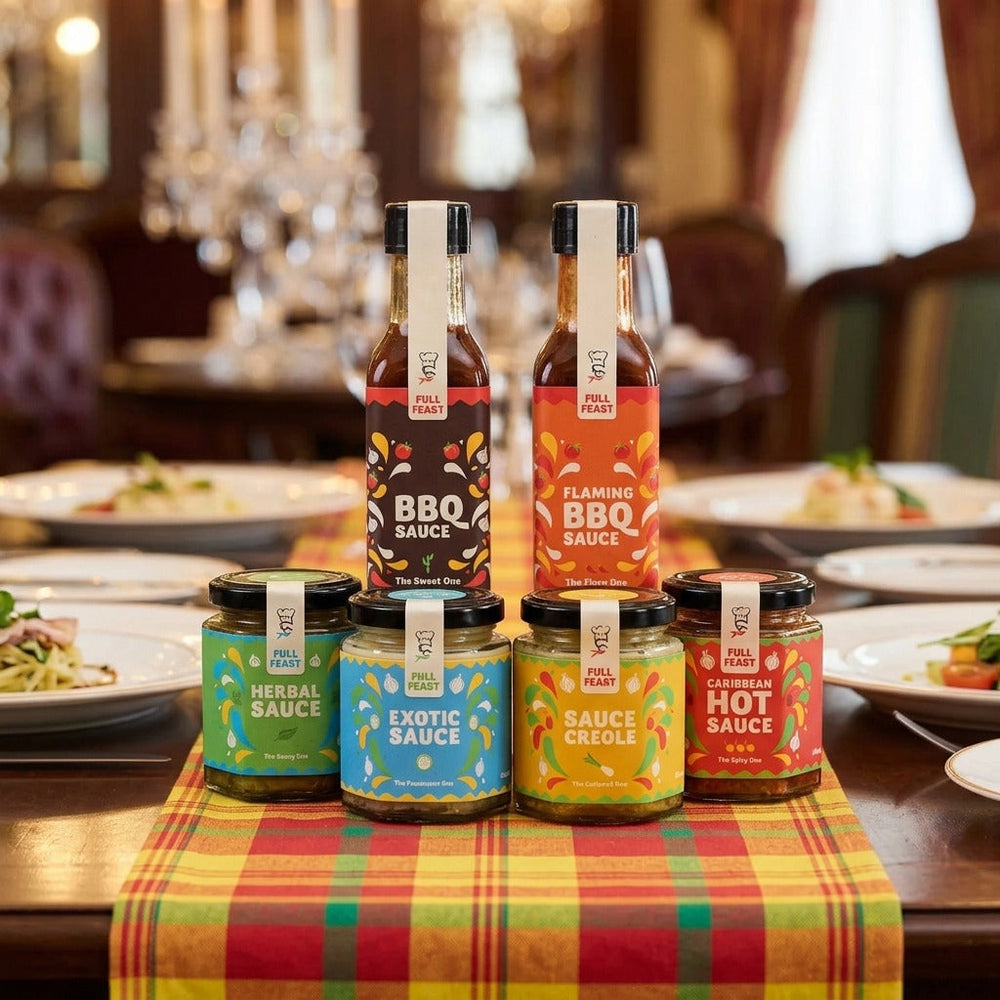
Then, at the end, the heat. I stir a spoonful of Full Feast Caribbean Hot Sauce through the pot. It is mostly Scotch bonnet and white onion, with garlic, so it brings fire and sweetness together without hiding the nutty taste of the peas. Start with one spoon, taste, then decide. Mild peas take heat beautifully, but you want to taste the peas, not only the chilli.
FAQ
What are pigeon peas called in the UK?
Most often pigeon peas or gungo peas, the Jamaican name. In Indian shops you will find the split form as toor dal, arhar dal or tuvar dal.
What do pigeon peas taste like?
Mild and nutty. Green ones are sweet and tender, dried ones earthier with a firm skin that keeps them whole in rice.
How long do pigeon peas need to soak?
Dried whole pigeon peas need at least six hours, or overnight. Tinned ones need no soaking, and split toor dal only needs a rinse.
Are pigeon peas the same as chickpeas?
No. Both are legumes, but the pigeon pea is a different plant, Cajanus cajan, with its own small, round seed and a milder, nuttier taste.
What is green tuvar in English?
Green tuvar, or green toor, is the fresh green pigeon pea. Tuvar is one of its Indian names.
At Christmas in Guadeloupe, rice with pigeon peas always sits next to the ragoût, so if you are cooking the peas, make my Caribbean pork stew to go with them.
One small thing to try this week
Buy one tin of green pigeon peas. They sit in the world food aisle, usually near the coconut milk, and cost very little.
Next time you cook rice, drain the tin into the pot with the rice, a little coconut milk, a sprig of thyme and a pinch of salt. Cook it as usual. Then taste a spoonful with a drop of hot sauce and imagine a warm night, a chanté Nwèl going on next door, and a pot of pork ragoût waiting.
That is my Christmas. I hope it becomes a little bit of yours.
JP