The Rough Brown Tuber Guadeloupe Calls Igname, and Why It Is Not a Sweet Potato
The first time someone in London offered me “yams”, they put a tray of orange sweet potato wedges in front of me. I ate them, they were good, and I said nothing. But I was thinking of my mother’s kitchen, and of a very different thing.
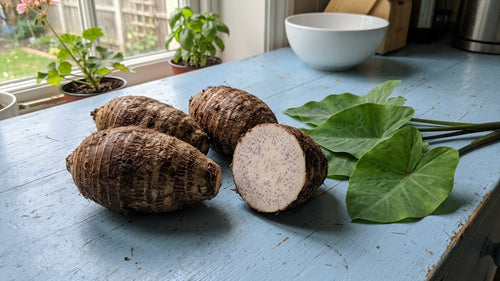
Back home in Guadeloupe a yam is igname. It comes home from the market long, heavy and knobbly, with bark-like brown skin and earth still stuck to it. My mother peeled it at the sink, cut the white flesh into thick pieces and boiled it in salted water until a knife slid through. Then it sat on the plate next to fish, or stew, or whatever was in the pot that day, and soaked up the sauce.
So when people in the UK ask me what is a yam, I understand the confusion. Two different vegetables share one name. Let me show you the real one, how we cook it, and where you can find it here.
What is a yam?
A yam is the starchy tuber of a climbing plant from the genus Dioscorea. It has rough, brown, bark-like skin and white, yellow or purple flesh, and it must always be cooked. A yam is not a sweet potato: the two plants belong to different families.
A big family of tubers
There are around 870 known species of yam. Only a handful are grown for food, and the ones you will meet most often are these:
- White yam (Dioscorea rotundata), native to Africa. White flesh, firm, the classic for boiling and pounding.
- Yellow yam (Dioscorea cayenensis), also native to Africa, with yellow flesh.
- Water yam (Dioscorea alata), also called greater yam, winged yam or purple yam. Its flesh can be white or purple.
- Cush-cush (Dioscorea trifida), native to the Caribbean and Central and South America. In Guadeloupe we call it igname cousse-couche.
The plant is related to lilies and grasses, not to the potato. Most of the world’s yams, about 95 per cent, are grown in Africa, mainly in West Africa. A white yam tuber usually weighs 5 to 10 kg, which is why at the market in Pointe-à-Pitre you often buy a piece cut from a bigger one, not the whole thing.
Even the word travelled. The English “yam” seems to come from the Portuguese inhame or the Canarian Spanish ñame. In French it became igname, and that is the word I grew up with.
Yam vs sweet potato: the difference
This is where Britain gets confused, and America too. Sweet potato is a different plant altogether: Ipomoea batatas, from the morning glory family. The potato is a third family again, the nightshades. Three tubers, three families.
In North America, sweet potatoes are often sold as “yams”. The US rules even require any label that says yam to say sweet potato too. The name probably came from enslaved Africans, who saw that some sweet potatoes looked like the yams they knew at home. The word crossed the Atlantic and stuck to the wrong vegetable.
You can tell them apart in your hand:
- Skin. A real yam has rough, brown, scaly skin, almost like bark. Sweet potato skin is thin and smooth.
- Flesh. Yam is dry and starchy. Sweet potato is moist and creamy.
- Taste. Yam is mild and earthy with only a little sweetness. Sweet potato is properly sweet.
- Size. A yam can be much bigger and heavier than any sweet potato.

So what are yams called in the UK? Mostly yams, but in a supermarket that word on a recipe often means sweet potato. If the recipe is American, it almost certainly does. If it comes from West Africa or the Caribbean, it means the real thing.
What does a yam taste like?
Gentle. That is the first word I would use. A boiled yam tastes earthy, a little nutty, with only a soft trace of sweetness. The texture is firmer and drier than potato, a little floury at the edges, smooth in the middle.
That gentleness is the whole point. Yam is not the star of the plate. It is the thing that carries the star: the sauce of a fish stew, the gravy of a pork ragoût, a spoonful of something green and sharp on top. If you expect the sweetness of a sweet potato, you will be disappointed. If you treat it as the starch that holds the meal together, you will understand why we love it.
A yam is never the star of the plate. It is the thing that carries the star.
JP
Igname in Guadeloupe
At home, igname is everyday food and celebration food at the same time. It sits in the market next to sweet potato, green bananas, breadfruit and dasheen, and every cook has a favourite. Farmers in Guadeloupe grow several varieties, and research on the island found that taste and cooking quality are what decide which ones they plant. The research centre Cirad has also spent years selecting new varieties for local growers.
My mother had strong opinions. Some yams went soft and floury, perfect for mashing with butter. Others stayed firm, good for a stew. The little cousse-couche was the one people talked about with a smile.
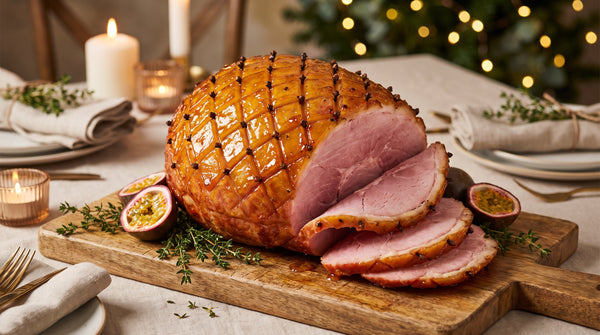
Then there is Christmas. The Guadeloupe Christmas table is pork: the glazed Christmas ham, boudin créole, a slow pork ragoût, rice with pigeon peas, accras, and yams. If you want to know more about that December table, I wrote about it in Christmas in the Caribbean. And if you want to meet the other roots and fruits from that basket, start with my guide to breadfruit, which we cook almost the same way.

Where to buy yam in the UK
In an ordinary supermarket you are almost always buying sweet potato, whatever the sign says. For a real yam, go where the cooks go:
- African and Caribbean grocers. Ask for white yam or yellow yam. They will often cut a piece from a large tuber for you.
- International and market stalls in cities with West African or Caribbean communities.
- Look at the skin. Rough, brown and bark-like means yam. Smooth and coppery means sweet potato.
Choose a piece that feels heavy and hard, with no soft patches or mould at the cut end. Stored well, yam keeps longer than most roots. I keep mine somewhere cool, dark and dry and use it within a week or two. Once it is cut, wrap the end and use it within a few days.
How to cook yam
Yam must always be cooked. Some raw yams contain compounds that are not safe to eat, and cooking takes care of them. Some varieties also make your hands itch when you peel them, because of tiny crystals in and under the skin. I wear thin gloves.
My basic method:
- Peel thickly. Use a sharp knife, not a peeler. Take off all the brown skin and the layer just under it.
- Cut into big pieces, about the size of an egg, and drop them into cold water as you go so they do not discolour.
- Boil in salted water for 20 to 30 minutes, until a knife slides in with no resistance.
- Drain and steam dry for a minute in the pan. Then serve, mash or fry.
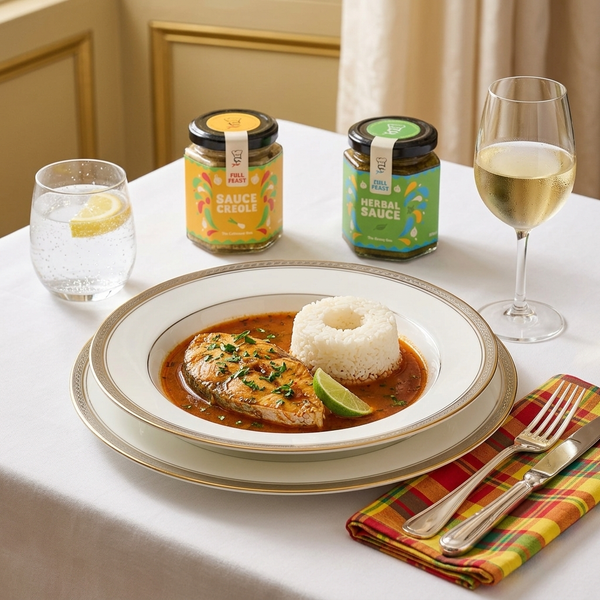
Boiled yam is the start. In West Africa it is also roasted, fried and pounded in a mortar into a thick, smooth paste. In my kitchen it goes beside a stew. It is perfect with my mother’s Friday court-bouillon de poisson, where it drinks up the sauce. Try it in place of the potatoes in poulet colombo: add the yam pieces at the same moment and they will hold their shape a little better. And at Christmas, boiled yam is the natural partner for a glazed Caribbean ham.
The sauce I spoon over boiled yam
A plate of plain boiled yam needs something sharp and green on top. Back home that is often a fresh herb sauce, spooned straight from the bowl.
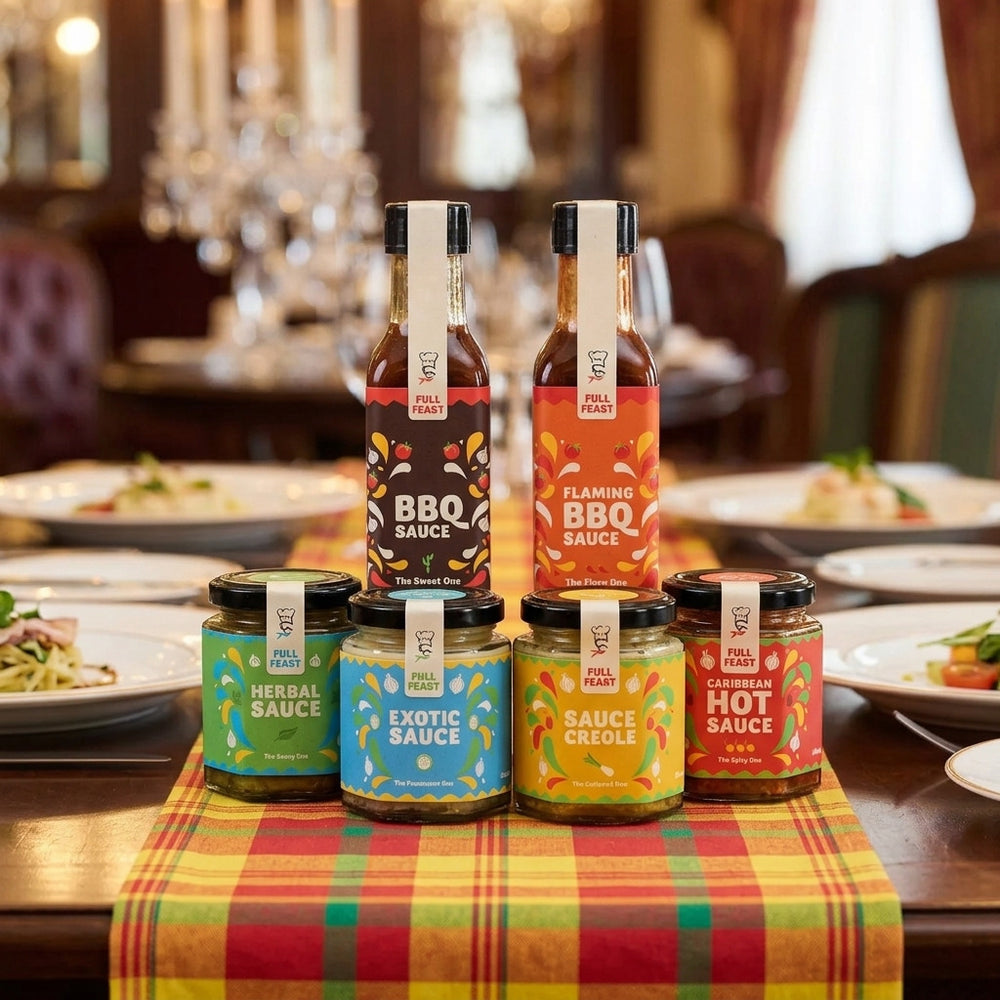
At home in London I use our Fresh Herbal Sauce. It is made mostly of shallots, with basil, coriander, French mustard, white wine vinegar and black pepper. There is no chilli in it, so it suits everyone at the table, children included. The vinegar and shallot cut through the starch, and the herbs make the whole plate taste fresh. A spoonful over hot yam, a piece of grilled fish beside it, and you have a Guadeloupe lunch.
FAQ
Is a sweet potato and a yam the same thing? No. A yam is a Dioscorea tuber, with rough brown skin and dry, starchy flesh. A sweet potato is Ipomoea batatas, from the morning glory family, with thin skin and sweet, moist flesh. In North America sweet potatoes are often sold as yams, which is where the confusion comes from.
What are yams called in the UK? Yams. But in supermarkets and in American recipes the word often means sweet potato. For a true yam, look in African and Caribbean grocers for white yam or yellow yam.
What is yam called in French? Igname. In Guadeloupe we also have igname cousse-couche, the small yam native to the Caribbean and South America.
Can you eat yam raw? No. Always peel and cook yam. Some raw yams contain compounds that are not safe to eat, and the skin of some varieties makes your hands itch.
What does yam taste like? Mild, earthy and only lightly sweet, with a dry, starchy texture firmer than potato. It is a quiet starch that takes on the flavour of whatever sauce it sits in.
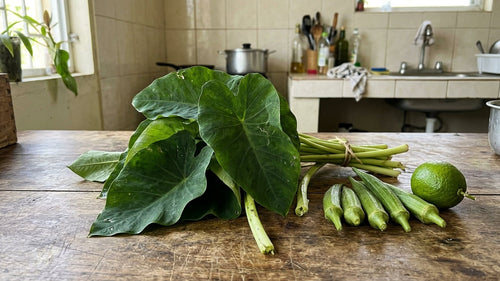
Next to the yams on that stall you will always find dasheen, and I wrote a whole piece on dasheen, the taro root we call madère.
One small thing to try this week
Go to an African or Caribbean grocer and ask for a piece of white yam, about the size of your forearm. Feel the skin. Notice how heavy it is for its size.
Take it home, peel it thick, boil it in salted water and eat it hot with a little butter and salt. Nothing else. Then you will know the real yam, before you ever put it next to a stew.
JP