Saltfish, Bakes and Cocoa Tea, a Morning Tour of the Islands From a Guadeloupe Kitchen
When people in England ask me what a Caribbean breakfast looks like, I think they expect a bowl of fruit. Mango, papaya, a glass of juice. And yes, there is fruit. But the breakfast I grew up with in Guadeloupe was something else entirely: the smell of salt cod frying, green bananas boiling in a big pot, and a cup of something hot and strong.
That is the secret most visitors miss. In the islands, breakfast is often a proper cooked meal. Savoury, filling, made to carry you through a long morning of work in the heat.
So let me take you on a little tour. Island by island, plate by plate, from Jamaica to Trinidad, Barbados, St Lucia, Haiti and home to Guadeloupe. You will see the same thread running through all of them, and by the end you will know exactly what to cook next Sunday morning.
What is a traditional Caribbean breakfast?
A traditional Caribbean breakfast is usually a cooked, savoury meal built around salt cod (saltfish), served with something starchy: fried bakes, dumplings, boiled green bananas, plantain, breadfruit or bread. Each island has its own version, from ackee and saltfish in Jamaica to doubles in Trinidad, with cocoa tea or strong coffee to drink.
Why saltfish is on almost every breakfast table
You cannot talk about a Caribbean breakfast without talking about salt cod. It turns up in Kingston, Port of Spain, Castries, Port-au-Prince and Pointe-à-Pitre, each time in a different outfit.
The reason is history, and not a happy one. Salt cod kept for months without spoiling and it was cheap, so it was shipped to the islands to feed enslaved workers on the plantations. After slavery ended, it stayed on the table. People had learned to make it delicious, and it became part of who we are.
I tell the whole story in my piece on saltfish, the salted cod that crossed an ocean. For breakfast, what matters is this: the fish is soaked or boiled to draw out the salt, then flaked and cooked with onion, peppers, herbs and chilli. From there, every island goes its own way.

What do Jamaicans eat for breakfast?
Jamaica’s national dish is a breakfast dish. Ackee and saltfish is salt cod sautéed with boiled ackee, onion, Scotch bonnet and tomato. The ackee, Jamaica’s national fruit, came originally from West Africa.
It is usually eaten with breadfruit, fried dumplings, hard dough bread or boiled green bananas. A typical Jamaican breakfast may also include seasoned callaloo, the leafy green, and you will often see baked beans, a British habit, and porridge, which came with Scottish influence.
One word of care. Ackee must be fully ripe and open on the tree before it is picked and cooked, never forced. My explainer on ackee, Jamaica’s national fruit tells you why and how to buy it safely in the UK, where it usually comes in tins.
Then there is mackerel run down: salt mackerel cooked in coconut milk with pimento, thyme, Scotch bonnet, onion and scallion. The name comes from the coconut milk being cooked down until it thickens. It is served with boiled yam, breadfruit, dumplings or green banana, and it is the kind of breakfast that makes you want to go back to bed afterwards.
What do Trinidadians eat for breakfast?
Trinidad has, for me, the most exciting breakfast in the Caribbean, because it brings together everyone who made the island.
First, doubles. Two soft fried breads called bara, filled with curried channa (chickpeas), then topped with pepper sauce and chutneys: kuchela, tamarind, mango, cucumber. Doubles is one of the most popular breakfast foods on the island, and people eat it all day. I wrote more about it in my guide to Trinidad food, from doubles to pelau.

Then the Indo-Trinidadian breakfast: sada roti, a simple bread of flour, baking powder and water cooked on a flat iron pan called a tawa. It comes with chokhas, roasted and mashed vegetables. Baigan chokha is aubergine, and there is also tomato chokha and aloo chokha with potato.
And then bake. Fried bake with saltfish, smoked herring, fried plantain or corned beef. Coconut bake with accra, the saltfish fritters. Or buljol: boiled, flaked saltfish with onion, sweet pepper, tomato, lime juice and hot pepper, sometimes with boiled egg. At weekends, people head to Maracas Beach and Store Bay for bake and shark. To drink, cocoa tea.
Every island has its own way with salt cod in the morning. Taste them all and you have tasted our whole history on one plate.
JP
Barbados and St Lucia: bakes, fish cakes and green figs
In Barbados, bakes were once seen as a survival food, because they need so little: flour, a raising agent, a hot pan. Today they are a breakfast tradition. Bajan fish cakes are the other star. Salt cod is flaked and mixed into a batter of flour, baking powder, onion and herbs, then fried by the spoonful and eaten hot with Bajan pepper sauce. At Cheapside market in Bridgetown, you will find them sold with salt bread.
St Lucia’s national dish is green figs and saltfish, and “figs” there means green bananas, not the fruit you know. Breakfast is fried bakes, roast bakes or floats, bread with saltfish, smoked herring, breadfruit and saltfish, and a cup of cocoa tea, a spiced hot cocoa drink. If you want the full picture, read my guide to St Lucia food, green fig and saltfish.
Haiti: mòri and boiled plantain
Haiti’s breakfast feels very close to ours. Mòri ak bannann bouyi is salt cod, boiled, flaked and sautéed with onion, pepper, garlic and thyme, eaten in the morning with boiled plantain.
Then a surprise for many visitors: espageti, Haitian spaghetti cooked with hot dogs, a common breakfast. And on 1 January, the first meal of the year is soup joumou, the pumpkin soup UNESCO has inscribed on its list of intangible cultural heritage. It is also eaten as a Sunday breakfast.
A Guadeloupe breakfast: ti-nain morue, accras and spiced cocoa
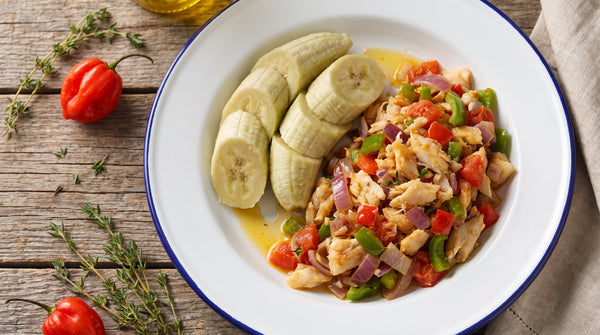
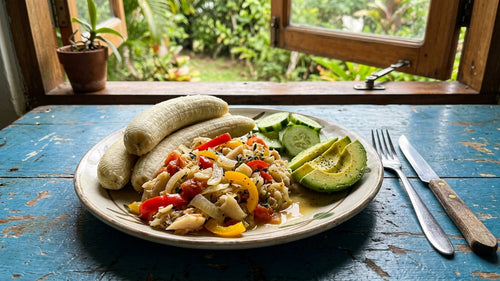
And now home. In Guadeloupe, ti-nain means green banana and morue means salt cod. Ti-nain morue is exactly what it sounds like: boiled green bananas with salt cod, dressed with onion, oil and chilli. It is the breakfast I grew up on, and I still make it the same way today.
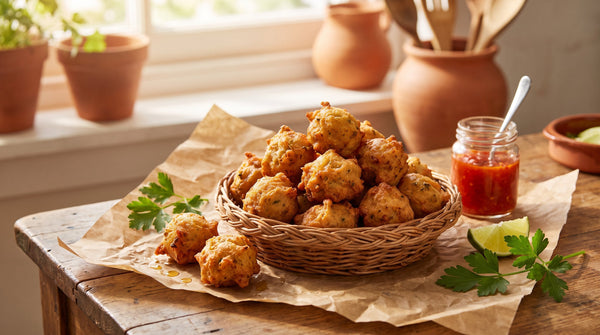
Accras, our salt cod fritters, are a daily staple, served hot with lime or a spicy sauce. Then there is chiquetaille, grilled salt cod flaked with peppers, eaten in Guadeloupe and Martinique, sometimes with accras or simply on toasted bread.
Being French islands, we also have the bakery. A breakfast in Guadeloupe can be tropical fruit, French pastries, or accras with a strong coffee. Coffee was introduced in 1721 by Gabriel de Clieu, and people in Guadeloupe drink it at breakfast and all through the day.
But my favourite morning drink is cocoa. In Guadeloupe it is traditionally made from grated sticks of cocoa, bâton kako, for a thick drink infused with cinnamon, nutmeg and sometimes a drop of bitter almond essence. It is a signature of Christmas, but we drink it all year, ideally with a piece of pain au beurre, our soft butter bread.
How to cook a Caribbean breakfast at home
The good news is that you do not need a Caribbean market to make any of this. Salt cod, green bananas, plantain and tinned ackee are all sold in Caribbean and African grocers, and many larger supermarkets carry some of them too.
Here is where I would start:
- Ti-nain morue. My green banana and saltfish is the simplest Caribbean breakfast there is, and the most comforting.
- Accras. Make a batch of my accras de morue, the saltfish fritters my mother fried every Sunday, and eat them warm with coffee.
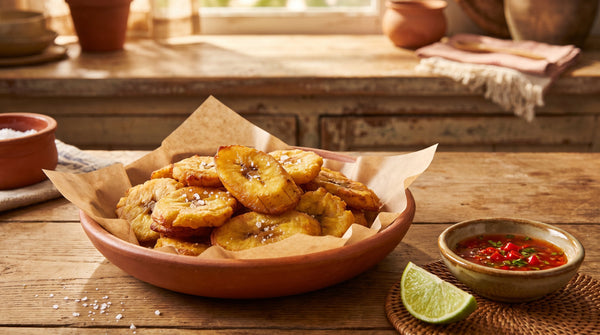
- Fried plantain. My bananes pesées, twice-fried plantain, go beside any saltfish dish, from buljol to ackee.
Plan ahead with the salt cod. Soak it the night before, changing the water a few times, and taste a flake before you season. Most of the work is done while you sleep.
A little heat in the morning
Almost every breakfast on this tour comes with chilli somewhere. Scotch bonnet in Jamaica’s ackee and saltfish. Pepper sauce on Trinidad’s doubles. Bajan pepper sauce with fish cakes. In Guadeloupe, a spicy sauce beside the accras.
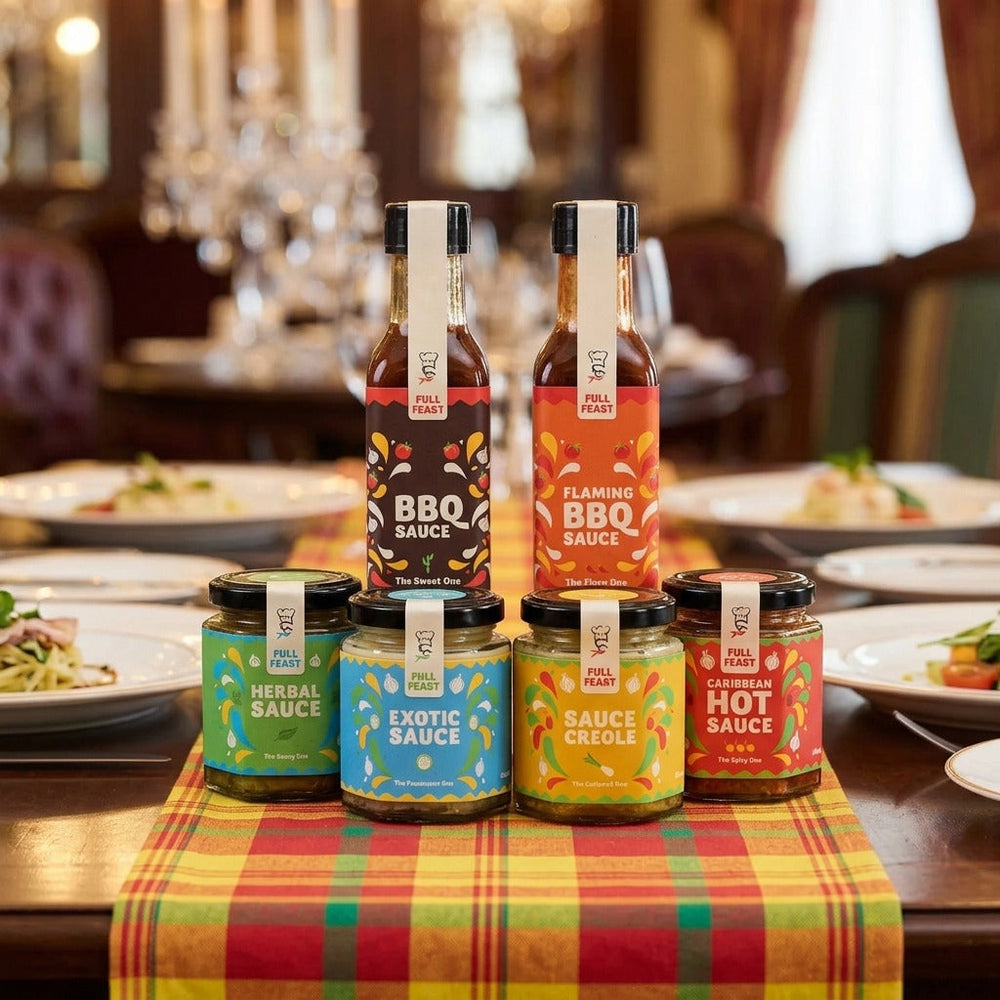
On a weekday morning in England, I do not always have time to chop a Scotch bonnet. So I reach for a bottle. Our Caribbean Hot Sauce is made with Scotch bonnet, white onion and garlic, and a few drops on flaked saltfish or a hot accra give you that island heat in a second. Start with less than you think. You can always add more.
FAQ
What is a traditional Caribbean breakfast? Usually a cooked, savoury plate built around salt cod, with bakes, dumplings, boiled green banana, plantain or breadfruit on the side. Ackee and saltfish in Jamaica, doubles or bake and saltfish in Trinidad and ti-nain morue in Guadeloupe are classic examples.
What do Trinidadians eat for breakfast? Doubles, sada roti with chokhas, fried bake or coconut bake with saltfish or buljol, and on weekends bake and shark at the beach. Cocoa tea is a common breakfast drink.
What do most Jamaicans eat for breakfast? Ackee and saltfish, the national dish, often with fried dumplings, boiled green bananas, breadfruit or hard dough bread. Callaloo, mackerel run down, porridge and baked beans are common too.
What is cocoa tea? A hot spiced cocoa drink, popular at breakfast in Trinidad and St Lucia. In Guadeloupe we make a thick cocoa from grated cocoa sticks with cinnamon and nutmeg.
Why is saltfish eaten for breakfast in the Caribbean? Salt cod kept for months and was cheap, so it was shipped to the islands to feed enslaved workers. It stayed on the table after slavery ended and became a breakfast staple on almost every island.
One small thing to try this week
Buy a piece of salt cod this week and put it in a bowl of water on Friday night. Change the water before bed and again in the morning.
On Saturday, boil a few green bananas, flake the fish, soften an onion in oil, and put it all together with a little chilli. That is ti-nain morue, and that is my childhood on a plate.
Make a strong coffee or a cocoa with a pinch of cinnamon, sit down, and take your time. In the islands, nobody rushes breakfast.
JP