The Rum-Soaked Christmas Loaf of Jamaica and Trinidad, Seen From a Guadeloupe Kitchen
The first time someone handed me a slice of black cake, I thought it was chocolate. It was dark, almost the colour of coffee grounds, and so heavy for its size that the plate dipped in my hand. Then I tasted it. Rum, molasses, raisins and prunes, all melted together into something between a cake and a pudding.
I grew up in Guadeloupe, and black cake is not our cake. Back home, December tastes of shrubb, the white rum my family left to steep with citrus peel from October, and of coconut blanc-manger. Black cake belongs to our English-speaking neighbours: Jamaica, Trinidad and Tobago, Guyana, Grenada. I met it properly here in Britain, where Caribbean families have kept it at the centre of Christmas.
So this is a Guadeloupe cook’s guide to someone else’s treasure. What it is, where it came from, why it is so dark, and how to bake one in a UK kitchen before the 25th.
What is black cake?
Black cake is a dense, dark Christmas cake from the English-speaking Caribbean, made with dried fruit soaked for weeks or months in rum and wine, then baked into a butter batter coloured with browning, a burnt sugar syrup. It is also called rum cake, and it is served at Christmas and at weddings.
Where black cake comes from
Black cake is a British pudding that crossed the ocean and changed its accent. Food writers trace it to the plum pudding, and further back to the figgy pudding, that British colonisers brought to the West Indies in the 18th century. On the islands, cooks reworked those recipes with what they had.
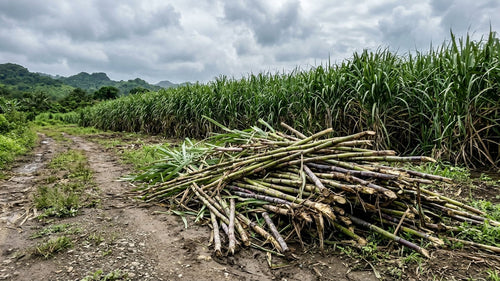
What they had was sugar and rum. The historian Jessica B. Harris puts the cake’s Caribbean character in two things: rum where a British cake would use brandy, and its very dark colour. The brown sugar, the molasses and the rum all come from cane, and the cane came from the labour of enslaved people. I wrote about that history in my post on sugar cane and how Guadeloupe uses it. It sits inside every slice.
The historian Candice Goucher describes black cake as something between an English plum pudding and a pound cake. I like that. It tells you exactly what to expect on the fork.
Is black cake the same as rum cake?
Mostly, yes. In Jamaica and across the islands, people use both names for the same Christmas cake, and you will see “Jamaican rum cake” and “Jamaican black cake” on the same recipe. Lighter rum cakes exist too, like Puerto Rico’s bizcocho de ron, a sponge made to drink up the rum, so if you want the dark one, ask for black cake.
It is also not quite a fruit cake. The fruit is soaked so long, then blended, that it almost disappears into the batter. The crumb is dense, moist and nearly grain-like.

The soaked fruit: the heart of black cake
Everything starts with the jar. Raisins, currants, prunes, cherries and citrus peel go into rum and wine, often with cherry brandy too, and the lid goes on. Some families start the next year’s jar on New Year’s Day, the moment the last cake is gone.
How long is enough? Traditionally, months. Some cooks leave it a full year. But a few days still gives you a good cake. The difference is texture: a short soak bakes more like a cake, a long soak more like a pudding, darker and wetter.
- Fruit: raisins, currants, prunes, cherries, mixed peel
- Liquor: rum and red or cherry wine, sometimes cherry brandy
- Time: a few days at the least, six months is common, up to a year
- Spice: cinnamon, nutmeg and vanilla; a Grenadian cook might add tonka bean
Browning: why black cake is black
The colour does not come from chocolate. It comes from browning, sugar cooked past caramel until it is nearly burnt, then loosened into a bitter, inky syrup. A few spoonfuls go into the batter just before it goes in the oven, and the cake comes out the colour of night.
You can buy bottled browning in Caribbean food shops across the UK. Or make your own: melt brown sugar in a heavy pan and take it to the edge of smoking, then very carefully add a splash of hot water. Stand back, because hot sugar spits. If you have neither, black treacle or molasses will give you colour and depth.
Black cake is a British pudding that crossed the ocean and came back speaking rum.
JP
How black cake is baked
Here is a straightforward version, adapted from a Trinidad family method. It makes two 20 cm cakes, one to keep and one to give away.
- Soak the fruit. 115 g each of raisins, currants, pitted prunes and mixed candied fruit, in 240 ml rum and 240 ml cherry wine mixed together. Keep back about half the liquid for feeding later. Soak a few days or as long as you can, then blend the fruit until it is a thick, rough paste.
- Make the batter. Cream 225 g butter with 225 g brown or caster sugar for 5 to 10 minutes. Beat in 5 eggs one at a time. Fold in 225 g plain flour with 2 tsp baking powder and 2 tsp cinnamon, then 2 tsp vanilla, 1 tsp almond extract and about 2½ tbsp browning.
- Add the fruit. Stir in the blended fruit. The batter should be thick enough to hold a wooden spoon upright. If the spoon falls, add a little flour.
- Bake low and slow. Lined 20 cm tins, 160°C (140°C fan), middle shelf, with a tray of water on the shelf below to keep the cakes moist. 45 to 70 minutes, until a skewer comes out clean and the cake pulls away from the tin.
- Feed it. While the cakes are still warm, pierce them all over and spoon about 3 tbsp of the reserved rum and wine over each. Do it again the next morning and the next evening. Out of the oven it looks like chocolate cake. After feeding, it turns properly black.
Wrap it tightly and keep it in a tin somewhere cool. It freezes well, wrapped, and is best eaten at room temperature in small slices. For children, many families bake a version without the alcohol.

Black cake on the Caribbean Christmas table
On Christmas Day, black cake comes after the main course, in small wedges, because it is rich. Next to it you will usually find a glass of sorrel, the red hibiscus Christmas drink, or ginger beer. Some households pour a little more rum, wine or sherry over the slices before serving.
It is also a gift. Giving someone a whole home-baked black cake is a sign of real affection. And dressed in white fondant, the same cake becomes a wedding cake in Jamaica, Trinidad and Guyana.
In Guadeloupe, our Christmas sweet table looks different: blanc-manger coco, a plain quatre-quarts, candied chadec peel, and the shrubb after midnight mass. I tell the whole December story in my guide to Christmas in the Caribbean. Two islands, two kitchens, the same love of rum and sugar.
How I eat it, and what I cook before it
Black cake is the last act. The meal before it matters, and the best Christmas mains share its flavours: rum, dark sugar, something sticky.
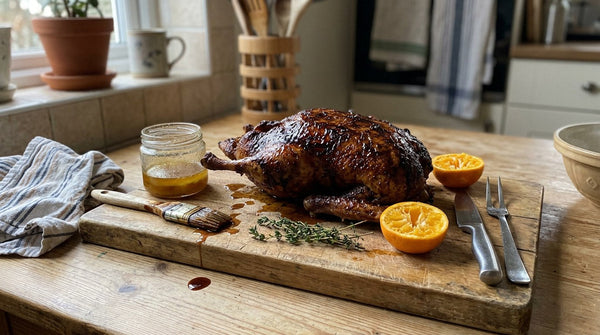
- My Caribbean roast duck with a sticky rum glaze is the bird I make when the cake is waiting on the side.
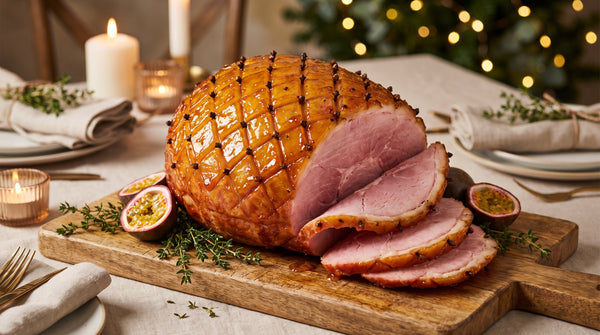
- The passion fruit glazed Christmas ham is the classic island centrepiece, and leftovers go in sandwiches all week.
- And pigs in blankets with a sticky Caribbean glaze keep everyone busy while the cake gets its last spoon of rum.
The sauce that tastes like Christmas
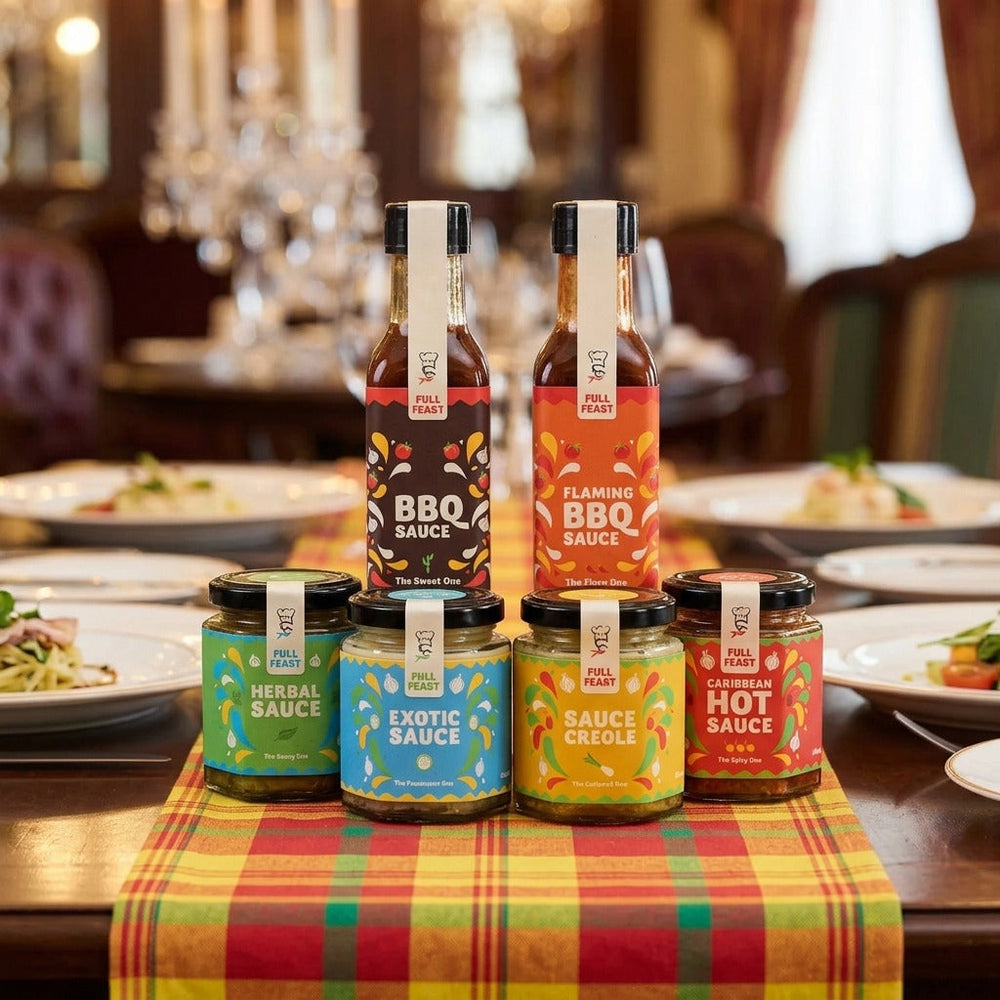
Here is something I noticed only when I put the two side by side. The things that make black cake what it is, brown sugar and rum, are also in my Full Feast BBQ Sauce, with tomato, balsamic vinegar, garlic and English mustard. There is no chilli in it, so the whole family can eat it.
Brush it on a ham or a duck in the last half hour of roasting and it turns sticky and dark, the same deep molasses note you get in the cake. Same flavours, two courses apart. Christmas holds together better that way.
FAQ
Is black cake the same as rum cake? In most of the Caribbean, yes. Black cake is often called rum cake, and Jamaican recipes use both names for the same dark, fruit-heavy Christmas cake.
Why is it called black cake? Because of its colour. Browning, a burnt sugar syrup, and long-soaked dark fruit turn the cake almost black, especially after it is fed with rum and wine.
How long do you soak fruit for black cake? Traditionally for months, and some families soak it for a year. A few days still works; the cake will just be lighter and more cake-like than pudding-like.
Is there alcohol in black cake? Yes, traditionally a fair amount: the fruit soaks in rum and wine and the baked cake is fed with more. Many families bake a version without alcohol for children.
What can I use instead of browning? Black treacle or molasses give colour and a similar bitter-sweet depth. You can also make browning at home by taking brown sugar to the edge of smoking.
Black cake is only one of our Christmas sweets, and I gathered the rest, from Guadeloupe's coconut tarts to Jamaican gizzada, in my guide to Caribbean desserts.
One small thing to try this week
Start a jar tonight. Chop a couple of handfuls of raisins, prunes and currants, put them in a clean jar, cover them with rum and red wine, and close the lid. Shake it when you walk past.
If you bake on the weekend before Christmas, that is more than a month of soaking. Not a Jamaican grandmother’s year, but enough to taste the difference. And when someone asks what is in the jar, you can tell them it is a pudding from Britain that went to the Caribbean and came home darker.
JP