Griot, Pikliz and the Soup of Freedom, Seen From a Guadeloupe Kitchen
The first time I tasted Haitian food properly, I was a young cook, and someone put a plate of griot in front of me with a heap of pikliz on the side. Fried pork, golden at the edges, soft inside, sharp with citrus. Then the pikliz: cabbage and carrot drowned in vinegar and Scotch bonnet, so hot and so bright it woke up the whole plate. I remember thinking, I know this family. I do not know this house, but I know this family.
That is how a Guadeloupean feels about Haiti. We share a Creole tongue, a French past, the same peppers and the same love of a fried plantain. But Haitian cooking has its own voice, and its own history, which is bigger than any one plate.
Creole Day falls on 28 October, and there is no better week to talk about the cooking of the country where most French Creole speakers live. So let me take you round the Haitian table, the way I would explain it to a friend in my kitchen.
What is Haitian food?
Haitian food is a Creole cuisine. It blends African, French, Indigenous Taíno, Spanish and Levantine cooking into one kitchen. It is built on rice and beans, plantain, pork, goat, chicken and fish, all seasoned with epis, a green paste of peppers, garlic and herbs, and served with pikliz, a fiery pickled slaw.
Where Haitian cooking comes from
Haiti shares the island of Hispaniola with the Dominican Republic. In Creole the country is Ayiti. On 1 January 1804 it declared independence from France, and it is the only country in history founded by a slave revolt. You cannot understand the food without that date, as you will see when we get to the soup.
The kitchen carries every layer of that story:
- The Taíno, the first people of the island. Even the word barbecue comes from their word barabicu. Akasan, a warm cornmeal drink with milk, cinnamon, vanilla and star anise, is rooted in Taíno food.
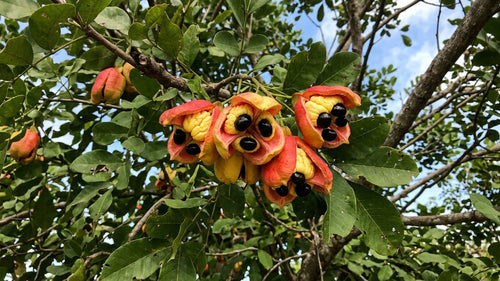
- Africa. Okra, ackee, taro and pigeon peas arrived in the colonial period, and so did whole ways of cooking.
- France. You taste it in the bread, the cheese and the desserts.
- Spain and the Levant, who left their mark too.
Haitian Creole, one of the country’s two official languages beside French, is a cousin of my own Guadeloupe Creole. If you are curious how the two differ, I wrote about it in my piece on the Creole we speak at home in Guadeloupe. And for the bigger picture of what the word Creole means on a plate, read what Creole food actually is.
Epis: where every Haitian dish starts
Before a pot goes on the fire in Haiti, there is epis. It is a green seasoning paste of peppers, garlic and herbs, especially spring onion, thyme and parsley. Cooks rub it into meat as a marinade and stir it into beans.
In Guadeloupe we have our own green base of chives, garlic, herbs and piment, so when I first saw a Haitian cook reach for the epis jar, I smiled. Different name, same instinct: season early, season green, and let it sit.

Traditional Haitian dishes to know
If someone asks me for the traditional Haitian dishes, this is my list. Not every one, but the plates you will meet first.
- Griot. Pork shoulder marinated in bitter orange and citrus with epis, braised slowly, then fried until golden and caramelised. It comes with pikliz and a sauce called sòs ti-malis.
- Diri kole ak pwa. Rice cooked with kidney beans, called the national rice.
- Diri ak djon djon. Rice cooked in a black mushroom sauce. Nothing in my Guadeloupe kitchen tastes like it.
- Diri ak sòs pwa. White rice under a smooth, thick sauce of beans cooked down and blended with garlic, thyme, epis and Scotch bonnet.
- Tassot cabrit. Fried goat.
- Légume, or legim. A thick vegetable stew of aubergine, cabbage and chayote.
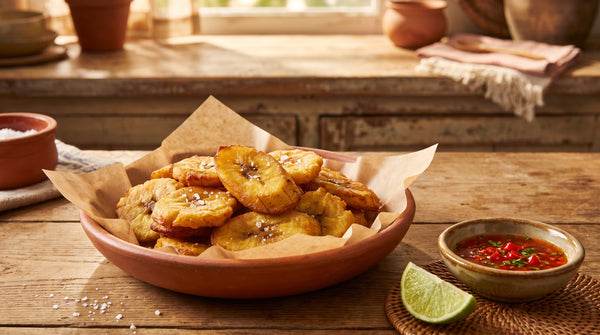
- Bannann peze. Plantain, fried, flattened and fried again.
- Pâté haïtien. Puff pastry filled with beef, salt cod, smoked herring or chicken.
- Poul ak nwa. Chicken with cashew nuts, a speciality of the north.
And on the side, almost always, pikliz.
Pikliz: the condiment on every plate
Pikliz is a slaw of cabbage, carrot, onion and Scotch bonnet, pickled in vinegar. It is on nearly every Haitian table, beside griot, fried plantain, fried fish, anything rich.
People sometimes ask me if pikliz is the Haitian version of our sauce chien. They do the same job, cutting through fried food, but they are different things. Sauce chien is fresh and green, herbs and lime and a splash of hot water, made on the day. Pikliz is pickled, crunchy and fierce, and it keeps.
What they share is the pepper. Both use the Scotch bonnet family, the chilli that runs through all Caribbean cooking. If you want to know it better, read my guide to the Scotch bonnet.
Pikliz and sauce chien are cousins. One lives in a jar for weeks, one lives for an afternoon, and both are there to wake up the plate.
JP
Soup joumou: the soup of freedom
This is the dish that makes Haitian food different from any other in the Caribbean.
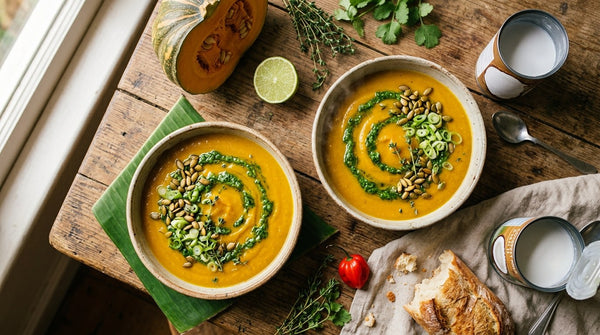
Soup joumou is made from giraumon, the Caribbean pumpkin, with vegetables, plantain, meat, pasta and spices. Recipes often use beef marinated in epis, carrot, cabbage, potato and celery, with a Scotch bonnet in the pot, and Haitian bread for dipping.
Under French rule the soup was reserved for the slave owners. After independence, Haitians made it their own, a symbol of freedom, dignity and resilience. Now it is the first meal of the year, eaten on 1 January, Independence Day, and again on 2 January, Ancestors’ Day. It is also a traditional Sunday breakfast. Making it is a family and community affair.
In 2021 UNESCO added soup joumou to its list of the Intangible Cultural Heritage of Humanity. It was Haiti’s first inscription on that list.
Giraumon is the same pumpkin we cook in Guadeloupe, so this soup feels close to home for me. When I make my own Caribbean pumpkin soup, I think of a whole country sitting down to that colour on New Year’s morning.

Haitian food and Guadeloupe food: what we share
When I cook Haitian dishes I keep finding my mother’s kitchen inside them.
- Fried plantain. Haiti says bannann peze, we say bananes pesées. Same green plantain, same press, same double fry. My fried plantain recipe is exactly that.
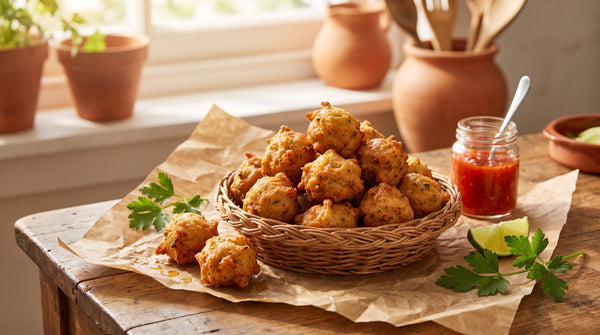
- Fritters. In Haiti, akra are crisp fritters made with malanga, a starchy root. In Guadeloupe our accras are made with salt cod. Same word, different heart. Try my accras de morue and you will see the family likeness.
- Pumpkin. Giraumon in both kitchens.
- Rice and beans. At home in Guadeloupe it is rice and red beans with almost everything. In Haiti it is diri kole ak pwa.
Where we differ is just as interesting. Djon djon rice and soup joumou are Haiti’s, not ours. Haiti has its own breakfasts too, like espageti, spaghetti with hot dogs and tomato, which is a common morning dish there. Every island cooks its own history.
How to eat Haitian food in the UK
If there is no Haitian kitchen near you, you can cook a Haitian-style plate at home with ingredients from a Caribbean grocer or a good supermarket:
- Make a quick pikliz. Shred cabbage, grate carrot, slice onion and one Scotch bonnet. Pack into a clean jar, cover with vinegar, add salt, close and keep it in the fridge. It gets better over a few days. Wear gloves for the pepper.
- Make an epis. Blend spring onion, garlic, parsley, thyme and a little pepper with oil. Rub it into pork shoulder or chicken and leave it overnight.
- Cook, then fry. Braise the meat gently until tender, then fry the pieces until golden. That is the griot method.
- Add plantain and rice. Fried plantain and rice with beans on the side.
The sauce I reach for with griot
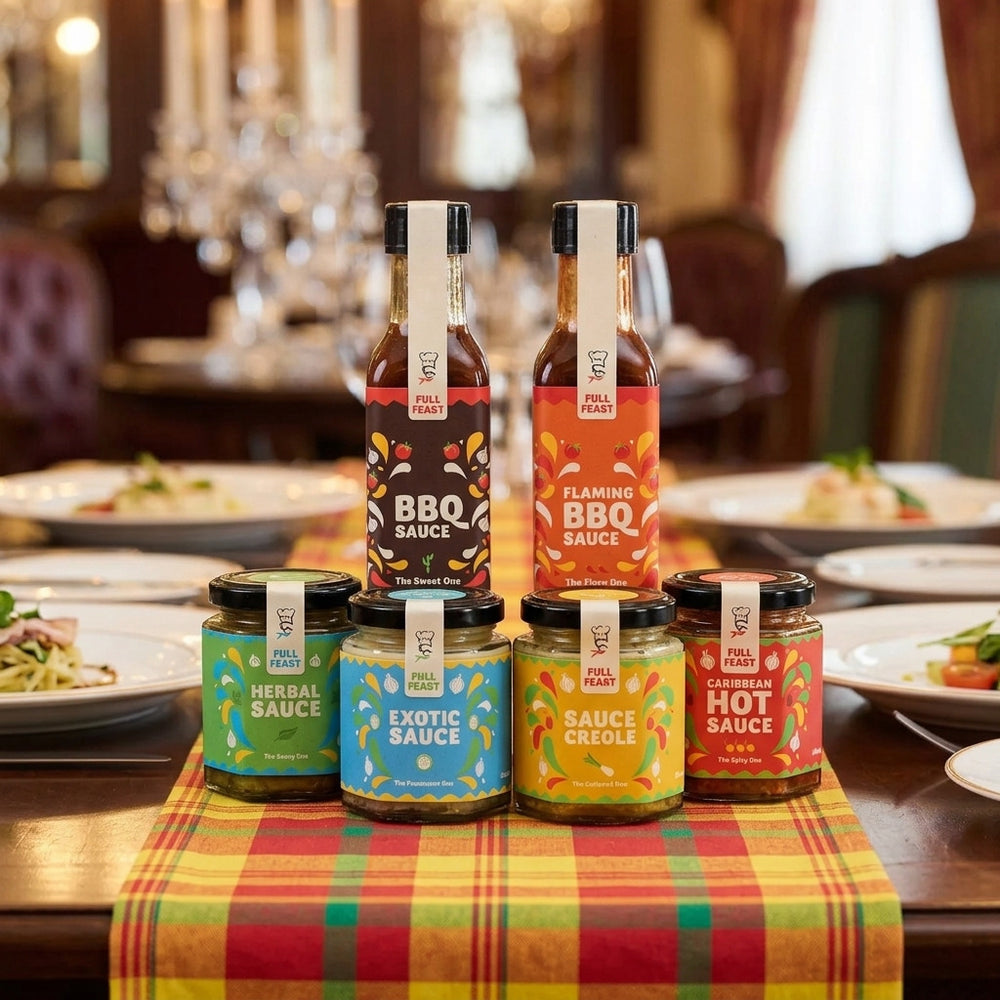
A plate of griot wants heat with sharpness. Pikliz gives you both, but it takes days in the jar. When I want that fire tonight, I reach for our Caribbean Hot Sauce.
It is built on Scotch bonnet, with white onion, a little vinegar, garlic, oil, salt and white pepper. That is the same pepper and the same onion and vinegar bite you find in pikliz, so it sits beautifully beside fried pork, fried plantain or a piece of fried fish. A few drops is enough. Or stir a spoonful into a bowl of shredded cabbage and carrot with a little extra vinegar for a quick slaw while your real pikliz is still pickling.
FAQ
What are some traditional Haitian dishes? Griot (fried pork), diri kole ak pwa (rice with kidney beans), diri ak djon djon (black mushroom rice), tassot cabrit (fried goat), legim (vegetable stew), bannann peze (fried plantain), pâté haïtien and soup joumou. Pikliz, a spicy pickled slaw, is served with most of them.
What is the most important dish in Haitian food? Diri kole ak pwa, rice with kidney beans, is called the national rice, and griot with pikliz is one of the plates you meet first. Soup joumou is the dish with the deepest meaning, eaten every 1 January for Independence Day.
Is Haitian food spicy? It can be. The heat usually comes from Scotch bonnet, in epis, in the pot, and above all in pikliz. Many dishes are seasoned rather than fiery, and you add pikliz to your own taste.
What is Haiti most famous for in food? Soup joumou, the pumpkin soup that became a symbol of freedom after independence in 1804. UNESCO added it to its Intangible Cultural Heritage list in 2021.
Is Haitian food the same as Guadeloupe food? No, but they are close cousins. Both are Creole kitchens with French and African roots, and we share fried plantain, fritters, giraumon and the Scotch bonnet. Haiti has dishes we do not, like djon djon rice and soup joumou.
One small thing to try this week
Make a jar of pikliz. Cabbage, carrot, onion, one Scotch bonnet, vinegar and salt. Ten minutes of chopping, then the fridge does the work.
By the weekend it will be ready, crunchy and fierce. Put a forkful next to anything fried, a piece of chicken, some plantain, a fried egg, and taste how one jar changes a plate. Then on 28 October, Creole Day, raise a spoon to our cousins in Ayiti.
JP