The Saturday Breakfast My London Neighbour Taught Me
I will tell you a secret about ackee and saltfish. Most people get it wrong because they stir it like scrambled eggs. You must not. The ackee is soft as butter, and if you push it around the pan you get yellow mush. My neighbour taught me that, the first winter I lived in London, and she was not gentle about it.
Back home in Guadeloupe we eat salt cod every way you can imagine. Morue in the accras my mother fried on Sunday, morue shredded raw with lime and pepper, morue with green banana. My six brothers and sisters and I could smell a saltfish soaking from the other end of the house. But ackee I never saw as a boy. Ackee belongs to Jamaica. It is their national fruit, and ackee and saltfish is their national dish.
So imagine me in a cold flat, a Guadeloupe boy who thought he knew everything about salt cod, and the smell coming up the stairs on a Saturday morning: onion, thyme, sweet pepper, fish and something rich and gentle underneath. I knocked. The lady downstairs, a Jamaican grandmother with flour on her hands, looked at me and said, “You hungry? Sit.” That was the beginning.
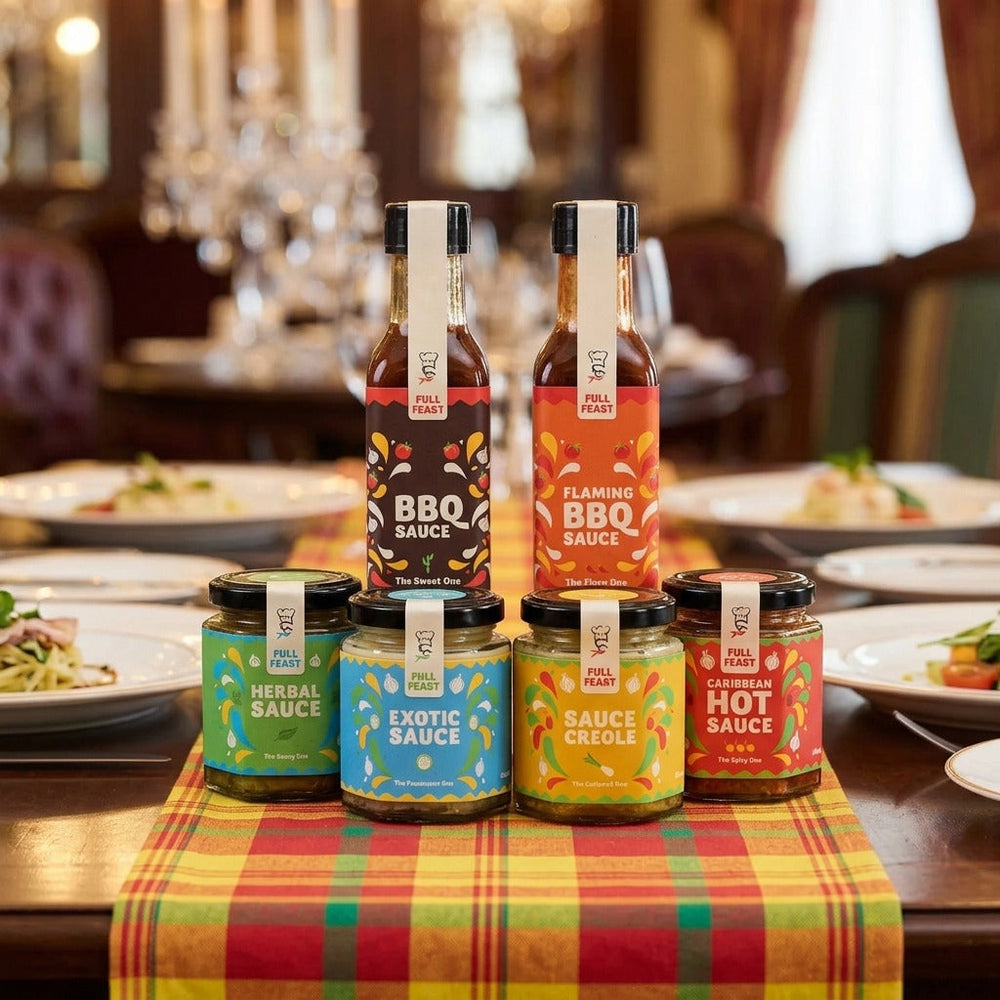
She cooked it with a whole Scotch bonnet floating in the pan. I cook it with a spoon of my Caribbean Hot Sauce, because it gives me the same fruity Scotch bonnet heat, every time, without the gamble. This is her way, with one small change from my kitchen. It is the breakfast I make when I miss home and when I miss her.
Recipe at a glance
- Cuisine: Caribbean (Jamaica)
- Prep: 15 minutes, plus an overnight soak for the saltfish • Cook: 20 minutes • Total: 35 minutes
- Serves: 4
- Featured sauce: Caribbean Hot Sauce
- Heat level: 7/10, warm and fruity, you can go lighter
- Diet: Dairy free, gluten free, pescatarian
What you’ll need
The ackee comes in a tin, and that is how almost everyone in the UK cooks it. You find it in Caribbean shops, in the world food aisle of the big supermarkets and online. Buy boneless salt cod if you can, it saves you twenty minutes of picking out bones. The rest is what my neighbour always had on her counter.
For the saltfish
- 300 g boneless salt cod (saltfish)
- Cold water for soaking and boiling
For the pan
- 1 x 540 g tin ackee, drained (about 280 g drained weight)
- 3 tbsp vegetable oil
- 1 medium onion, sliced
- 4 spring onions, sliced, green tops kept separate
- 2 garlic cloves, finely chopped
- ½ red pepper, sliced into thin strips
- ½ green pepper, sliced into thin strips
- 2 ripe tomatoes, chopped
- 4 sprigs fresh thyme
- ¼ tsp ground allspice
- ½ tsp freshly ground black pepper
- 1 tbsp Full Feast Caribbean Hot Sauce, plus more at the table
No salt in this list. The fish brings all the salt you need.
How I make it
-
Soak the saltfish the night before. Put the salt cod in a big bowl, cover it with plenty of cold water and leave it in the fridge overnight. Change the water once before bed and once in the morning if you remember. This is where the salt goes. You don’t rush this part.
-
Boil it once, gently. In the morning, drain the fish, put it in a pan of fresh cold water and bring it slowly to a simmer. Let it bubble softly for 10 minutes, then drain. Taste a small flake. If it still bites your tongue with salt, cover it with fresh water and simmer another 5 minutes.
-
Flake the fish. When it is cool enough to touch, break it into flakes with your fingers, the size of your thumbnail. Feel for any bones or skin and throw them away. You want pieces, not powder.
-
Drain the ackee and leave it alone. Tip the tin into a sieve and let it drain while you cook. Don’t rinse it hard and don’t squeeze it. Each piece of ackee should stay whole, like a little yellow cloud.
-
Start the base. Warm the oil in a wide frying pan over a medium heat. Add the onion and the white part of the spring onions and cook for 4 to 5 minutes, until soft and sweet and just turning gold at the edges. Listen to it. A soft sizzle, never a hiss.
-
Add the colour and the smell. Add the garlic, the red and green pepper and the thyme sprigs. Cook for 3 minutes, until the peppers soften but still have a little bite. Now your kitchen smells like that Saturday staircase.
-
Tomato, spice and heat. Add the tomatoes, the allspice, the black pepper and the tablespoon of Caribbean Hot Sauce. Stir and cook for 2 minutes, until the tomatoes slump and everything turns glossy and orange.
-
Bring in the fish. Add the flaked saltfish and turn it through the vegetables for 3 to 4 minutes so it takes all that flavour. Taste it now. This is your moment to add more hot sauce, not later.
-
Fold in the ackee, gently. Lay the drained ackee over the top. Now take your spoon and fold, two or three times only, from the bottom of the pan to the top. Then put a lid on, turn the heat to low and leave it for 3 minutes so the ackee warms through in the steam.
-
Finish and serve. Take off the lid, scatter over the green spring onion tops, fish out the thyme stalks and serve straight away while the ackee is still soft and warm.

The role of Caribbean Hot Sauce in this dish
In Jamaica the heat in ackee and saltfish comes from Scotch bonnet, and so does mine. My Caribbean Hot Sauce is 40% Scotch bonnet, blended with white onion and garlic, so one spoon gives you the pepper’s fruity perfume and the warmth that builds slowly after each bite. The onion and garlic in the sauce melt into the onion and garlic in the pan, so it tastes like part of the dish, not something poured on top.
The ackee is mild and creamy, almost like a soft egg yolk. The saltfish is savoury and firm. The hot sauce is what wakes them both up. It goes in with the tomatoes so the vinegar cooks gently and the heat spreads through the whole pan, and then the jar stays on the table for anyone who wants more. In my house, that is everyone.
Tips from my kitchen
- How do you make ackee and saltfish less salty? Soak longer, change the water more often and always taste the fish after the first boil. Some salt cod is saltier than others. If you forgot to soak it, cover it with cold water, bring it to the boil, drain, and repeat three times. It works, but the overnight soak is kinder to the fish.
- Use a wide pan. The ackee needs room to sit on top of everything. In a small deep pan it gets crushed.
- Ackee goes in last, always. It is already cooked in the tin. You only want to warm it, not cook it again.
- Don’t add salt until you have tasted. I say it twice because it matters twice.
- If you love salt cod, make a double batch of fish and keep half for my accras de morue, the Guadeloupe saltfish fritters I grew up on.
What to serve it with
In Jamaica you eat ackee and saltfish with fried dumplings, and I will not argue with that. Golden, crisp outside, soft in the middle, perfect for scooping. Boiled green banana is the other classic, and if you want the Guadeloupe version of that plate, look at my green banana and saltfish.
Ripe plantain is my favourite partner. Its sweetness against the salt fish and the Scotch bonnet is perfect. My fried plantain takes ten minutes while the fish simmers. For something green, ackee and saltfish with callaloo is a beautiful plate, and my callaloo recipe is the one my mother made.
Breadfruit, roast or fried, rice and peas for a bigger lunch, or simply hard-dough bread and a big mug of hot chocolate or tea. If you want to know more about the fruit itself, I wrote about what ackee is and where it comes from.

FAQ
Is ackee poisonous?
Unripe ackee is, yes. The fruit contains a natural toxin called hypoglycin, and it is only safe once the pod has ripened and split open on the tree by itself. The seeds and the pink skin are never eaten. That is why in the UK we use tinned ackee from a trusted shop: it has been picked ripe, cleaned and cooked for you. Never cook fresh ackee unless someone who really knows the fruit has prepared it.
Can you eat ackee straight from the tin?
Tinned ackee is already cooked, so it is safe, but it tastes of very little on its own. It needs the onion, thyme, pepper and fish around it. Warm it gently in the pan, as in step 9, and that is all it needs.
How do you cook ackee and saltfish Jamaican style?
Soak and boil the salt cod, soften onion, peppers, garlic and thyme in oil, add tomato and Scotch bonnet, then the flaked fish, and fold the ackee in at the very end so it stays whole. That is the method above. The only change I make is the spoon of Caribbean Hot Sauce in place of a whole fresh Scotch bonnet.
What are the ackee and saltfish ingredients, and is it gluten free?
Salt cod, tinned ackee, onion, spring onion, garlic, sweet peppers, tomato, thyme, allspice, black pepper, oil and Scotch bonnet heat. My Caribbean Hot Sauce is lab tested gluten free and all the other ingredients are naturally gluten free, so the dish is too. If you serve it with fried dumplings, those are made with wheat flour, so they are not. The allergen in this dish is fish. The hot sauce’s vinegar is made from barley, so it is not for anyone with a barley allergy.
Can you make ackee and saltfish the day before?
You can prepare the fish the day before: soak, boil, flake and keep it covered in the fridge for up to 2 days. Cook the pan fresh. Leftovers keep in the fridge for a day; reheat gently in a pan with a splash of water until piping hot all the way through, though the ackee will be softer.
Final word from me
Every time I fold the ackee into the pan I hear her voice telling me to stop stirring. Some recipes you learn from your mother, and some you learn from the kind people who feed you when you are far from home. Soak the fish tonight, put the jar on the table tomorrow and sit everyone down. You hungry? Sit.
JP