My Mother’s Christmas Ragoût From Guadeloupe
When I was a boy in Guadeloupe, Christmas did not start on the twenty-fifth. It started three days before, when the pork came into the house. My mother would stand at the sink with a bowl of water and a pile of limes, washing every piece of meat by hand, squeezing the limes until her fingers stung. Seven children watching. Nobody was allowed to touch.
That meat was for the ragoût de cochon, our Caribbean pork stew, the dish at the centre of every Christmas table on the island. Before it came the Christmas ham, the boudin, the little salt pâtés, the accras. People would eat all of that and still find room, because the ragoût was the reason you came. Dark, glossy, the pork so soft you could break it with a spoon, and beside it a mountain of rice with pigeon peas.
I remember the sound most of all. The pork going into the hot pot with the sugar, that hiss and crackle, then the smell of caramel and garlic filling the whole house and drifting out into the street. My mother called it roussir, to colour the meat. She said if you do not take your time here, you do not have a ragoût, you have boiled pork. She was right, as usual.
Here in London I make it every December, and now I make it all winter, because a pot of pork stew on a cold Sunday is the best medicine I know. I keep her method: the lime wash, the slow browning, the long gentle simmer. My one change is a few spoons of my BBQ Sauce. The tomato, brown sugar, balsamic and rum in it do what my mother did with caramel and patience, and they give the sauce a deep, sticky gloss. Let me show you how I make it. The proper way.
Recipe at a glance
- Cuisine: French Caribbean (Guadeloupe)
- Prep: 20 minutes, plus at least 1 hour marinating • Cook: 2 hours • Total: 2 hours 20 minutes
- Serves: 6
- Featured sauce: BBQ Sauce
- Heat level: 4/10 as written, gentle and warming (add the whole Scotch bonnet for more perfume)
- Diet: Gluten free (with gluten free stock), dairy free
What you’ll need
Buy pork shoulder, the cut the French call échine. It has fat running through it, and that fat is what keeps the meat juicy over two hours. Lean cuts like loin go dry and stringy in a stew. Ask your butcher to cut it into big chunks, about 5 cm, or do it yourself. Small pieces fall to threads.
For the marinade
- 1.2 kg boneless pork shoulder, cut into 5 cm chunks
- 3 limes (one for washing the pork, two for juice)
- 4 garlic cloves, crushed
- 3 spring onions, finely sliced
- 4 sprigs fresh thyme (or 1 tsp dried)
- 1 tsp ground allspice
- 1 tsp freshly ground black pepper
- 1 tsp salt
For the stew
- 2 tbsp vegetable oil
- 1 tbsp soft brown sugar
- 2 onions, sliced
- 1 red pepper, sliced
- 2 more garlic cloves, sliced
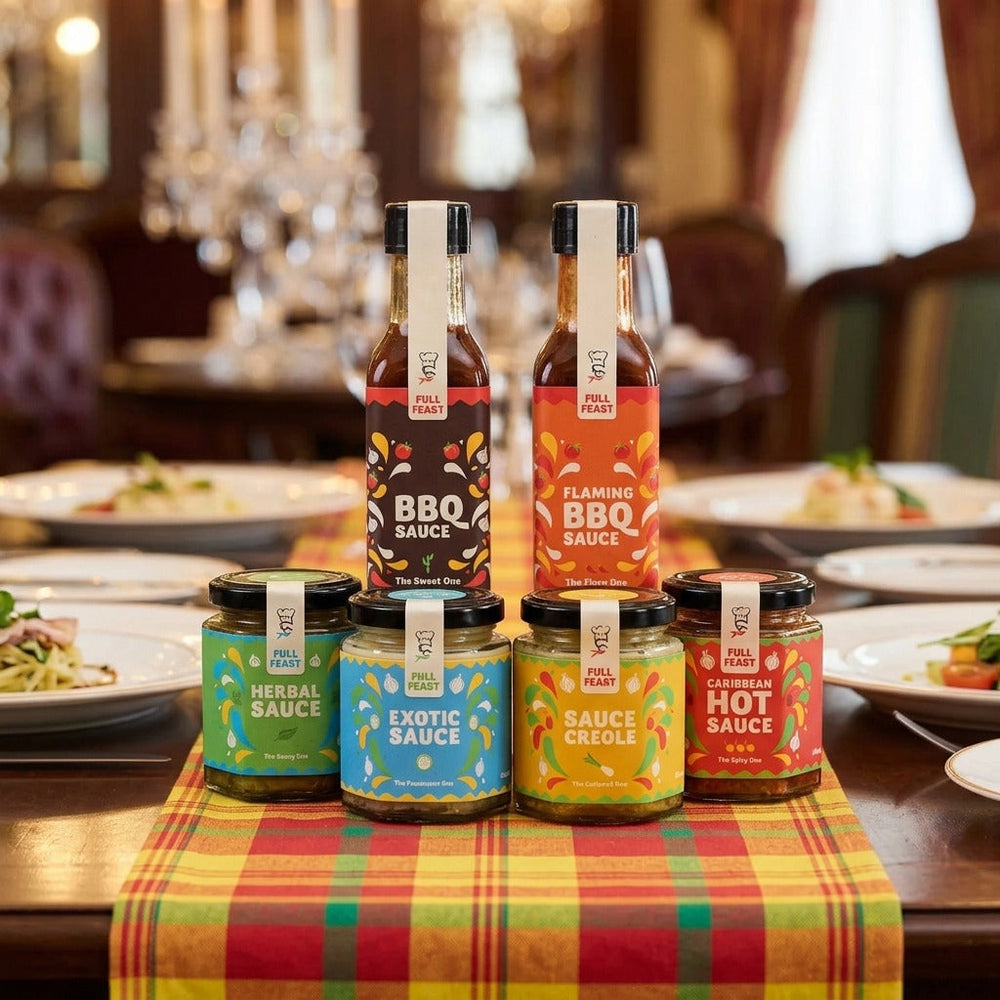
- 6 tbsp Full Feast BBQ Sauce, plus 2 tbsp to finish
- 500 ml water or gluten free chicken stock
- 3 carrots, cut into thick rounds
- 2 bay leaves
- 1 whole Scotch bonnet, left whole (optional)
- A handful of flat-leaf parsley, chopped, to finish
How I make it
-
Wash the pork the island way. Fill a large bowl with cold water and squeeze in the juice of one lime. Drop the halves in too. Rinse the pork chunks in it, rubbing each one, then drain and pat them very dry with kitchen paper. My mother did this for every piece of meat she ever cooked. It freshens the pork and gives the marinade a clean start.
-
Marinate. Put the pork in a bowl with the juice of the other two limes, the crushed garlic, spring onions, thyme, allspice, pepper and salt. Mix it with your hands so every piece is coated. Cover and leave in the fridge for at least an hour. Overnight is better, and on Christmas Eve that is how we did it.
-
Lift the meat out. When you are ready to cook, take the pork out of the marinade and shake off the bits of garlic and herb. Keep the marinade, it goes back in later. Pat the meat dry again. Wet meat steams, dry meat colours.
-
Roussir, the important part. Heat the oil in a large heavy casserole over a medium-high heat. Sprinkle in the brown sugar and let it melt and turn a deep amber, about one minute. Watch it, it goes from golden to bitter quickly. Now add the pork in two or three batches, turning the pieces until they are a rich mahogany on every side, about 4 to 5 minutes a batch. You will hear it hiss. You will smell the caramel. Do not rush this part. Lift each batch out onto a plate.
-
Soften the onions. Turn the heat down to medium. Add the onions and red pepper to the same pot and cook for 6 to 8 minutes, scraping up all the brown bits from the bottom, until soft and sweet. Add the sliced garlic for the last minute.
-
Bring in the sauce. Stir in 6 tbsp of BBQ Sauce and let it bubble with the onions for a minute so it darkens slightly. Pour in the water or stock and the reserved marinade, and scrape the bottom of the pot clean.
-
Simmer low and slow. Return the pork and any juices to the pot with the carrots, bay leaves and the whole Scotch bonnet if you are using it. The liquid should come about three quarters of the way up the meat. Bring it to a gentle bubble, then turn it right down, cover with a lid slightly open, and let it simmer for 1 hour 30 minutes. Stir every 20 minutes so nothing catches, and add a splash of water if it looks dry.
-
Reduce and finish. Take off the lid and simmer for another 15 to 20 minutes, until the sauce thickens and turns glossy and the pork gives way when you press it with a spoon. The pork must be cooked right through with no pink, which it will be long before it is tender. Fish out the Scotch bonnet and the bay leaves. Stir in the last 2 tbsp of BBQ Sauce, taste, and add salt only if it needs it.
-
Rest it. Turn off the heat and let the pot sit for 10 minutes with the lid on. Scatter the parsley over just before you carry it to the table.

The role of BBQ Sauce in this dish
In Guadeloupe the colour and depth of a ragoût come from caramel, time and a long list of things in the pot. My BBQ Sauce brings a lot of that in one spoon. The tomato purée gives body and that dark red colour. The brown sugar meets the caramel from the browning and turns sticky. The balsamic vinegar keeps it bright, so the stew never tastes heavy, and the rum and garlic sit underneath everything, warm and rounded. The English mustard adds a little backbone you feel more than taste.
I add it in two stages for a reason. The first spoons cook down with the onions and melt into the gravy over two hours. The last two go in at the end, so the sauce keeps a fresh, tangy edge on top of all that slow-cooked depth. There is no chilli in the BBQ Sauce, so the heat is up to you: leave the Scotch bonnet out for children, or swap to my Flaming BBQ Sauce if your family likes it hot.
Tips from my kitchen
- Big pieces, low heat. If your pieces are too small or your simmer too fierce, the pork tightens and goes dry. You want the smallest bubble, a lazy blip on the surface.
- Make it the day before. Like every stew, this one is better the next day. Cool it, keep it covered in the fridge, and any fat sets on top so you can lift it off. Reheat gently until it is piping hot all the way through.
- The whole Scotch bonnet trick. Left whole, the chilli perfumes the stew with fruitiness and only a little heat. If it bursts, the heat goes everywhere. Handle it gently and take it out before serving.
- Want it with potatoes? Add 500 g of waxy potatoes, halved, with the carrots. They will soak up the sauce and make it a one-pot meal.
- Colour is flavour. If you only remember one thing, remember the browning. That is what my mother would tell you too.
What to serve it with
At Christmas in Guadeloupe this pork stew comes with rice and pigeon peas, always. My rice and peas is the easiest way to get that at home, and if you want to know more about the little peas themselves, I wrote about pigeon peas and why they matter to us at this time of year.
Add a plate of fried plantain for something sweet and crisp next to the rich sauce, and some boiled yam or sweet potato if you have it. And if you are cooking for a crowd over the holidays, do it the island way and put a Caribbean glazed ham on the table first. The ham opens the meal, the ragoût finishes it.
On an ordinary winter night, pork stew with rice is all you need. A simple green salad with lime makes it feel lighter.

FAQ
Why is my pork stew meat tough?
Usually one of three things. The cut is too lean (loin or tenderloin dry out in a stew), the heat is too high, or it has not cooked long enough. Pork shoulder goes through a tough stage before it turns tender, so if it feels firm after an hour, keep going. Low heat, lid on, patience. That is how to cook pork stew meat tender.
Can you make this pork stew in a slow cooker?
Yes. Do steps 1 to 6 in a pan on the hob, because the browning cannot happen in a slow cooker. Then put everything in the slow cooker with only 300 ml of liquid, since nothing evaporates, and cook on low for 6 to 7 hours. Stir in the last spoons of BBQ Sauce at the end.
Can you stew pork shoulder, or is another cut better?
Pork shoulder is the best cut for stewing. It has the fat and connective tissue that melt over a long cook and keep the meat juicy. Pork belly also works if you like it rich. Avoid loin and fillet here.
Is this Caribbean pork stew gluten free?
Yes, as long as you use gluten free stock or plain water. All the Full Feast sauces are lab tested gluten free. One allergy note: the BBQ Sauce is lab tested gluten free, but its English mustard is made with wheat, so it is not for anyone with a wheat allergy. It also contains mustard and sulphites (from the balsamic vinegar). There is no dairy in the dish.
How long does pork stew keep, and can I freeze it?
It keeps for 3 days in the fridge in a covered container. It freezes well for up to 3 months. Defrost it overnight in the fridge and reheat it gently until it is piping hot all the way through.
Final word from me
This is the dish that tastes like Christmas to me, like my mother’s kitchen, my brothers and sisters crowded round the table, the whole street smelling of caramel and thyme. You do not need to be in Guadeloupe to cook it. You need a heavy pot, a good piece of pork, an afternoon, and someone to share it with. Make it this winter, and make plenty. Somebody always comes back for more.
JP