The Dark Christmas Stew That Simmers for Days, Explained by a Guadeloupe Chef
Every December, my kitchen in England starts to smell like Christmas long before the tree goes up. Onions, thyme, a ham in the oven, and the pork stew my mother made back home in Guadeloupe. But there is another Christmas stew from our corner of the world that I love just as much, and it is not from my island at all. It is Guyanese pepperpot: meat so soft it gives way on the fork, in a sauce almost black, shining, sweet and bitter at the same time.
The secret is in a bottle of something that looks like molasses. It is called cassareep, and the rest is patience.
So this is my love letter to a dish from our neighbours on the South American mainland. I am a Guadeloupe cook, not a Guyanese one, and I will tell you honestly where my knowledge comes from. But a stew that fills a house at Christmas, eaten with bread on Christmas morning? That, I understand completely.
What is Guyanese pepperpot?
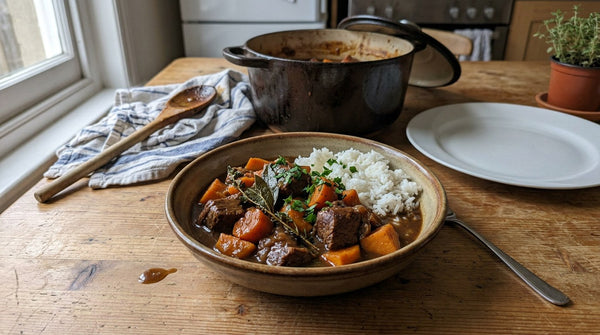
Guyanese pepperpot is a slow-cooked meat stew from Guyana, made dark, glossy and bittersweet with cassareep, a thick syrup boiled down from cassava juice. Beef, pork or lamb cook for hours with cinnamon, cloves, orange peel and hot wiri wiri peppers. It is one of Guyana’s national dishes and the dish Guyanese families serve at Christmas.
Where did pepperpot originate?
Pepperpot comes from Guyana’s first peoples, the Amerindians. Guyanese writers explain that the dish was most likely invented as a way to keep meat before there was any refrigeration, using cassareep in the pot.
Over the centuries, everyone who came to Guyana left a mark on the table. The Dutch ruled in the 17th and 18th centuries, then the British from 1796. Enslaved Africans, indentured workers from India and labourers from Portugal followed. Cinnamon and cloves went into the pot. Bread came to sit beside it. But the heart of the dish, cassareep, stayed Amerindian.
The name is not only Guyanese, and that confuses people. Jamaica, Antigua and even Philadelphia have a pepperpot of their own, and I will come back to those further down.
Cassareep: the secret in the bottle
You cannot make Guyanese pepperpot without cassareep. It is what makes the dish what it is: the colour, the bittersweet depth, the shine on the meat.
Cassareep starts with bitter cassava, a root that is poisonous when raw. The roots are peeled and grated, then the pulp is squeezed in a matapi, a long woven press, to get the juice out. That juice is cooked slowly until it reduces to a thick, dark syrup with the texture of molasses. The long cooking is what drives the toxins away, which is why nobody sensible drinks raw cassava juice.
Guyanese cooks describe the finished syrup as smelling like burnt sugar. Some versions are flavoured with cloves, cinnamon, sugar and a little hot pepper. And most Guyanese will tell you plainly: cassareep is one of those things you buy, not make.

This part made me smile, because it is so close to home. In Guadeloupe we grow manioc too, and it arrived with the first inhabitants of the islands, the Arawaks and the Caribs. We grate it, press it to get rid of the toxic juice, then dry the pulp into flour for our kassav flatbreads. I wrote about all of that in my piece on cassava, the root Guadeloupe turns into flour and flatbread. In Guadeloupe we throw the juice away. In Guyana, they boil it into treasure.
What goes into Guyanese pepperpot
Pepperpot is not a fussy dish. It is a dish for the cuts that need time. Guyanese recipes call for:
- Meat: beef, pork, lamb or goat, often more than one, and sometimes chicken
- The gelatinous cuts: cow heel (cow foot), oxtail or pig trotters, which give the sauce its body
- Cassareep: a generous amount, until the stew turns deep, dark brown
- Whole spices: cinnamon sticks and cloves
- Brightness: a strip of orange peel, and thyme in many kitchens
- Heat: wiri wiri peppers, small round chillies native to Guyana
- Balance: brown sugar and salt
Wiri wiri is hard to find outside Guyana, so cooks abroad use Scotch bonnet or habanero instead, because they have a similar heat and fruitiness. If you have never cooked with one, my guide to what a Scotch bonnet is and how to handle it will help.
Many cooks steam or blanch the meat briefly first to lift off the fat, so the finished stew is clean rather than greasy. The cow heel is the one that matters most. It melts into the sauce and gives that sticky, lip-coating texture you want to chase with bread. If you love the soft, bony richness of my oxtail explainer, you will understand pepperpot straight away.
In Guadeloupe we throw the cassava juice away. In Guyana, they boil it into treasure.
JP
What does Guyanese pepperpot taste like?
The first taste is sweet, a little like caramel. Then comes the bitterness, gentle, at the back of the mouth, the way you find it in dark caramel or strong coffee. Under that, warm cinnamon and clove, the richness of slow-cooked beef, and a fruity chilli heat that builds slowly.
Food writers compare a good pepperpot to a Mexican mole, because it is layered in the same way: sweet, bitter, spiced and savoury all at once. It is not a hot dish in the sense of burning your mouth. It is deep.
And like many stews, it tastes better the next day. Guyanese cooks make it a day or two ahead, because the flavour keeps deepening as it sits.
Pepperpot at Christmas in Guyana
In Guyana, pepperpot is Christmas. The stew is cooked on Christmas Eve and served on Christmas morning, often as the first thing on the table, with slices of soft, dense homemade bread to wipe the bowl clean. It comes back again over Boxing Day and New Year.
Its partner on the Christmas table is garlic pork, a dish from the Portuguese side of Guyana’s history.

Reading about this, I thought of my mother’s table. In Guadeloupe our Christmas means ham, Creole boudin, pork stew, pigeon peas with rice, and pain au beurre, our buttered bread, with spiced hot chocolate. Different islands, different pots, but the same instinct: a dark, slow stew, and good bread to go with it, shared with everyone who comes through the door. If you want the full tour, I wrote about what Christmas in the Caribbean actually tastes like.
The famous pepperpot that never stops cooking
You will read stories about pepperpots kept going for weeks or even years, with fresh meat and more cassareep added as the pot goes down. Traditionally in Guyana, pepperpot sits on the stove without a fridge, and is brought back to the boil every day.
Here is where I put my chef’s hat on. Cassareep is widely believed to preserve the meat, but laboratory tests on that power have been inconclusive. So in a UK kitchen, I follow the Food Standards Agency, not the legend:
- Cool the stew and get it into the fridge within two hours of cooking.
- Eat it within two days, or freeze it in portions.
- Reheat only what you will eat, until it is steaming hot all the way through, and reheat it once.
You lose nothing. The flavour still deepens overnight in the fridge, and it freezes beautifully.
Guyanese pepperpot vs Jamaican pepperpot and other pepperpots
The word pepperpot travels, so let me clear up the confusion.
- Guyanese pepperpot is a dark meat stew made with cassareep, eaten with bread at Christmas.
- Jamaican pepperpot is a soup, not a stew. It is green from callaloo, with cured meat, coconut milk, root vegetables, dumplings, Scotch bonnet and pimento. It also has Amerindian roots, from the Taíno.
- Antiguan pepperpot is a hearty stew of meats and greens such as spinach, and it is half of Antigua and Barbuda’s national dish, fungee and pepperpot. Fungee is a cornmeal dish a little like polenta.
- Philadelphia pepper pot is a thick stew with tripe, peppers, root vegetables and greens, credited to Black Philadelphians and traced back to West Indian cooking. It was once sold on the street by the “pepper pot women”.
So if someone in London asks you for pepperpot, ask them where their family is from first.
How to cook Guyanese pepperpot (and its cousins) at home
The method is simple, and it is the same slow method I use for my own stews. Brown or blanch the meat, cover it with water, add the cassareep, cinnamon, cloves, orange peel, sugar and a whole chilli, then let it bubble very gently for hours until the meat falls apart and the liquid has reduced to a glossy sauce.
If you cannot find cassareep yet, it is sold in bottles by some UK online grocers. Without it, you can still cook a dark, slow Caribbean stew, but please do not call it pepperpot. These recipes from my kitchen use the same patience:
- My Caribbean oxtail, slow-cooked all afternoon, for the same sticky, gelatinous sauce
- My mother’s Caribbean pork stew, her Christmas ragoût from Guadeloupe, our island’s answer to a festive stew
- A Caribbean beef stew, slow and Sunday style, the easiest place to start
Serve any of them the Guyanese way: with thick slices of soft white bread, and nothing else on the plate.
A little heat on the side
Pepperpot already has its own heat from the chilli in the pot, and every Guyanese cook has an opinion on how much is right. At my table, I keep the pot gentle so the children can eat it, and put the fire on the table instead.
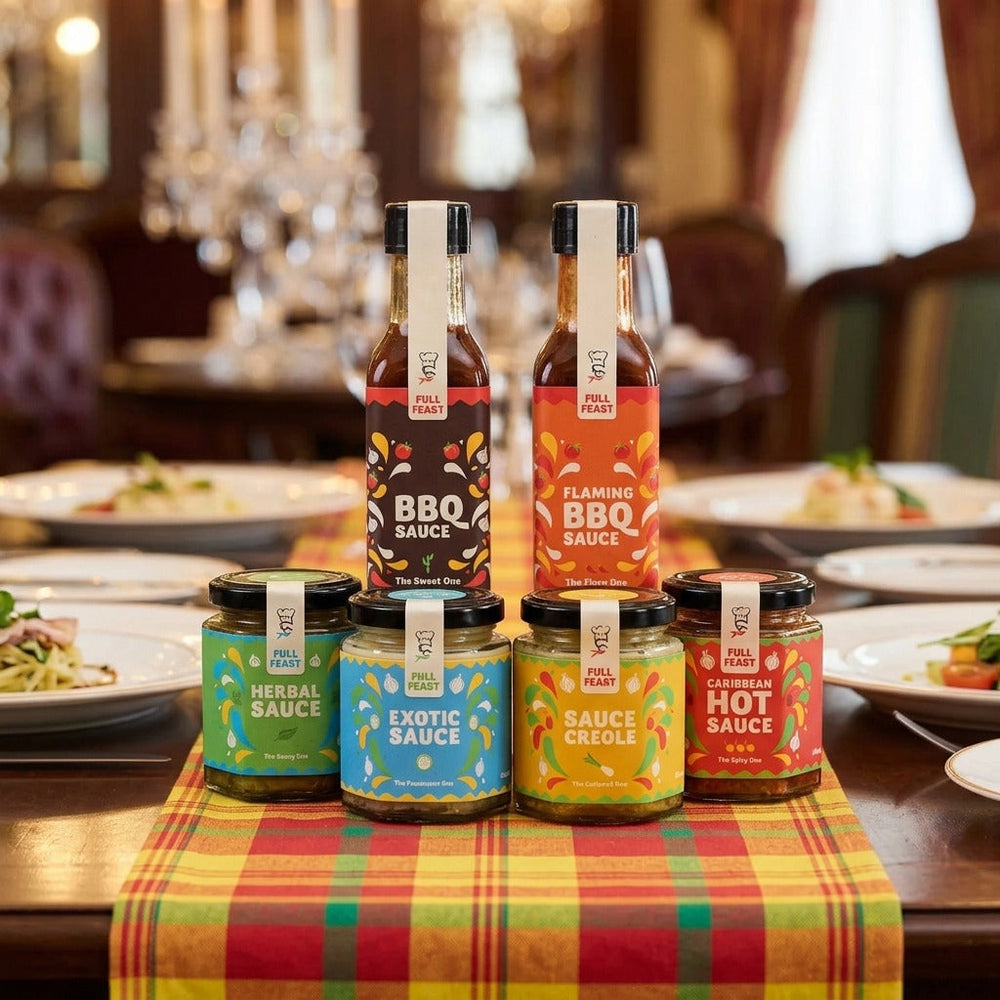
That is where our Full Feast Caribbean Hot Sauce comes in. It is built on Scotch bonnet, the same chilli cooks abroad use in place of wiri wiri, with white onion and garlic. No cinnamon, no clove, nothing that fights the cassareep. A few drops on a spoonful of pepperpot and bread, and the fruity heat cuts straight through all that dark sweetness.
FAQ
What is Guyanese pepperpot made of? Meat, usually beef, pork or lamb with cow heel or oxtail, slow-cooked with cassareep, cinnamon, cloves, orange peel, brown sugar and wiri wiri peppers.
What is cassareep? A thick, dark syrup made by boiling the juice of bitter cassava until it reduces to the consistency of molasses. It gives pepperpot its colour and bittersweet flavour.
Where did pepperpot originate? Guyanese pepperpot comes from Guyana’s Amerindian peoples, who used cassareep with meat long before refrigeration. Later African, European and Indian influences shaped the dish eaten today.
What does Guyanese pepperpot taste like? Bittersweet and rich: caramel sweetness, a gentle bitter finish, warm cinnamon and clove, tender meat and a slow, fruity chilli heat.
What is the difference between Guyanese and Jamaican pepperpot? Guyanese pepperpot is a dark meat stew made with cassareep. Jamaican pepperpot is a green soup made with callaloo, coconut milk, root vegetables and dumplings.
One small thing to try this week
Look for a bottle of cassareep. Open it and smell it: burnt sugar, something earthy, something you have never quite smelled before. Put a spoonful into your next beef stew and watch the colour change.
Then, if it calls to you, plan a small pepperpot for Christmas morning. Make it two days before. Keep it in the fridge. Buy the softest, thickest loaf you can find.
And when you sit down to eat, think of the Amerindian cooks who first boiled that cassava juice, and of every family who has carried the pot forward since.
JP