The Bony Cut My Mother Turned Into Sunday Lunch, and Why It Costs So Much Now
My mother used to come home from the butcher with a paper parcel under her arm, and we knew what the afternoon would smell like. Oxtail. Queue de boeuf, in our house in Guadeloupe. It was the cheap thing, the bony thing, the cut nobody with money asked for.
She had seven children to feed and she understood something I only learned later as a chef. The cuts nobody wants are the cuts with the most in them. Give them time and they pay you back.
Today the same cut sits in a British butcher’s window at a price that would have made her laugh. So let me tell you what oxtail really is, what it tastes like, why it got so dear, and how the islands made it famous.
What is oxtail?
Oxtail is the tail of beef cattle, skinned and cut across into thick rounds. Each round has a piece of bone in the centre, with marrow inside and rich, fatty meat around it. It is tough raw and full of collagen, so it needs at least three hours of slow, moist cooking.
What does oxtail taste like?
Like beef, only more so. The flavour is deep and savoury, and cooks compare it to beef cheeks, short ribs or shin. If you have enjoyed my Caribbean beef short ribs, you are already most of the way there.
The real difference is the texture. Oxtail is mostly bone, marrow and connective tissue, with a modest amount of meat. Over hours of gentle heat the collagen turns to gelatine. The meat goes soft and silky, and the cooking liquid thickens by itself into a gravy with a velvety body. No flour, no cornflour. The tail does the work.
This is why you cannot rush it. Cook oxtail quickly and you get something tough, fatty and disappointing. Cook it slowly and it leaves the bone with no argument.

Is oxtail from a cow or an ox?
From a cow, or more exactly from cattle of any kind. The word once meant only the tail of an ox. Today it covers the tails of beef cattle in general, and that is what your butcher sells. So if you were wondering what part of the cow oxtail is: the whole tail, nothing else.
A typical tail weighs about 3.5 kg before it is cut. The rounds from the wide end near the body are big and meaty. The ones from the tip are small and mostly bone, which makes them better for flavouring a pot than for filling a plate.
Where to buy oxtail in the UK
Most people find it at the butcher or in the meat aisle of a large supermarket. Morrisons sells a 600g pack of British oxtail at about £11 a kilo. Online butchers ask around £15 a kilo, and organic oxtail costs more. Here is what I look for:
- Thick rounds from the wide end of the tail, not a bag of little tips.
- Bright red meat with creamy white fat.
- About 400g per person, because so much of the weight is bone.
Fresh oxtail keeps in the fridge for 3 to 5 days before cooking. Wrapped airtight, it keeps in the freezer for up to a year.

Why do Jamaicans eat oxtail?
Because history left them the tail. Jamaica’s land could not support vast herds of beef cattle, and in the days of slavery the wealthy took the steaks while enslaved Africans made do with off-cuts: snout, foot and tail. Across the Americas, oxtail became food of the Caribbean and the American South, cooked by people of African descent who had been pushed to the bottom of the economic ladder.
They took that tail and they made it into something extraordinary. African cooking met allspice, thyme and ginger. After slavery ended, their descendants kept cooking it, because it was delicious and it was still cheap.
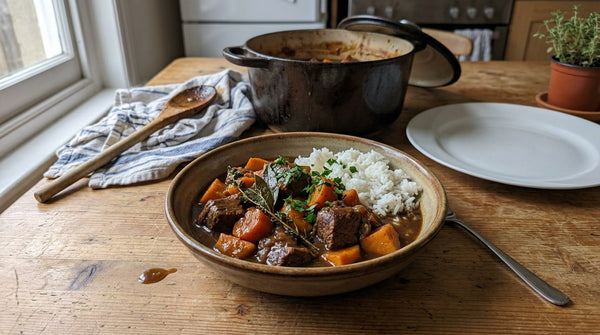
The Jamaican version most people know today is stewed with butter beans, usually with a Scotch bonnet for fire, and served with white rice or rice and peas. The butter beans go in near the end so they stay whole.
Nobody ever gave the islands the good cuts. So we made the bad cuts good, and then the world came to buy them.
JP
Trinidad has its own way. Cooks there marinate the oxtail in green seasoning, with culantro, chive, thyme, garlic and ginger, preferably overnight. Then they melt sugar in hot oil until it turns the colour of caramel and drop the meat straight in. That browning gives the gravy its dark colour. Let the sugar go black, though, and it turns bitter. Cuba has rabo encendido, its own oxtail stew.
Oxtail in Guadeloupe
I will be honest with you, because honesty is cheaper than oxtail. It is not one of Guadeloupe’s famous dishes. Open a guide to our food and you will read about colombo, cabri and the bébélé of Marie-Galante, not queue de boeuf. In the French islands the tail with the reputation is the pig’s: queue de cochon, soaked overnight and cooked with red beans.
But the idea is the same, and so is the pot. In my mother’s kitchen, oxtail was a long Sunday braise. Thyme, allspice and onion going soft, the house smelling of it until evening, butter beans at the end to stretch it across seven plates. She started with sugar in the oil, the same trick as Trinidad. In the French islands we know it as a roussi.
On the side, I want something plain to catch the gravy. White rice, or a boiled root such as igname, the real yam, which drinks up sauce better than any potato.
Why is oxtail so expensive?
Every animal has only one tail. That is the whole problem, and then fashion made it worse.
For a long time oxtail was the cheap choice. In 1845 the English cookery writer Eliza Acton called oxtail soup “an inexpensive and very nutritious soup”. The price changed as chefs started putting it on smart menus. More demand met the same small supply, so the price went up, and the communities who made the dish famous are now the ones paying for it.
The weight is misleading too. Because so much of a pack is bone, you buy more than you would of a boneless cut, so the real price per plate is higher than the label suggests. Wholesale, restaurants were paying about £14.56 a kilo in May 2026.
Oxtail beyond the Caribbean
We do not own this cut, and I like that. Poor cooks everywhere found the same answer.
- Rome: coda alla vaccinara, named for the vaccinari, the butchers of the Regola district, where residents were nicknamed the tail-eaters.
- Britain: oxtail soup, a stock base and a tinned classic. A popular story credits Huguenot refugees in London, but nobody has shown good proof.
- Korea: kkori-gomtang, a thick soup eaten with rice.
- Philippines: kare-kare, a stew made with peanuts.
- South Africa: cooked in a potjie, a three-legged iron pot over an open fire.
One strange British footnote. According to the Oxford Companion to Food, sales of oxtail stopped in Britain in 1997 in connection with BSE. The rules on beef on the bone were lifted in December 1999, and the tail came back to the butcher’s window.
How to cook oxtail
There are four rules, and they are the same on every island.
- Dry the meat, then brown it properly in batches. Wet meat steams, and a grey stew stays grey.
- Add just enough liquid to almost cover the meat, then keep it at a gentle bubble.
- Give it at least three hours, on the hob or in a low oven. A slow cooker works, and a pressure cooker is a fair shortcut.
- Take the fat off at the end. Oxtail gives up a lot. Better still, cool the pot, chill it overnight and lift the set fat away before you reheat.
My full method, with every quantity, is in my Caribbean oxtail recipe. If you want to practise on something easier, my Caribbean beef stew uses the same slow logic with a meatier cut.
What I put in the pot
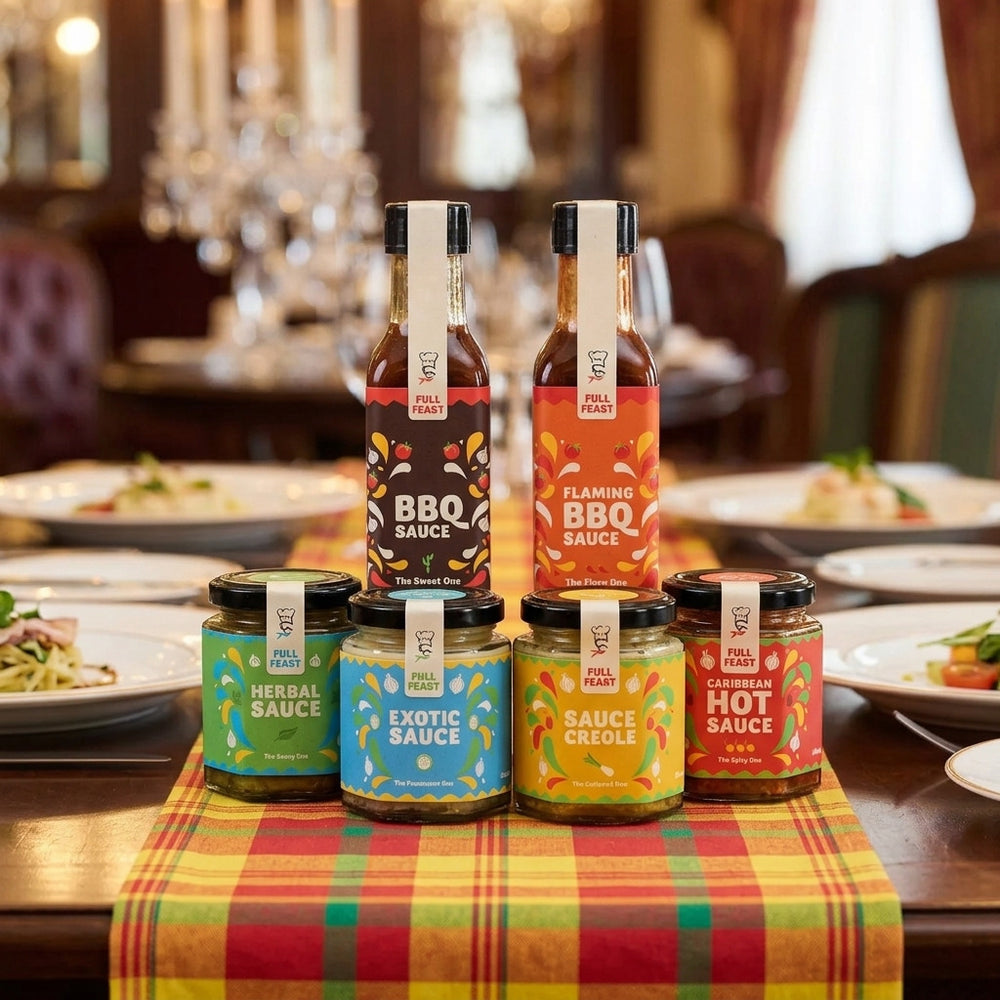
A three-hour braise flattens anything delicate, so I want a seasoning with weight. That is why I reach for Caribbean Sauce Creole. It is 68% onion with green chilli, so it melts into the gravy and gives you a mellow, savoury warmth, not a sharp burn.
To be clear, it contains no tomato, no garlic and no thyme. Those go into the pot on their own, along with the allspice. I stir a spoonful of the sauce through the meat before browning and another into the liquid. Then I taste at the end and add a little more if the gravy wants it.
FAQ
What is oxtail made of?
It is the tail of beef cattle, cut into rounds. Each round has a central bone with marrow, surrounded by fatty meat and a lot of connective tissue.
What does oxtail taste like?
Deep, savoury and very beefy, similar to beef cheeks or short ribs. When slow-cooked, the meat is soft and silky and the gravy is rich and glossy.
Is oxtail from a cow or an ox?
The name came from the ox, but today oxtail comes from cattle in general. The cut you buy in the UK is the tail of a beef animal.
Why is oxtail so expensive?
Each animal has one tail, much of the weight is bone, and demand has grown as chefs have put it on their menus. It was a cheap cut for a very long time.
How long does oxtail take to cook?
At least three hours on the hob or in the oven at a gentle heat. It is ready when the meat slides off the bone with no resistance.
One small thing to try this week
Ask your butcher for oxtail, and ask for the wide end. Then choose a cold afternoon when you are staying in anyway.
Brown it slowly, cover it, and leave it alone. Do something else. Let the house fill up with the smell. That is half the meal, and my mother knew it.
When it comes to the table, eat it with your fingers at the end. The bone is the best part, and nobody is watching.
JP