The Pink Fruit Guadeloupe Named a Town After, and How I Eat It
You smell a guava before you see it. That is the first thing I want you to know.
Back home in Guadeloupe, a ripe guava on the kitchen counter fills the whole room. Sweet, musky, a little bit like flowers and a little bit like the inside of a pear. When I was a boy, that smell meant my mother was about to make juice, or jam, or simply cut one open and hand me half with a pinch of sugar.
The guava is so much part of our island that a whole town carries its name. On Basse-Terre there is a commune called Goyave, which is French for guava, named for the trees that grow along its river.
In London, I see people pick up a guava at the market, turn it over, and put it back. They do not know when it is ripe, or what to do with the seeds. So let me explain guava the way I would to a friend in my kitchen: what it is, how it tastes, how to choose one and how we eat it.
What is guava?
Guava is the fruit of Psidium guajava, a small tree in the myrtle family from tropical America. The fruit is round or pear-shaped, about 5 to 10 cm long, with thin yellow or green skin and white, pink or red flesh full of small hard seeds. You can eat it raw or cooked.
Where guava comes from
Guava is a child of the Americas. Botanists place its home somewhere between southern Mexico, Central America and Peru, and some sources include the Caribbean too. What is certain is that it has been common in the West Indies since at least 1526.
From there it travelled. Spanish and Portuguese sailors carried it to the East Indies and Guam, and today it grows in warm countries all over the world. In India, in Hawaii, in Puerto Rico, every place has its own way of eating it.
In Guadeloupe it feels like it has always been there. Guava trees grow in gardens, by the roadside and along the rivers. There has even been a fruit research station on the island, at Neufchâteau, where guava was grown and studied.
Goyave: the town named after the fruit
I love this story. In 1684 a parish was founded on the east coast of Basse-Terre with a long name: Sainte-Anne de la petite rivière à Goyave. Saint Anne of the little river of guavas. The guava trees along that river gave the place its name, and the town is still called Goyave today.
Look at the town’s coat of arms and you will find a scroll made of guava leaves and fruit. Not a ship, not a cannon. A fruit. That tells you something about how we see food on our island.
Visitors to Goyave are told to taste the guava jam made locally there, and I agree. A spoon of warm guava jam on bread in the morning is one of the small happy things of home.

What does guava taste like?
A ripe guava is sweet and perfumed, with a soft tartness at the back. Some people say pear, some say strawberry, some say a little bit of both. The pink and red guavas are prized for their strong aroma and colour. The white ones are gentler and sweeter.
The texture is part of the experience. The flesh near the skin is firm, almost like a pear. The middle is softer, a little grainy, packed with small hard seeds.
An unripe guava is a different animal. It is green, hard and very astringent: it dries your mouth like strong tea. Do not judge the fruit by a green one.
There is also a smaller cousin you may meet, the strawberry guava, which we call goyave fraise or goyave de Chine. It is red, tart and tastes of red berries. On the island it goes into jam, compote and juice.
Trust your nose with a guava. If it does not smell of anything, it is not ready for you yet.
JP
How to choose a ripe guava
Guava has a short life once it is ripe. It bruises easily and does not keep, so here is how I choose:
- Smell it. A ripe guava has a strong, sweet, musky smell. No smell, no flavour.
- Look at the skin. It moves from green to light yellow, often with a pink blush.
- Press gently. It should give a little, like a ripe pear. Rock hard means wait.
- Plan to eat it soon. At room temperature a ripe guava goes soft and mealy within a few days, so buy what you will eat this week.
If yours is still green and hard, leave it in the fruit bowl for a day or two and let your nose tell you when.
How to eat a guava
This is the question people ask me most. The simple answer: wash it, cut it, eat it.
- Wash the guava and trim off the little crown at the top and the stalk end.
- Cut it in half or into quarters. The skin is thin, and many people eat it with the fruit.
- Eat the flesh with the seeds, or scoop the seedy middle out with a spoon if the seeds bother you. They are small and hard, and in some guavas there are hundreds of them.
- For a dessert or a salad, peel and seed it and slice the firm shell of flesh.
Back home, the simplest pleasure was a ripe guava cut in half with a little sugar on top. My mother would also push the soft middle through a sieve to make juice, and keep the seeds out.

Guava paste, jam and juice: how the Caribbean keeps it
Because fresh guava does not last, every guava country has learned to keep it. In Guadeloupe, guava is above all juice and jam. The Routard guide to the island calls guava an excellent fruit for juice, and fresh juices are sold cheaply all over the Antilles.
Elsewhere in the Caribbean and Latin America you find guava paste and guava cheese: thick, firm bars of cooked guava and sugar that you slice like a cheese. Guava jelly, clear and pink, is sold almost everywhere guava grows. In the Spanish-speaking islands there are guava shells, the halves of the fruit with the seeds removed, stewed in syrup.
And in Les Saintes, the little islands south of Guadeloupe, there is the tourment d’amour: a small tart of pastry and sponge with a jam inside. Coconut is the original, but you will also find banana, pineapple, passion fruit and guava. If you ever get on the boat to Terre-de-Haut, buy one at the port, early, before they sell out.
How to cook with guava at home
In the kitchen, guava behaves like a tropical cousin of the apple or the quince. It loves sugar, acid and a little heat. Slightly underripe guavas, still firm, are the best ones for jam, compote and baking.
Here is how I use it with the recipes already on the blog:
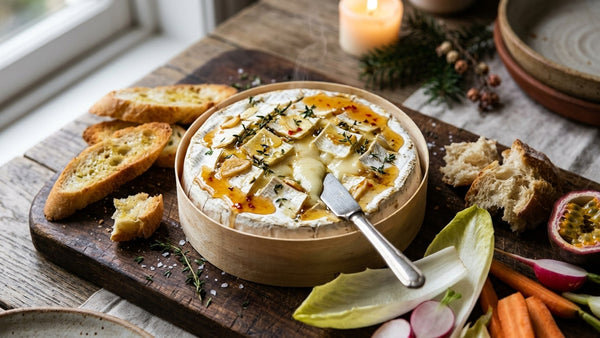
- With cheese. A slice of guava paste beside my baked camembert with passion fruit and hot honey is a very happy plate. The fruit and the salt cheese are made for each other.
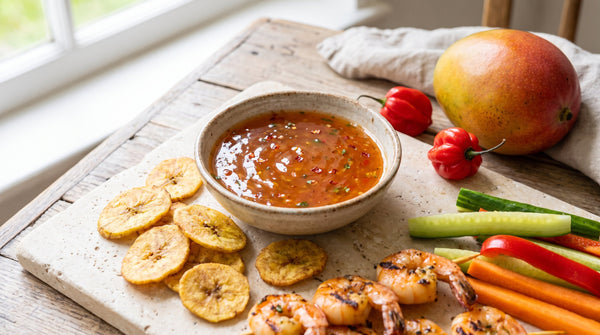
- In a dip. Stir a spoon of guava jam into my ten-minute Caribbean dipping sauce for prawns or chicken skewers.
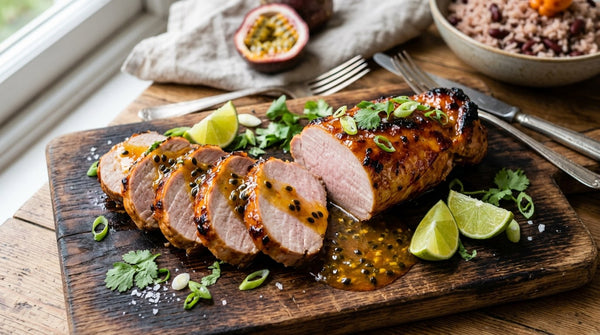
- With pork. Guava and pork are a pairing I love. Swap a little guava jam into the glaze of my passion fruit pork tenderloin and you will understand why.
- In a glass. Guava juice is a good base for a fruit punch, next to the ones in my rum punch and planteur. Make it without the rum for the children and the drivers.
Guava belongs to a big family of island fruit. If you enjoyed this, read my piece on soursop, the spiky fruit we call corossol, and my guide to Guadeloupean food for the rest of the table.
Sweet fruit, a little heat: the sauce I reach for
In Guadeloupe we never really separate sweet fruit from heat. A ripe fruit with salt and a touch of chilli is a snack from my childhood, and a sticky fruit glaze on grilled meat is how I like my Sundays.
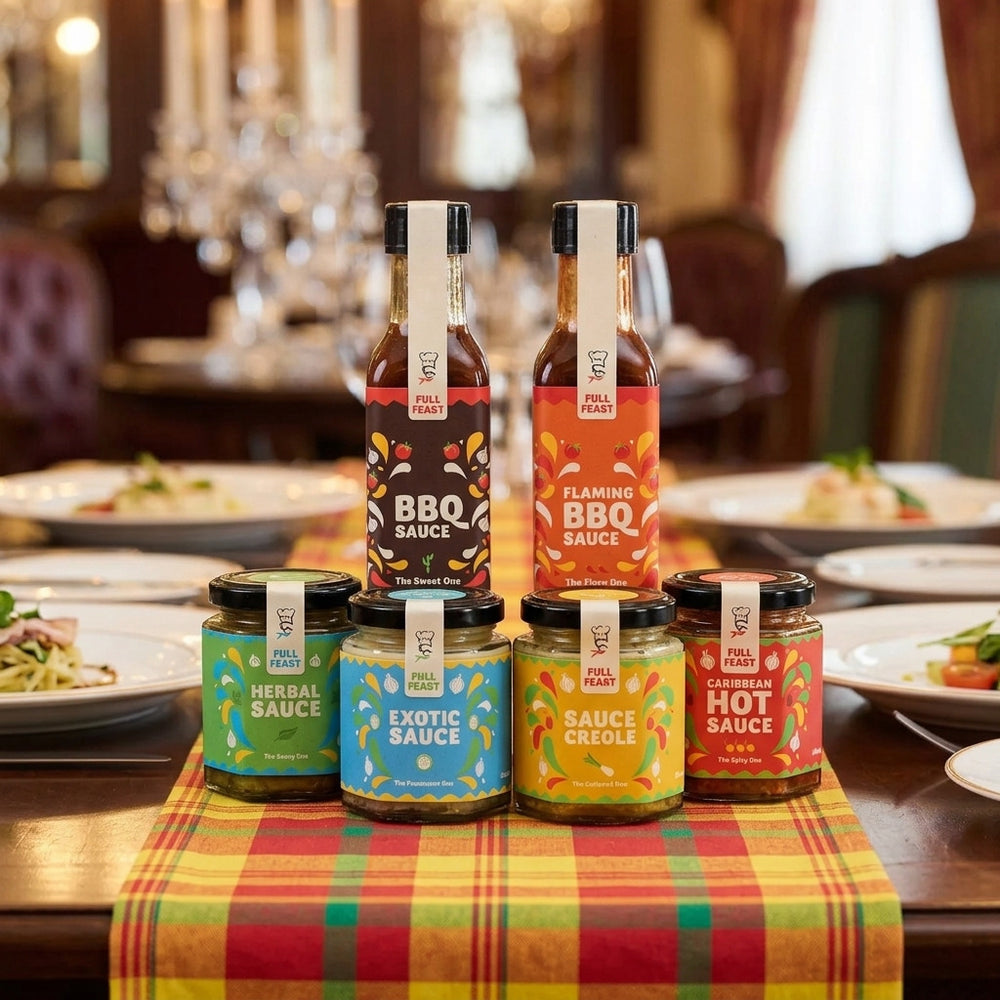
When I want that feeling with guava, I reach for Full Feast Exotic Caribbean Sauce. Let me be clear: there is no guava in that bottle. It is onion, passion fruit juice and chillies, with vinegar, salt and white pepper. But the passion fruit and the guava are neighbours on every market stall back home, and they get on well in the pan.
Mix two spoons of the sauce with one spoon of guava jam, warm it, and brush it on chicken thighs or pork chops in the last minutes on the grill. Sweet, tart, a gentle burn. That is the taste of a Sunday afternoon in Guadeloupe.
FAQ
What does a guava taste like? A ripe guava is sweet and perfumed, somewhere between a pear and a strawberry, with a light tartness. Pink varieties have the strongest aroma; white ones are milder and sweeter.
Can you eat the skin and seeds of a guava? Yes. The skin is thin and many people eat it with the flesh. The seeds are small and hard; you can eat them or scoop out the seedy centre with a spoon.
How do you know when a guava is ripe? It smells strongly sweet and musky, the skin turns from green to light yellow, and it gives a little when you press it. A green, hard guava is astringent and not ready.
What is guava called in French? Goyave. In Guadeloupe there is even a town called Goyave, named for the guava trees along its river.
What is the difference between guava and strawberry guava? Strawberry guava is a smaller, related fruit with red skin and a tart, berry-like taste. The common guava is bigger, with yellow skin and white, pink or red flesh.
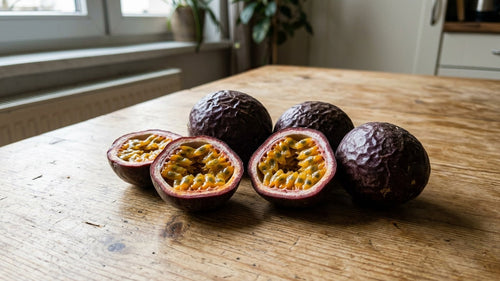
Guava's closest companion on the juice stall is maracudja, and I explain how to pick and eat a ripe passion fruit in its own piece.
One small thing to try this week
Buy one guava. Just one. Leave it in your fruit bowl until it perfumes the kitchen, the way it did in my mother’s house.
Then cut it in half, sprinkle a little sugar on top, and eat it with a spoon, seeds and all. No recipe. No pan. Only the fruit.
If you like it, buy three next week and start on the jam.
JP