Gwoka Drums, Biguine, Zouk and the Songs of Christmas
In Guadeloupe, music and food arrive together. You never hear drums at a party without smelling something frying nearby, and you never sit down to a big family meal without somebody turning the music up before the plates are cleared.
When I cook in my kitchen in England, there is always music on. Usually zouk, sometimes gwoka, and in December, the Christmas songs of home. People who visit ask me what it is, so here is the music of my island, the way I grew up with it.
Gwoka: the drum at the heart of Guadeloupe
If one sound is Guadeloupe, it is the ka, the drum. Gwo ka means big drum, and gwoka is the music made with it: drums, a singer, a chorus that answers, and dancers who step into the circle one at a time.
The drums were first made from barrels, the wooden casks that salted meat and goods arrived in, with goatskin stretched across the top. Two kinds play together:
- The boula keeps the rhythm steady, played by one or more drummers.
- The makè is the lead drum. The drummer watches the dancer and answers every movement with a beat, as if the drum and the dancer were having a conversation.
Gwoka has seven basic rhythms: léwòz, kaladja, padjanbèl, graj, toumblak, woulé and menndé. Each has its own mood. Kaladja is slow and sorrowful, toumblak is joyful, graj comes from the rhythm of grating manioc. Every Guadeloupean child recognises them before they can name them.
The music was born among enslaved Africans on the plantations, and for a long time it was treated as something to be ashamed of. From the 1960s and 1970s, musicians brought it back as the proudest sound of the island. In 2014, UNESCO added gwoka to its list of the Intangible Cultural Heritage of Humanity.
A léwòz night
A léwòz is a gwoka evening, usually on a Saturday night, out in the open. The drummers sit in a row, the singer calls, the crowd answers, and anyone brave enough steps into the circle to dance and challenge the makè.
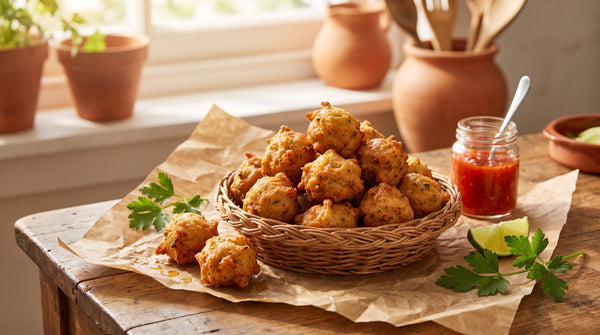
It goes on late. And there is always food at the edge of the yard: somebody frying accras, somebody with a pot of something hot, a bowl of sòs piman next to it, and a rum punch going round. Music that loud makes people hungry.
Biguine: the dance that went to Paris
Biguine was born in Martinique at the end of the nineteenth century and danced all over the French Caribbean. It mixes the old ballroom dances of Europe with Caribbean rhythm, led by the clarinet, the trombone and the banjo.
In the 1920s and 1930s, Antillean musicians took it to Paris, and the city went mad for it. It is the music of my grandparents’ generation, and you still hear it at weddings, when the older people get up and show the young ones how it is done.
Zouk: the sound that went round the world
Zouk means party in our Creole, and in 1979 a group of musicians from Guadeloupe gave the word to a new music. The band was Kassav’, founded by Pierre-Édouard Décimus with Freddy Marshall and the guitarist Jacob Desvarieux, and later joined by singers from Martinique, including Jocelyne Béroard.
Kassav’ took the rhythms of gwoka and carnival, added synthesisers, horns and studio polish, and sang in Creole. It was a huge success, across the Caribbean, in France, and in Africa, where zouk is still loved. For many people, it was the first time they had heard our language on the radio.
Zouk later slowed down into a romantic style, zouk love, which is the music of every slow dance at every Guadeloupean party since. If you want to understand the Creole language better, a zouk song is a beautiful place to start. I wrote about the language itself in my piece on Guadeloupe Creole.
Kompa: our neighbours’ music
Kompa comes from Haiti. It was created in the 1950s by the bandleader Nemours Jean-Baptiste, and it is a smooth, steady dance music that the whole French Caribbean loves. In Guadeloupe you hear it at every party, next to zouk, and many people dance both without thinking about which is which.
Carnival: the drums in the street
From January to Ash Wednesday, Guadeloupe belongs to carnival. Every Sunday the groups parade through the towns. Some march with brass bands, and the groupes à po march with nothing but skin drums, conch shells and hundreds of voices. It is loud, it is long, and you eat in the street: a bokit from a van, a cold drink, and back into the crowd.
Chanté Nwèl: the songs of Christmas
Of all the music of Guadeloupe, the one I miss most in England is chanté Nwèl.
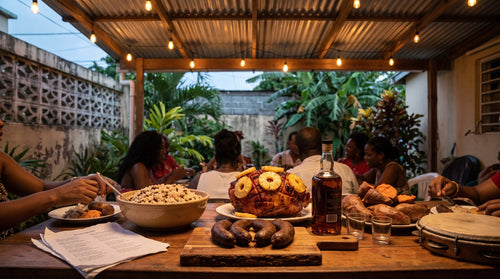
From late November until Christmas, families and neighbours gather in each other’s houses and gardens to sing. The songs are old French carols, but nobody sings them the French way. They are sung with drums, the chacha shaker and everything else that makes a noise, faster and louder every hour, until the carols sound like a party, which is exactly what they are.
And of course there is food. Boudin, always, and never enough. Accras. Shrubb and punch for the grown-ups. I wrote about the whole Christmas table in Christmas in the Caribbean.
The food that goes with the music
Every music of Guadeloupe comes with a plate. If you want to put on some gwoka or Kassav’ and cook something that goes with it, here is where I would start:
- For a léwòz night: accras and a rum punch.
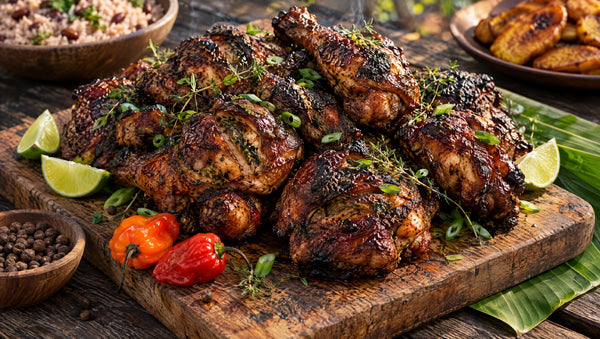
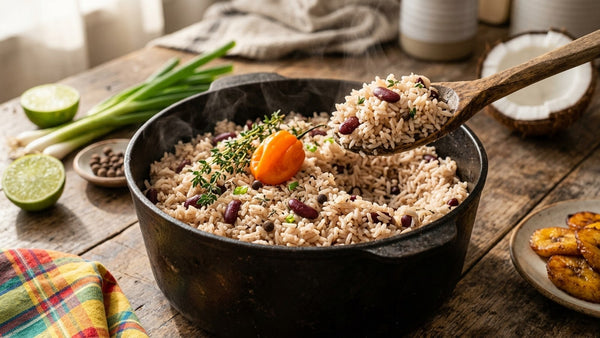
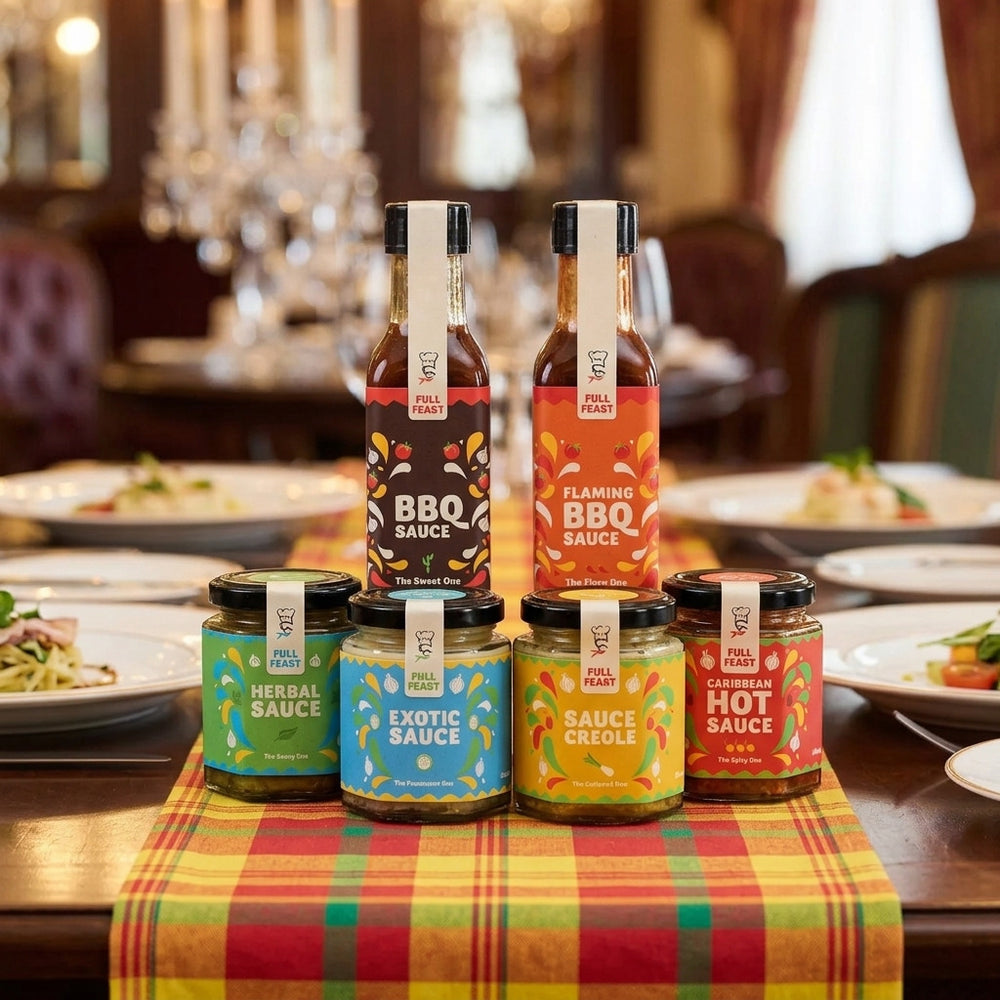
- For a zouk party: jerk chicken, rice and peas and a bowl of Caribbean Hot Sauce on the table.
- For a chanté Nwèl evening: Caribbean glazed ham and a jug of sorrel.
For more of the food, my guide to Guadeloupean food has the lot.
FAQ
What music is Guadeloupe known for?
Gwoka, the drum music of Guadeloupe, which UNESCO lists as Intangible Cultural Heritage, and zouk, the dance music the band Kassav’ made famous from 1979. Biguine and Haitian kompa are also widely played.
What is gwoka?
Gwoka is Guadeloupe’s traditional drum music. Drums called ka, a lead singer, a chorus and dancers take part. It has seven basic rhythms: léwòz, kaladja, padjanbèl, graj, toumblak, woulé and menndé.
What does zouk mean?
Zouk means party in Antillean Creole. It became the name of the music created by Kassav’ at the end of the 1970s.
Is zouk from Guadeloupe or Martinique?
Both. Kassav’ was founded by musicians from Guadeloupe, and some of its best-known singers are from Martinique. Zouk belongs to the whole French Caribbean.
What is chanté Nwèl?
Chanté Nwèl is the Christmas singing tradition of Guadeloupe and Martinique. From late November to Christmas, people gather to sing French carols to Caribbean drums and percussion, with food and drink.
And if you want to taste carnival in Britain, I wrote about Notting Hill Carnival at 60.
One small thing to try this week
Put on a Kassav’ record while you cook dinner. Any one. Turn it up a little louder than feels reasonable.
That is the right volume. That is how we cook.
JP