Coconut Tarts, Island Sorbet and the Sweet Table of a Guadeloupe Christmas
Late afternoon, back home in Guadeloupe, you hear it before you see it. A wooden barrel by the side of the road, a man turning a crank, round and round, ice and coarse salt packed around a metal drum. Inside, coconut milk is slowly becoming sorbet. You wait. Nobody hurries a sorbet coco.
That sound is my first memory of Caribbean desserts. The second is my mother’s kitchen in December, a bowl of blanc-manger setting in the fridge, and me told very firmly not to touch it before the guests arrived.
People in the UK know our savoury food better: the curries, the jerk, the hot sauce. But the sweet side of the islands is just as rich, and it tells the same story of sugar cane, coconut, spice and many peoples cooking side by side. So with Christmas coming, let me walk you through the sweet table, island by island, starting with mine.
What are Caribbean desserts?
Caribbean desserts are the sweets of the islands, built on a few local treasures: coconut, cane sugar, tropical fruit and warm spices such as nutmeg, cinnamon and vanilla. Each island adds its own history, so Guadeloupe has French-style tarts and set creams, Jamaica has Portuguese-rooted coconut pastries, and Christmas brings rum-soaked cakes.
Why coconut and sugar rule the sweet table
If you want to understand our desserts, look at what grows around the house. Coconut palms are everywhere, and cane fields cover whole plains. Sugar cane shaped the history of these islands, painfully, and its sweetness is in almost everything we bake. I wrote about that history in my piece on how sugar cane shaped Guadeloupe.
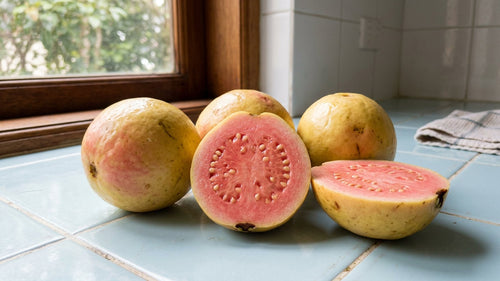
Then come the spices. Nutmeg, cinnamon and vanilla go into the coconut fillings, the custards and the sorbet. And then the fruit: guava, passion fruit, mango, papaya, banana. In Guadeloupe much of that fruit ends up as confiture, jars of maracudja, guava, mango, papaya, coconut and banana jam. Sweet, sometimes very sweet. That is how we like it.
The last ingredient is history. Every people who came to the islands brought a dessert habit:
- France gave Guadeloupe and Martinique the tart, the flan and the blanc-manger.
- Portugal, through the Jewish families who reached Jamaica from 1530, left the coconut tart that became gizzada.
- Britain left the Christmas pudding that grew into black cake.
- The islands’ own harvest gave the sweet potato, the coconut and the banana leaves that wrap a Barbados conkie.

The desserts of Guadeloupe
Here is what I grew up eating. If you visit, this is what to look for.
Tourment d’amour
The pride of Les Saintes, the smallest islands of Guadeloupe. It is a small tart: a crisp pastry base, a layer of coconut jam, and a soft sponge on top. The coconut filling is flavoured with sugar, vanilla and rum. Guava, banana, passion fruit and pineapple versions exist too, and I love them all, but coconut is the one to try first. The ripe guava version is worth a detour too; I explain why in my guide to guava.
The name means “torment of love”. The legend says the wives of Les Saintes fishermen baked them while waiting, worried, for their husbands to come home from the sea. Nobody can prove the story, and the tourism board says so honestly. But the name has stuck, and since May 2013 tourment d’amour has been a registered trademark in France. Every 15 August, at the patronal festival in Terre-de-Haut, there is even a contest for the biggest one.
Blanc-manger coco
A white, wobbly coconut cream, set cold. My mother made it with coconut milk, milk, vanilla, a little cinnamon and a scrape of nutmeg. Many cooks today use condensed milk and gelatine, which makes it very easy. It is served all over the French islands and in Haiti, and on a festive table in the Antilles you will often find it with fruit, next to a coconut cake or a pineapple cake.
Flan coco
A baked coconut custard with a caramel top. When you add sweet potato to it, people call it “mal élevé”, the badly brought up flan. I have never found out why, and I like it that way.
Sorbet coco
The roadside sorbet from my opening. Coconut milk, condensed milk, cinnamon, nutmeg, lime zest, vanilla and a drop of bitter almond, churned by hand in a crank machine surrounded by ice and coarse salt. It takes about half an hour of turning. You find the stands by the road, at markets and near beaches, mostly from mid afternoon. Some also sell passion fruit, papaya or mango.
One piece of honest advice: it is a street food, so choose a busy stand, the way you would anywhere. Even the Routard guide tells visitors to taste before they buy.
Nobody hurries a sorbet coco. You wait for the crank, and the waiting is part of the dessert.
JP
Kaka bœuf and the fruit itself
From Marie-Galante comes kaka bœuf, a rustic cake made with cane syrup and filled with coconut. Do not let the name put you off. And sometimes dessert is just fruit: sapotille, which tastes of caramel, or the small pink figue-dessert banana, eaten straight from the bunch.
Popular desserts in Jamaica
This is one of the questions people ask most, and Jamaica has a wonderful sweet tradition.
- Gizzada. A small crisp tart with its edge pinched into a star, filled with grated coconut, brown sugar, ginger, nutmeg, cinnamon and vanilla. It is also called pinch-me-round, after that crimped edge. It looks like a cousin of our tourment d’amour, and in a way it is: both are coconut tarts that crossed an ocean.
- Grater cake. Despite the name, more a sweet than a cake: grated coconut cooked with sugar, white at the bottom and pink on top. That is why people call it “pink on top”. Made with wet, unrefined sugar, it used to be called grater brute.
- Sweet potato pudding. Grated sweet potato with coconut milk, nutmeg and cinnamon, baked dense and often with a soft custardy top.
- Black cake. The Christmas cake of Jamaica, Trinidad and Guyana, dark with rum-soaked fruit and browning. I gave it a whole post: black cake, the rum-soaked Christmas loaf.

Sweets from Trinidad, Barbados and Haiti
Go further and every island has its own sweet signature:
- Trinidad and Tobago: tamarind balls, toolum and sugar cake, the sweets of a Trinidad childhood.
- Barbados: conkies, made from cornmeal, coconut, sweet potato, pumpkin and raisins, steamed in banana leaves. They are eaten for Independence Day on 30 November, and in Trinidad and Saint Lucia the same parcel is called paime. I explain more in my guide to Barbados food.
- Haiti: pen patat, a sweet potato loaf with cinnamon, and dous makòs, a fudge. Haitian desserts carry a strong French influence, just like ours.
Caribbean Christmas desserts
December is when the sweet table is at its fullest. In Guadeloupe, the festive meal ends with blanc-manger, coconut cake or pineapple cake. In Jamaica and Trinidad, a slice of black cake waits, with a glass of sorrel. Across the islands, the dessert is the part of Christmas the children remember. If you want the whole picture of the season, read my piece on what Christmas in the Caribbean actually tastes like.
The trick, in my mother’s kitchen, was that dessert was made first. The blanc-manger set overnight. The tarts were baked the day before. On the day itself, the oven belonged to the meat.
How to cook the meal before dessert
A Caribbean dessert deserves a proper meal in front of it. Here is what I would cook this December, so the sweet ending has something to follow:
- My Caribbean pork stew, the Christmas ragoût of my mother’s kitchen, slow and rich. A cold blanc-manger after it is perfect.
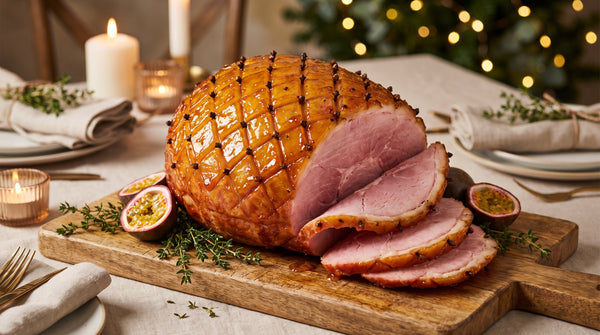
- A gammon with a passion fruit glaze, the centrepiece if you have a crowd. It leaves room for a slice of black cake.
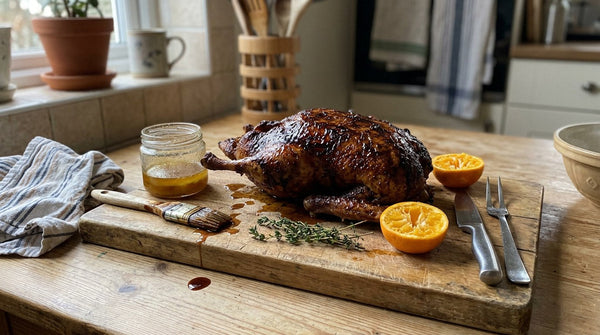
- A Caribbean roast duck for a smaller table, followed by a coconut tart.
Where Full Feast fits
Let me be clear: no hot sauce goes in a dessert. My sauces belong to the course before.
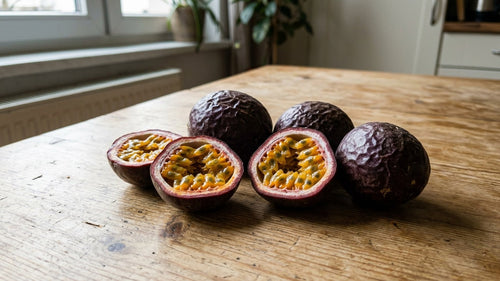
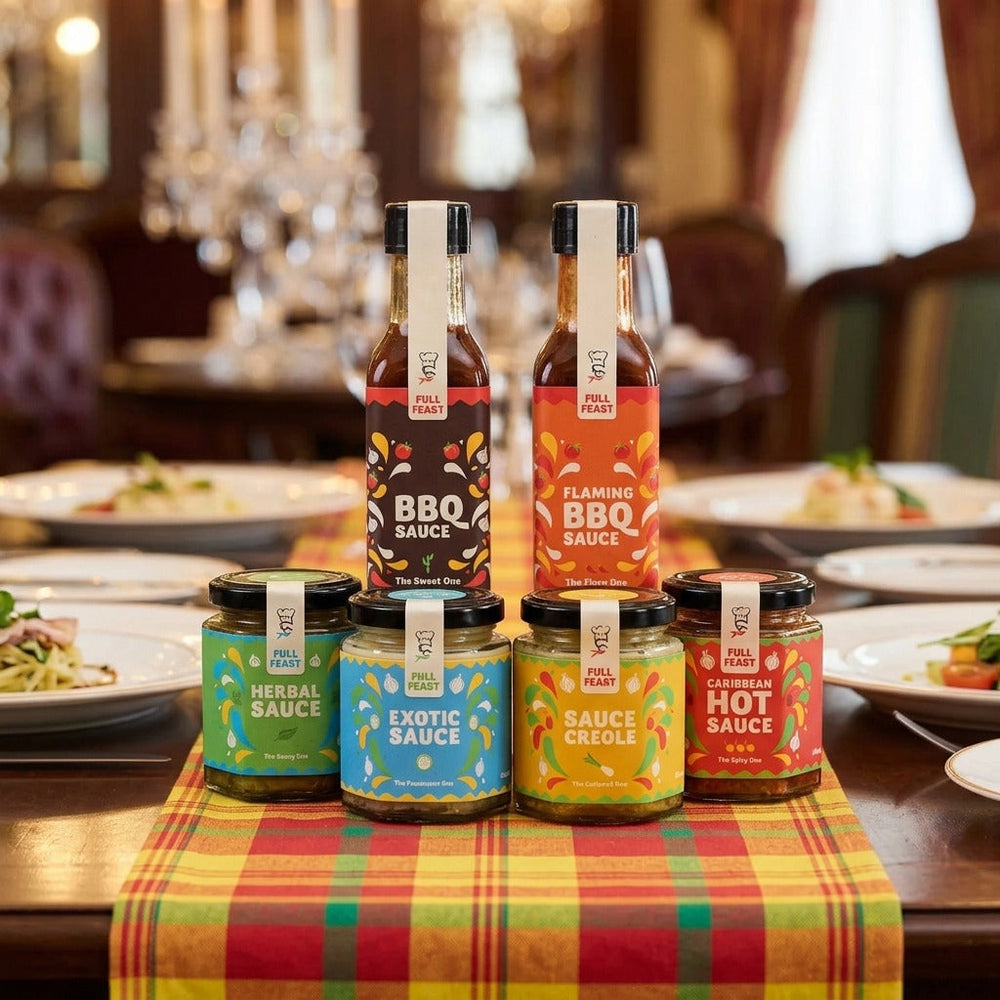
For the gammon, I use our Exotic Caribbean Sauce in the glaze. It is made with onion and passion fruit juice, with a little chilli, so it brings fruit and a gentle warmth to the ham. Then the passion fruit comes back, naturally, in a tourment d’amour or a scoop of fruit sorbet at the end. The meal starts and finishes with the same fruit, and the guests feel the thread even if they cannot name it.
FAQ
What are the most popular Caribbean desserts? Coconut desserts lead everywhere. In Guadeloupe, tourment d’amour, blanc-manger coco, flan coco and sorbet coco. In Jamaica, gizzada, grater cake, sweet potato pudding and black cake. In Barbados, conkies.
What are some popular desserts in Jamaica? Gizzada (a pinched coconut tart), grater cake (a pink and white coconut sweet), sweet potato pudding, and black cake at Christmas.
What is a traditional Caribbean Christmas dessert? It depends on the island. In Guadeloupe and Martinique, blanc-manger, coconut cake and pineapple cake. In Jamaica, Trinidad and Guyana, black cake soaked in rum.
What is tourment d’amour? A small tart from Les Saintes in Guadeloupe: crisp pastry, coconut jam and a soft sponge on top. Guava, banana, passion fruit and pineapple versions exist.
What is blanc-manger coco? A cold set coconut cream, made with coconut milk, milk or condensed milk, vanilla and spices, and set with gelatine. It is loved in Guadeloupe, Martinique and Haiti.
One small thing to try this week
Make a blanc-manger coco. Warm a tin of coconut milk with a little sugar or condensed milk, a vanilla pod, a cinnamon stick and a grating of nutmeg. Stir in softened gelatine, pour it into a bowl, and leave it in the fridge overnight.
The next day, turn it out with some sliced mango or passion fruit pulp on top. It takes ten minutes of work and tastes like December in Guadeloupe.
And this time, nobody will tell you not to touch it before the guests arrive.
JP