The Tall Grass Guadeloupe Presses Into Juice, Syrup and Rhum, and How I Use It
When I was a boy, the best sweet in Guadeloupe did not come in a wrapper. It came from a stick of sugar cane. Someone would take a cutlass, strip off the hard green skin, and hand you a piece of pale, wet fibre. You bit, you chewed, you sucked out the juice, and you spat the rest on the ground. Your chin was sticky for an hour.
Back home, cane is everywhere. It stands taller than a man along the roads. It is in the sugar on the table, the syrup in the ti-punch, the rhum in my uncles’ glasses on a Sunday. Half our history is written in it, and not all of that history is sweet.
In Britain, sugar cane is mostly a word on a bag of sugar. So let me tell you what it really is, where it came from, how Guadeloupe uses it, and how you can taste a little of it in a UK kitchen.
What is sugar cane?
Sugar cane is a tall tropical grass, of the same family as bamboo, grown for the sweet juice in its stalks. The stalks are thick, jointed and fibrous, and they store sugar (sucrose) inside. Crushed, they give a juice that becomes sugar, syrup, molasses and rum.
Where sugar cane comes from
Sugar cane is not from the Caribbean at all. It is native to New Guinea, where people bred it from a wild cane, Saccharum robustum. From there it travelled west through Asia.
India gave the world the trick that matters most. People there found how to turn cane juice into dry crystals, around 350 AD. Our word sugar goes back to the Sanskrit śarkarā, and the Sanskrit khanda, for those crystals, gave English the word candy.
The cane reached the Americas in 1493. Christopher Columbus carried it on his second voyage to Hispaniola, the island that is now Haiti and the Dominican Republic, and the first harvest there came in 1501.
Sugar cane in the Caribbean: the hard part of the story
I cannot write about cane without saying this plainly. Sugar made fortunes in Europe, and it was built on slavery. Cane needed enormous labour, and enslaved Africans became the main workforce on the plantations of the islands.
In Guadeloupe, cane farming began in the late 17th century. Many of us who grew up there descend from the people who cut that cane. So when I chew a stick of it, I taste something sweet, and I also remember. Both things are true at once.
In the 19th century, the world changed again. Europe learned to make sugar from beet. A scientist named Marggraf had shown in 1747 that sugar from beet was identical to sugar from cane, and by 1899 beet gave about two thirds of the world’s sugar. For the cane islands, that was a heavy blow.

How sugar cane grows
Cane needs heat and water: a tropical or subtropical climate, and plenty of rain. Farmers do not plant seeds. They plant pieces of the stalk, each with at least one bud, and a new plant grows from that bud.
In Guadeloupe, a plant takes 9 to 12 months to be ready. Harvest runs from February to June. And then you must hurry, because once cane is cut, its sugar starts to fall. It has to reach the sugar factory within two days.
Today Guadeloupe has about 3,500 cane growers and two sugar factories still working. Around 90 percent of the cane becomes sugar, and about 10 percent becomes rum.
How sugar cane becomes sugar
The steps are simple to say, and hard work to do:
- Crush. The stalks go through rollers that squeeze out the juice. In Guadeloupe we call this fresh juice vesou.
- Clean and boil. The juice is filtered, then boiled down until it turns to a thick syrup.
- Crystallise. The syrup forms crystals, and a spinning drum separates the sugar from the dark liquid around it. That liquid is molasses.
- Use the fibre. The dry fibre left behind is called bagasse. In Guadeloupe it is burned to make electricity, and the ash goes back on the fields.
Guadeloupe cane sugar is amber, with a taste of caramel. It is the sugar that goes into our cakes and into the ti-punch.
Back home, nothing from the cane is wasted. The juice becomes sugar, the syrup becomes rhum, and even the fibre lights the island.
JP
Cane in Guadeloupe: juice, syrup and rhum
Marie-Galante, one of the islands of Guadeloupe, is where I go in my mind when I think of cane. It has around a hundred old windmills that once crushed it. One of them, the Moulin de Bézard, was built in the 19th century and stopped working in 1956. It was restored in the early 1990s, and today it crushes cane again so visitors can taste the fresh juice right there.
Then there is sirop de batterie. Cane juice is boiled for hours in three big cauldrons, and the last one is called la batterie, which gave the syrup its name. It comes out almost black, thick, tasting of caramel and molasses with a little vanilla. On Marie-Galante it is still made by hand: about 50 to 60 litres from two tonnes of cane. We use it in cakes, sweets and in the ti-punch instead of sugar.
And rhum. Much of the world’s rum is made from molasses. Rhum agricole is made from the fresh cane juice itself, and in Guadeloupe distilleries may use juice or molasses. Guadeloupe rum is protected by a geographical indication. I tell the story of the ti-punch and the planteur in my post on how Guadeloupe pours rum punch. Drink it slowly, the way it is meant.

How to eat sugar cane
If you find a fresh stick, do it the way we did as children:
- Wash the stalk, then cut between the joints, the hard rings along the stalk. I never chew those.
- Stand each piece upright and slice the hard green or purple skin away with a sharp knife. Take care, it is slippery.
- Cut the pale inside into thin sticks, the size of your finger.
- Chew to squeeze out the juice, then spit out the fibre. You do not swallow it.
The juice is lovely cold. In many countries it is served with lemon and ice. At home I add a squeeze of lime.
Is sugar cane bamboo?
No, though they look like cousins, and in a way they are. Both are grasses of the same family, Poaceae, with tall jointed stems. But bamboo belongs to its own branch of that family, the Bambusoideae, and sugar cane to another, the genus Saccharum. Bamboo is grown for its woody canes; sugar cane for the sweet juice in its stalks.
Cane sugar vs regular sugar
In the UK, white sugar can come from cane or from sugar beet, which the UK grows and processes in a season of about five months. Once refined, the white sugar is the same: beet sugar was shown to be identical to cane sugar back in 1747.
The difference you can taste is in the less refined sugars. Amber and brown cane sugars keep some of the cane’s flavour, that caramel note. For Caribbean cooking, I reach for them first.
How to cook with sugar cane
You will rarely cook with the stalk itself in a UK kitchen. But the cane is in so much of what I cook: the brown sugar in a glaze, the rum in a marinade, the caramel at the bottom of a stew pot. Here are three recipes where it does its quiet work:
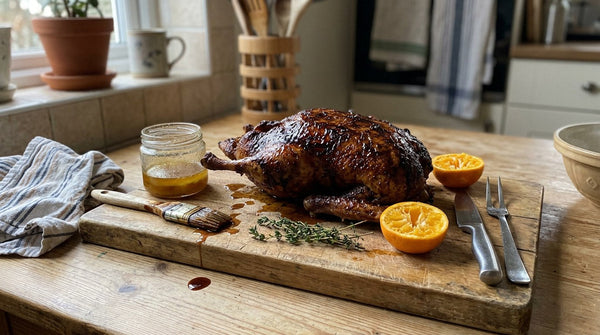
- My Caribbean roast duck with a sticky rum glaze: rum and brown sugar painted on in the last minutes, until the skin goes dark and shiny.
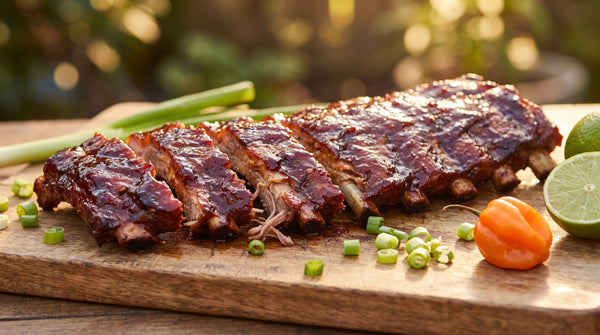
- Caribbean BBQ ribs: a slow oven, then a glaze with brown sugar and orange that melts to a gloss.
- Pigs in blankets with a sticky Caribbean glaze: the same sugar lacquer we put on the Christmas ham back home, made small.
Sugar is also the secret of the browning in my mother’s stews, melted in hot oil before the meat goes in. You can read about it in my post on oxtail and Sunday lunch.
The sauce that carries the cane
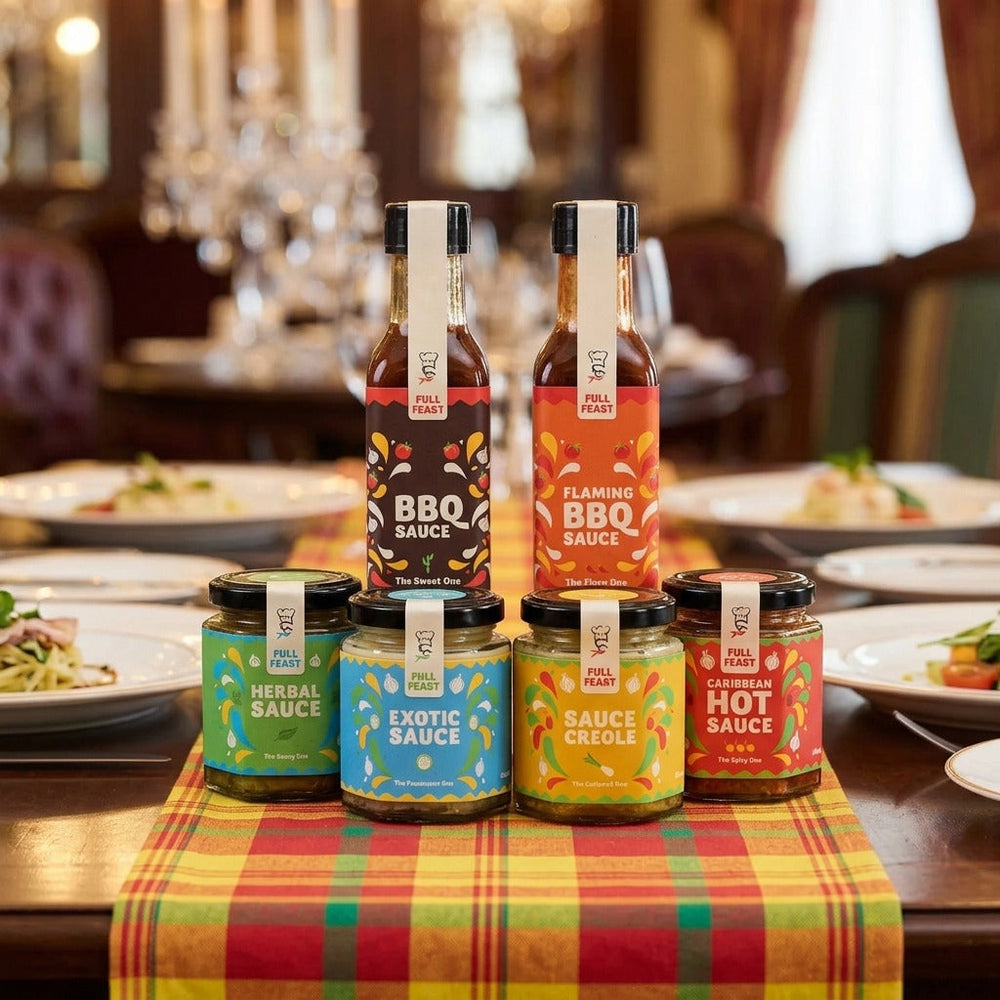
When I made my BBQ Sauce, I wanted the sweetness of home in it without the heat. So it has tomato purée, brown sugar, balsamic vinegar, rum, garlic and English mustard. No chilli at all, so the whole table can share it.
It does what cane sugar does in the oven. Brush it on in the last 20 minutes, and the sugar and tomato turn sticky and dark. Use it on duck, pork, chicken wings or roast vegetables. Stay near the oven, though: sugar goes from dark to burnt very fast.
For a wider look at what we eat on the island, from colombo to accras, start with my guide to Guadeloupean food.
FAQ
What is sugar cane? A tall tropical grass grown for the sweet juice in its thick, jointed stalks. The juice is crushed out and turned into sugar, syrup, molasses and rum.
Can you eat sugar cane raw? Yes. Peel off the hard skin, cut the inside into sticks, chew to get the juice, and spit out the fibre. Do not swallow the fibre.
Is sugar cane bamboo? No. Both belong to the grass family, Poaceae, but they sit in different branches of it. Sugar cane is grown for the sweet juice in its stalks.
What is the difference between cane sugar and regular sugar? In the UK, white sugar comes from cane or sugar beet, and refined white sugar is the same either way. Less refined amber and brown cane sugars keep more of the cane’s caramel flavour.
What is sugar cane bagasse? The dry fibre left once the juice is pressed out. In Guadeloupe it is burned to make electricity, and elsewhere it is also used for paper and as mulch.
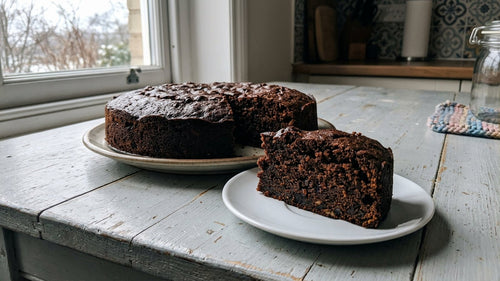
Brown sugar, molasses and rum from the cane all meet in one Christmas slice: Caribbean black cake, dark with browning and soaked fruit.
One small thing to try this week
Buy a bag of amber or brown cane sugar instead of white. Taste a few crystals on their own, slowly. That caramel note at the end is the cane talking.
Then use it. Melt a spoonful in a pan with a little oil, let it go the colour of strong tea, and drop in your chicken or beef for a stew. Or stir a spoonful into a glaze for Sunday’s roast. Small thing. Big flavour.
And if you ever see a stick of sugar cane in a shop, buy it. Peel it, chew it, and think of a boy in Guadeloupe with a sticky chin.
JP