The Sour Brown Pod Behind Island Juice, Sugared Sweets and Worcestershire Sauce
When I was a boy in Guadeloupe, tamarind was not something you bought. It was something you found. A brown pod, a little bent, the shell dusty and dry. You pressed it with your thumb, it cracked, and inside was a sticky brown flesh wrapped around hard seeds. You put it in your mouth and your whole face folded up. Sour first. Then, slowly, sweet.
That is still the best way to meet tamarind. My mother used it differently. She soaked the pulp in water, worked it with her fingers, strained it and sweetened it, and we had a cold drink that tasted like no other juice on the table.
Here in the UK, most people have eaten tamarind without knowing it. It is in curries, in chutneys, and in the brown Worcestershire sauce in the cupboard. So let me tell you what it is, how it tastes, and how I cook with it in a London kitchen.
What is tamarind?
Tamarind is the fruit of a large tropical tree, Tamarindus indica, from the legume family. The fruit is a brown pod with a brittle shell. Inside is a sticky, sweet and sour pulp around a few hard seeds. Cooks use the pulp to make food and drinks sharp, a little like lemon, but deeper and fruitier.
Where tamarind comes from
Many people think tamarind is Indian. The name even says so: it comes from the Arabic tamar hindi, which means “Indian date”. But the tree is native to tropical Africa, where it grows wild across the Sudan. It has been grown in India for so long that some writers took it for a native plant there.
From Africa and India, tamarind travelled with traders and ships. It reached tropical America and the West Indies long ago, and specimens were growing in Central America in the 16th century. Today you find the tree all over the Caribbean, in yards and along the roads.
It is a big tree. It can grow to 24 or even 30 metres, and it keeps bearing fruit heavily for 50 or 60 years, sometimes longer. A tamarind tree is planted for the grandchildren.
What does tamarind taste like?
Is tamarind sour? Yes, and that is the point. The green pulp is very acid. As the pod ripens, the flesh turns brown or reddish brown and the sugar comes up, so a ripe pod is sour and sweet together. Some trees give sweeter fruit than others, and people know which tree in the village is the good one.
I describe it to friends like this: imagine a date and a lime had a child. There is the soft, dark sweetness of dried fruit, and then a sharp, clean sourness that wakes up your tongue. Nothing else tastes quite like it.

The tamarind fruit and tree, up close
If you get a fresh pod, here is what you are holding:
- The shell. Brown, cinnamon brown or greyish, dry and brittle. It cracks easily when the fruit is ripe.
- The pod. Usually 5 to 18 cm long, often a little curved, with bumps where the seeds sit.
- The fibres. A few stringy veins run along the pulp. Pull them away.
- The pulp. Sticky and brown. This is the part you eat and cook with.
- The seeds. Between one and twelve, hard and glossy, each in a thin papery skin. Do not bite them.
In the West Indies the tree flowers in summer, the green pods hang in December and January, and they ripen from April through June. So by the time the pods are ripe, the year is warming up, and a sour, cold drink is very welcome.
How the islands eat tamarind
In the French Antilles, tamarind is the base of syrups, jams and punches. The cold drink made from the sweet pulp is called tamarinade, and that was my mother’s drink: pulp, water, sugar, strained and chilled. The same simple drink is popular right across the tropics.
Each island has its own habit:
- Trinidad and Tobago. Tambran balls: pulp worked with sugar, sometimes with pepper or garlic, rolled in more sugar. They are also found in Jamaica, Cuba and the Dominican Republic. Trinidad, Jamaica and Grenada also know tambran sauce. I wrote about that food culture in my guide to Trinidad food.
- The Bahamas. Unripe pods, called swells, are roasted in the coals until they burst.
- Puerto Rico. Cones of shaved ice soaked in tamarind syrup, sold by street vendors.
- Guadeloupe and Martinique. Syrups, jams and the cold tamarinade, and the pods eaten straight from the tree.
Sour first, then slowly sweet. If your face does not fold up a little, the tamarind is not ready.
JP
Tamarind in savoury cooking
The sweets are the fun part, but tamarind is serious in the savoury kitchen too. Its pulp is an important ingredient in chutneys, curries and sauces. In Thailand it replaces lemon to make a dish sour. In Senegal it seasons fish. In Mauritius it goes into chutney and into the sauce of a fish curry.
And in England, it is one of the main ingredients of Worcestershire sauce, which was invented here. Some barbecue sauces use it as well. So that sharp, fruity depth you taste in a good brown sauce often comes from a tree in the tropics.
Tamarind sits naturally in our island curries too. If you want the story of the curry itself, read my piece on the history of colombo curry, and for the other spices in our kitchen, my guide to Caribbean spices.

Tamarind paste, blocks and pods: how to use them in the UK
In the UK you will rarely see fresh pods. What you find easily is:
- Tamarind paste. In small jars in the big supermarkets. Already strained, ready to spoon in. Easy, but often less fruity.
- Tamarind blocks. A pressed brick of pulp, still with seeds and fibres. More work, more flavour. This is what I use.
- Dark concentrate. A very dark, thick paste, often from India. Strong, so use a little.
How to use a block:
- Break off about 50 g and put it in a bowl.
- Pour over 150 ml of warm water and leave it 15 to 20 minutes.
- Squash and squeeze it with your fingers until the pulp comes away from the seeds.
- Push it through a sieve with a spoon. Throw away the seeds and fibres.
What comes through is your tamarind water. Keep it in the fridge in a closed jar and use it within a few days. A block keeps much longer in a cool, dry cupboard.
How to eat tamarind fresh
If you do find pods, eat one the way we did as children. Crack the shell and lift it off. Pull away the stringy fibres. Then put a piece of pulp in your mouth, eat the flesh from around the seed, and spit the seed out. That is all. A ripe pod is sweet enough to snack on; a less ripe one will make you pull a face, which is half the pleasure.
How to cook with tamarind at home
Tamarind loves slow cooking, curry and anything glazed. These are the recipes on the blog where a spoon of tamarind water fits naturally:
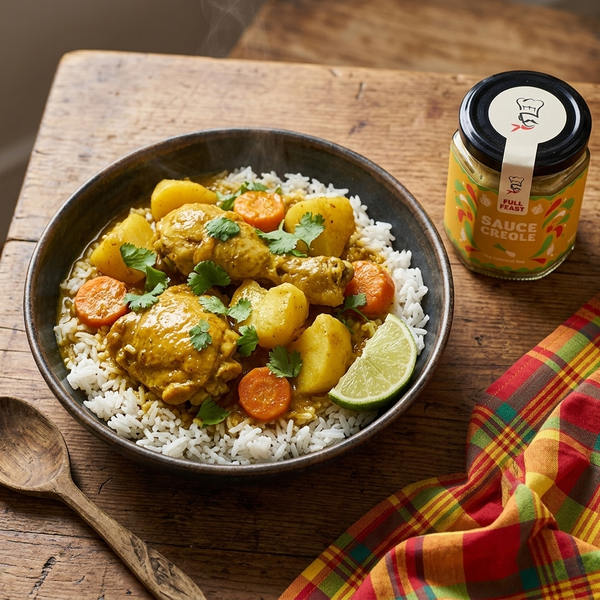
- My Guadeloupe poulet colombo. A spoon of tamarind at the end lifts the curry the way a squeeze of lime does, with more depth.
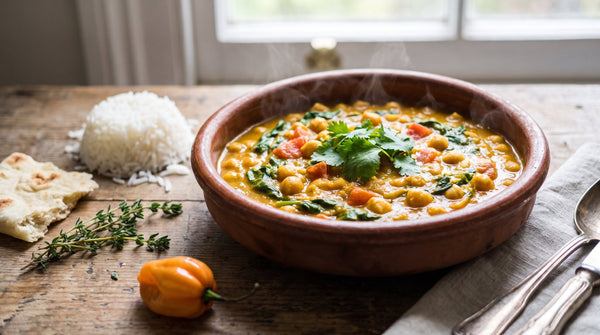
- The Caribbean chickpea curry, a weeknight pot that loves a sour note to balance the sweet onions.
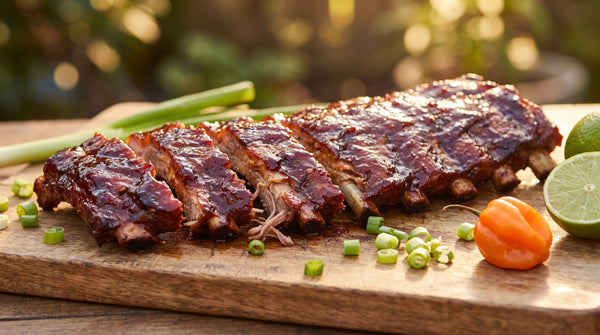
- Caribbean BBQ ribs, where tamarind in the glaze makes the sticky coating sharper and more grown up.
Where Full Feast fits
Our BBQ Sauce does not contain tamarind. It is made with tomato purée, brown sugar, balsamic vinegar, rum, garlic and English mustard, so it is already sweet and sharp. That is exactly why the two get on so well.
Here is my trick for ribs or chicken thighs: mix four tablespoons of the BBQ Sauce with one tablespoon of tamarind water. The balsamic and the tamarind meet in the middle, and the glaze tastes fruitier and deeper, like it cooked all afternoon. Brush it on in the last 15 minutes so the sugar does not burn.
FAQ
What is tamarind made of? Tamarind is a fruit. The pod holds a sticky pulp around hard seeds, and the pulp is what you buy as paste, block or concentrate.
Is tamarind sour or sweet? Both. Green tamarind is very sour. Ripe tamarind is sweet and sour together, and some trees give sweeter fruit than others.
How do you eat tamarind? Crack the shell, pull off the fibres, eat the pulp from around the seeds and spit the seeds out. In cooking, soak the pulp in warm water and strain it.
Where does tamarind come from? The tree is native to tropical Africa. It spread to India very early, and from there to the Caribbean and the Americas.
Is Worcestershire sauce made with tamarind? Yes. Tamarind is one of its main ingredients, which is why the sauce tastes both fruity and sharp.
One small thing to try this week
Buy a tamarind block next time you shop. It is cheap and keeps well in a cool, dry cupboard.
Soak a small piece, strain it, and make a glass of tamarinade: tamarind water, cold water, sugar to taste, plenty of ice. Taste it before you sweeten it, and then add sugar a spoon at a time until it tastes like sun.
Keep the rest of the tamarind water for a curry or a glaze at the weekend. One block, three ways, and a little piece of my childhood in your kitchen.
JP