My Vegetable Colombo From Guadeloupe
I will tell you a secret about sweet potato curry. Most people cook it like a soup. They throw everything in the pot at once, they let it boil, and they end up with orange mush and a sauce that tastes of nothing but coconut. Back home in Guadeloupe we would never call that a colombo.
When I was a boy, there was a week at the end of every month when the money ran thin. Seven children, one kitchen, and my mother still had to put something on the table that made us happy. That was the week of the vegetable colombo. No chicken, no pork, no cabri. Just patate douce from the market, an aubergine, a christophine if the neighbour had some on her vine, and the colombo powder that lived in a tin by the stove.
I remember the sound first. The onions hitting the hot oil, then the colombo going in and the kitchen turning yellow with the smell of turmeric, cumin and toasted seeds. My mother would stand there and stir, and she would not let anybody add the coconut until that powder had fried properly. “The colombo must cook,” she said. “Raw spice is for people in a hurry.”
Then the sweet potato went in, and the pot went quiet for a while. When she lifted the lid, the sauce had turned thick and golden, and the sweet potato held its shape on the spoon but melted the second it touched your tongue. We never once missed the meat.
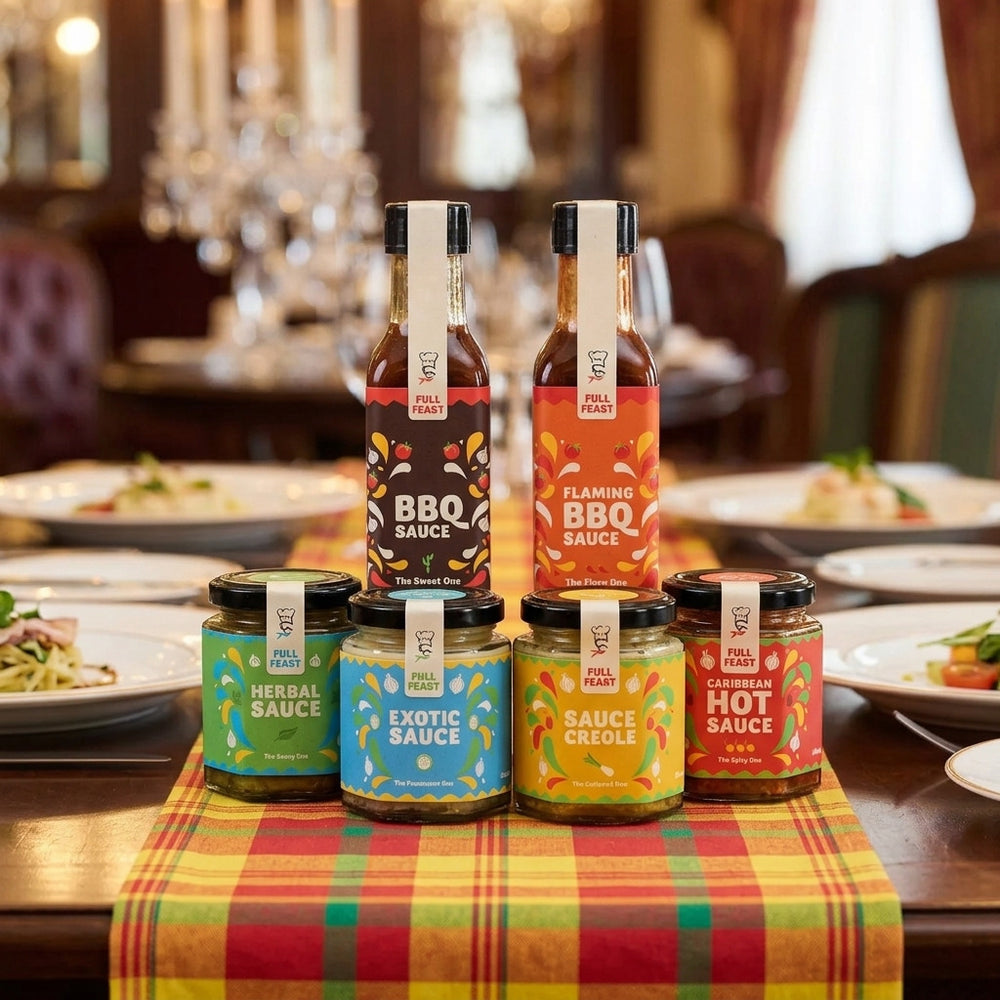
This is that colombo. I make it now with my Caribbean Hot Sauce, because the Scotch bonnet, onion and garlic in that jar give me the heat my mother got from the whole pepper she floated in the pot.
Recipe at a glance
- Cuisine: French Caribbean (Guadeloupe)
- Prep: 15 minutes • Cook: 40 minutes • Total: 55 minutes
- Serves: 4
- Featured sauce: Caribbean Hot Sauce
- Heat level: 7/10, warm and building (use 2 tablespoons for a gentler pot)
- Diet: Vegan, gluten free (with gluten free stock and a gluten free colombo powder), dairy free
What you’ll need
A colombo is a dish and a spice blend at the same time. The powder came to Guadeloupe with the workers who arrived from southern India in the second half of the 1800s, and today every family has its own mix. The thing that makes it different from an Indian curry powder is the toasted rice ground in with the spices, which gives the sauce its body. You can buy colombo powder from Caribbean grocers and online, or mix your own from the spices below.
- 2 tbsp vegetable oil
- 1 large onion, finely chopped
- 4 garlic cloves, crushed
- 3 spring onions, sliced (keep the green tops for the end)
- 2 tbsp colombo powder (check the label is gluten free), or make your own: 2 tsp ground turmeric, 2 tsp ground coriander, 1 tsp ground cumin, 1/2 tsp ground fenugreek, 1/2 tsp black mustard seeds, 1/4 tsp ground black pepper
- 3 tbsp Full Feast Caribbean Hot Sauce, plus more at the table
- 2 ripe tomatoes, chopped
- 1 medium aubergine (about 300g), cut into 3cm chunks
- 800g sweet potato (about 3 medium), peeled and cut into 3cm chunks
- 4 sprigs of fresh thyme
- 4 whole allspice berries
- 1 bay leaf
- 400ml tin of full fat coconut milk
- 300ml hot gluten free vegetable stock
- 1 christophine (chayote), peeled and cut into chunks, or 1 large courgette
- 100g baby spinach
- Juice of 1 lime
- Salt, to taste
- A small handful of fresh coriander or flat-leaf parsley, chopped
How I make it
-
Wake up the spices. If you are making your own colombo, put the mustard seeds in a dry pan over medium heat until they start to pop, about 1 minute, then tip them into a bowl with the other ground spices. If you are using a bought powder, you can skip this.
-
Cook the onion slowly. Heat the oil in a wide, heavy pot over medium heat. Add the onion with a pinch of salt and cook for 7 to 8 minutes, stirring now and then, until it is soft and just turning golden at the edges. You don’t rush this part. The onion is the sweetness under everything.
-
Fry the colombo. Add the garlic, the white part of the spring onions and the colombo powder. Stir for 1 to 2 minutes. The kitchen will turn yellow and smell toasty. If it starts to catch, add a splash of water. This is the step my mother guarded. Raw colombo tastes dusty; fried colombo tastes like home.
-
Build the base. Stir in 2 tablespoons of Caribbean Hot Sauce and the tomatoes. Cook for 3 to 4 minutes, pressing the tomatoes with your spoon, until you have a thick, glossy paste.
-
Give the aubergine a head start. Add the aubergine and turn it through the paste so every piece is coated. Cook for 5 minutes. The aubergine drinks the spice and goes silky, so it needs a little more time than the rest.
-
In goes the sweet potato. Add the sweet potato, thyme, allspice and bay leaf. Pour in the coconut milk and the hot stock. Bring it up to a gentle simmer, put the lid on and cook for 15 minutes. Let it bubble softly, never a hard boil, or the sweet potato breaks up before the sauce is ready.
-
Add the christophine. Stir in the christophine or courgette and carry on simmering with the lid off for 12 to 15 minutes. The sauce will reduce and thicken. It is ready when a knife goes into the sweet potato with no resistance but the chunks still hold their shape.
-
Finish it bright. Fold in the spinach until it wilts, about 1 minute. Add the lime juice and the last tablespoon of hot sauce. Taste now, and only now, for salt. Fish out the thyme stalks, the allspice berries and the bay leaf if you can find them.
-
Let it sit. Take the pot off the heat and leave it for 5 minutes with the lid on. The sauce settles, the flavours come together, and the spring onion tops and coriander go on just before you serve.
The role of Caribbean Hot Sauce in this dish
In Guadeloupe, the heat in a colombo usually comes from a whole Scotch bonnet dropped into the pot and taken out before it bursts. It is a beautiful trick, but it is also a gamble. Leave it too long and nobody at the table can eat.
My Caribbean Hot Sauce takes the gamble away. It is Scotch bonnet, white onion and garlic with a little oil and vinegar, so when you stir two tablespoons into the base at step four, the heat fries with the colombo and sinks right into the sauce. The onion and garlic in the jar make the base deeper, and the vinegar lifts the coconut so it never tastes heavy.
Then that last spoonful at the end does a different job. It wakes the whole pot up. The sweet potato is sweet, the coconut is rich, and that fresh hit of Scotch bonnet cuts through both. Sweet, then warm, then a slow fire at the back. That is what a colombo should do.
Tips from my kitchen
- Cut everything the same size. 3cm chunks of sweet potato cook evenly. If some pieces are tiny, they melt into the sauce while the big ones are still hard.
- Orange or white sweet potato both work. In Guadeloupe our patate douce is often pale inside with a pink skin, and it is a little drier and nuttier. The orange ones you find in every UK supermarket are softer and sweeter, so check them a few minutes earlier.
- Want more protein? A tin of drained chickpeas added with the christophine turns this into a sweet potato curry with chickpeas that will feed six. If you love chickpeas, my Caribbean chickpea curry is the quick weeknight cousin of this dish.
- It is better tomorrow. Like every colombo, this one tastes even better the next day. Make it on Sunday and you have lunch sorted.
- No coconut milk? Use 700ml of stock instead and stir a tablespoon of smooth peanut butter into the base at step four. The sauce will be thinner and nuttier, but still very good.
What to serve sweet potato curry with
At home, colombo always comes with plain white rice. The rice is there to catch the sauce, so make plenty. If you want something more generous, my rice and peas turns it into a proper Sunday plate.
A few slices of fried plantain on the side are never a mistake: the caramel edges and the colombo spice belong together. A crisp salad of cucumber and tomato with a spoon of Fresh Herbal Sauce brings something cool to the table.
And if this colombo makes you hungry for the classic, you will find my mother’s Sunday poulet colombo on the blog too. If you want to know where colombo really comes from, I wrote about the history of colombo curry, from the ships to our Sunday tables.
FAQ
Can you freeze sweet potato curry?
Yes. Let it cool completely, then freeze it in portions for up to 3 months. Leave the spinach out if you are cooking specially for the freezer and stir it in fresh when you reheat. The sweet potato goes a little softer after freezing, but the flavour holds well. Thaw it in the fridge overnight and reheat it gently until it is piping hot all the way through.
How long to cook sweet potato curry?
About 25 to 30 minutes once the sweet potato goes in, for 3cm chunks. Fifteen minutes with the lid on, then another 12 to 15 with the lid off so the sauce reduces. The whole pot, from chopping the onion to the table, takes under an hour.
Can you make sweet potato curry without coconut milk?
You can. Replace the coconut milk with more vegetable stock and stir a spoon of peanut butter into the base for richness, or blend a few chunks of the cooked sweet potato back into the sauce to thicken it. In Guadeloupe plenty of colombos are made with no coconut at all, so you are in good company.
What is the difference between colombo and curry?
Colombo is our Caribbean curry. The spices are close to a South Indian blend (turmeric, coriander, cumin, fenugreek, mustard seed), but colombo powder usually has toasted rice ground in, which thickens the sauce, and in Guadeloupe we cook it with thyme, allspice and lime. It is softer and more fragrant than many curry powders, and the heat comes from Scotch bonnet rather than dried chilli.
Is this sweet potato curry vegan and gluten free? What allergens does it contain?
It is vegan as written, and all Full Feast sauces are vegan. It is gluten free as long as your stock and your colombo powder are gluten free, so check those labels. It contains mustard (the mustard seeds in colombo powder) and coconut, so keep that in mind if you are cooking for someone with allergies. If you add peanut butter instead of coconut milk, it contains peanuts.
Final word from me
This was never a fancy dish in our house. It was the end of the month, the money was short, and my mother still made us feel like kings with a pot of sweet potato and a tin of colombo. Make it slowly, fry your spices properly, and taste it before you salt it. Then put the jar on the table and let everyone find their own fire.
JP