My Mother’s Slow Sunday Ragoût From Guadeloupe
It is Sunday morning. The pot is on. The kitchen smells of lime, onion and thyme, and my mother is standing at the stove with a wooden spoon in one hand and her other hand on her hip, daring anybody to lift the lid. This is the beef stew I grew up on, the ragoût de bœuf, and in our house it meant one thing: today we eat together.
In Guadeloupe, beef was not an everyday meat when I was a boy. Fish, yes. Chicken, often. But a piece of beef was for Sunday, for a birthday, for the day an aunt came over from Basse-Terre. So when my mother bought it, she treated it with respect. She washed it in lime first, the way every Creole cook I know does, then she browned it slowly, in batches, until the bottom of the pot was dark and sticky. Only then did the onions go in.
Then came the part we hated as children: waiting. Three hours. Seven of us in a small house, all of us hungry, and the smell coming through every door. My little sister would try to steal a piece of carrot from the pot and get the spoon on her knuckles. Nobody touched that pot until my mother said so.
When it was ready, the beef fell apart if you looked at it. The sauce was thick, glossy, sweet with onion, with a warmth that sat at the back of your throat. We ate it with rice and red beans and fried plantain, and nobody spoke for ten minutes.
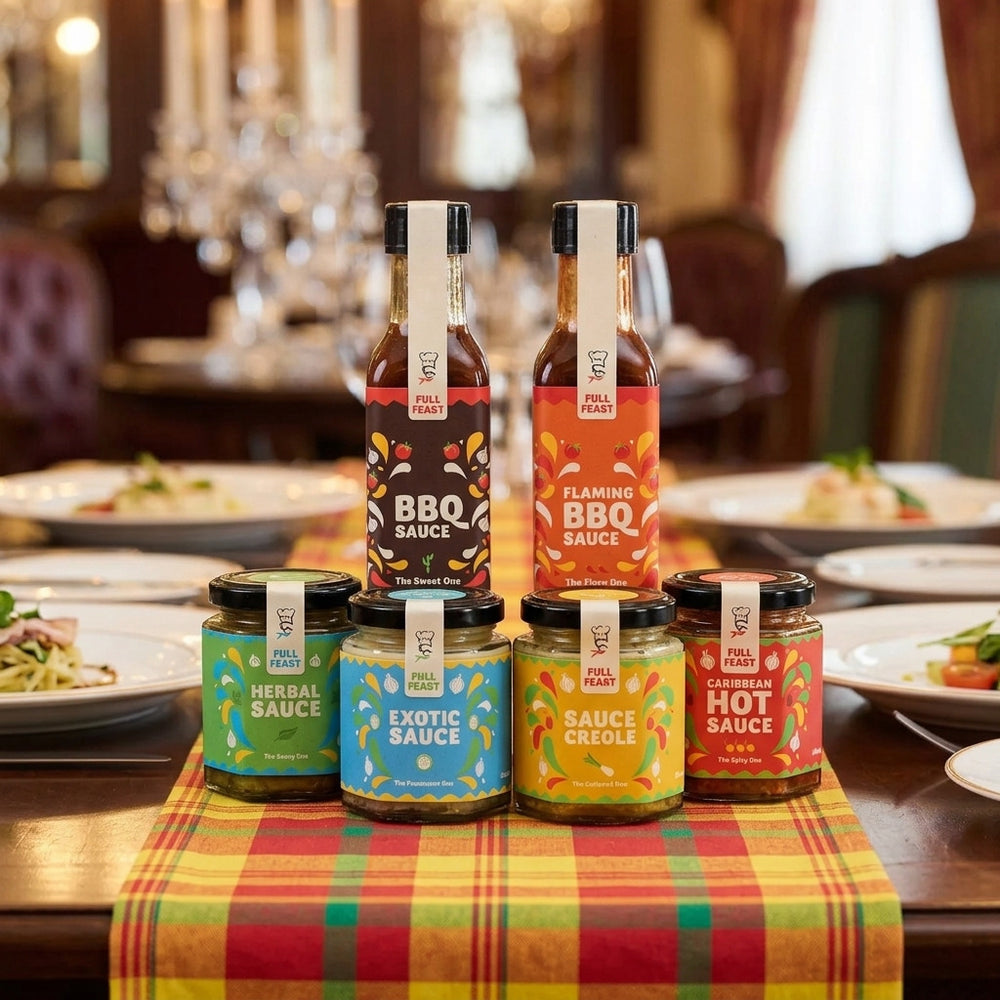
This is that stew. I make it now with my Caribbean Sauce Creole, because that sauce is the onion base my mother spent an hour building, already in the jar.
Recipe at a glance
- Cuisine: French Caribbean (Guadeloupe)
- Prep: 30 minutes (including 20 minutes in the lime) • Cook: 3 hours • Total: 3 hours 30 minutes
- Serves: 6
- Featured sauce: Caribbean Sauce Creole
- Heat level: 5/10, a gentle green chilli warmth, never a fight
- Diet: Gluten free (with gluten free stock and cornflour), dairy free
What you’ll need
The most important thing is the cut. Ask your butcher for chuck, or buy the packs labelled braising steak. You want meat with some fat and those little lines of connective tissue running through it. That is what melts in the long cook and makes the sauce rich. Lean meat will only go dry and stringy, I promise you.
- 1.2kg beef chuck or braising steak, cut into 5cm chunks
- Juice of 2 limes
- 1 tsp salt, plus more to taste
- ½ tsp freshly ground black pepper
- 3 tbsp vegetable oil
- 1 large onion, thinly sliced
- 4 garlic cloves, crushed
- 4 spring onions, chopped
- 6 sprigs of fresh thyme
- 6 whole allspice berries (or ¼ tsp ground allspice)
- 2 bay leaves
- 7 tbsp (about 100g) Caribbean Sauce Creole, 6 for the pot and 1 to finish
- 700ml hot beef stock (check the label is gluten free)
- 3 carrots, peeled and cut into thick chunks
- 500g sweet potato, peeled and cut into 4cm chunks
- 1 tbsp cornflour mixed with 2 tbsp cold water (optional, to thicken)
- A small handful of flat-leaf parsley, chopped
You need one heavy pot with a lid, a cast iron casserole if you have one. Thin pans burn the bottom before the beef is tender.
How I make it
-
Wash the beef in lime. Put the beef in a bowl, squeeze over the lime juice, add the salt and pepper and turn everything with your hands. Leave it 20 minutes. Back home this is how every piece of meat starts. It freshens the beef and seasons it right through.
-
Dry it properly. Lift the beef out, leave the juice behind, and pat every piece dry with kitchen paper. Wet meat steams. Dry meat browns. This is the difference between a grey stew and a dark one.
-
Brown it hard, in batches. Heat 2 tablespoons of the oil in your heavy pot over a medium high heat until it shimmers. Add a third of the beef, spaced out, and leave it alone for 3 to 4 minutes until it lifts easily with a deep brown crust. Turn and colour the other sides. Take it out, then do the next batch. Do not crowd the pan. You don’t rush this part. It takes about 20 minutes and it is where all the flavour starts.
-
Soften the onion. Turn the heat down to medium, add the last tablespoon of oil and the sliced onion. Cook for 8 minutes, scraping the dark bits from the bottom of the pot with your spoon, until the onion is soft and golden. Add the garlic and spring onions and cook 1 minute more, just until you can smell the garlic.
-
Bring in the Sauce Creole. Stir in 6 tablespoons of Caribbean Sauce Creole and let it cook with the onions for 2 minutes. You will hear it sizzle, then quieten as it melts into a thick, sweet base. This is the heart of the stew.
-
Back goes the beef. Return the beef and all its resting juices to the pot. Add the thyme, allspice and bay leaves, then pour in the hot stock until the meat is just covered. Bring it to a gentle bubble, then turn the heat as low as it goes. Put the lid on slightly ajar and let it simmer quietly for 1 hour 45 minutes, stirring now and then. If you prefer the oven, cover it and put it in at 160°C (140°C fan) for the same time.
-
Add the vegetables. Stir in the carrots and sweet potato, pushing them under the liquid. Cook for another 50 minutes to 1 hour, until the beef gives way when you press it with a spoon and the vegetables are tender. Some of the sweet potato will break at the edges. Good. It thickens the sauce.
-
Check the sauce. Taste it. Add salt if it needs it. If the sauce is thinner than you like, stir in the cornflour mixture and simmer 2 minutes until glossy. If it is too thick, a splash of hot water.
-
Finish and rest. Take the pot off the heat. Fish out the thyme stalks and bay leaves, stir in the last tablespoon of Sauce Creole and scatter over the parsley. Put the lid back and leave it 10 minutes. That last spoon of sauce wakes everything up again after the long cook.
The role of Caribbean Sauce Creole in this dish
When my mother made this stew, a big part of the morning was the onions. Sliced thin, cooked low, a green chilli in with them, a splash of vinegar at the end so the sweetness did not go flat. Caribbean Sauce Creole is exactly that idea. It is mostly onion, cooked soft and sweet, with green chilli for a gentle warmth and a little vinegar to keep it bright.
In a beef stew it does two jobs. Early in the pot, it melts into the browned onions and becomes the body of the sauce, sweet and savoury, clinging to every piece of beef. At the end, the one spoon you stir in brings back the freshness and that soft chilli glow that three hours of simmering always takes away. It is warm, not fierce. Children eat this stew. Grandmothers eat this stew.
Tips from my kitchen
- Cut big. Chunks of 5cm hold together over three hours. Small pieces fall to threads before the sauce is ready.
- Never boil it. A stew that bubbles hard goes tough, even after hours. You want a lazy bubble, one here, one there.
- Make it the day before. Like every ragoût, it is better the next day. Cool it, keep it in the fridge, and gently reheat until it is piping hot all the way through.
- Want more fire? Put a bottle of Caribbean Hot Sauce on the table and let everybody take their own. That is how we do it at home, so the children and the brave can eat from the same pot.
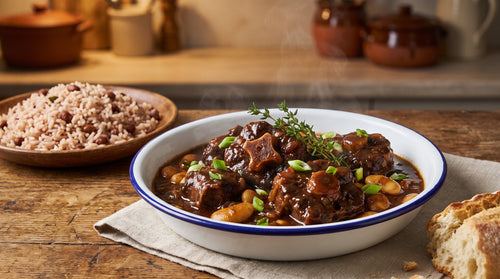
- The same slow method works with oxtail. If you love this, try my Caribbean oxtail on a cold weekend.
What to serve beef stew with
In Guadeloupe, a ragoût on a Sunday means white rice to catch the sauce, and beans on the side. Beef stew with rice is how I eat it nine times out of ten, and my rice and peas is the perfect partner, the coconut softening the warmth.
For something sweet against the savoury, fry some ripe plantain. My fried plantain takes ten minutes while the stew rests. A simple green salad with lime and oil keeps the table fresh.
And if you are in England in January and you want beef stew with dumplings, I will not stop you. Drop small flour and suet dumplings on top for the last 20 minutes with the lid on. Just know that dumplings made with wheat flour mean the dish is no longer gluten free.
FAQ
Why is my beef stew tough?
Nine times out of ten, one of three things. The wrong cut (lean meat like topside never goes tender), the heat too high (a hard boil tightens the meat), or not enough time. Chuck needs about 2 hours 30 minutes to 3 hours at a gentle simmer. If it is still tough, it is not ready. Put the lid back and give it another 30 minutes.
What beef for stew in the UK?
Chuck, sold as chuck steak or braising steak, is the best. Shin works beautifully too and gives an even richer sauce, though it can take a little longer. Brisket is good. Skip anything sold for frying or roasting quickly.
Can you make beef stew in a slow cooker?
Yes. Do steps 1 to 5 in a pan on the stove, because the slow cooker cannot brown the meat. Then put everything, vegetables too, into the slow cooker with only 500ml of stock, since nothing evaporates. Cook 7 to 8 hours on low. Stir in the last spoon of Sauce Creole at the end.
Can you freeze beef stew?
You can. Cool it quickly, then freeze in portions for up to 3 months. The sweet potato goes a little softer after freezing, which most people do not mind in a stew. Defrost overnight in the fridge and reheat gently until it is steaming hot right through.
Is this beef stew gluten free?
All the Full Feast sauces are gluten free, so this recipe is gluten free as long as your beef stock and cornflour are labelled gluten free. Check the stock for celery too, as many stocks contain it. If you add dumplings made with wheat flour, it is not gluten free.
Final word from me
This is not a quick dinner, and I will not pretend it is. It is a Sunday pot, the kind you start in the morning and let fill the whole house while you get on with your day. Brown the beef properly, keep the heat low, and wait. When you lift that lid and the beef falls apart under your spoon, you will understand why my mother made seven hungry children wait for it.
Cook it for the people you love.
JP