Lime, Garlic and a Pan of Sweet Peppers, the Guadeloupe Way
It is a Wednesday evening in my London kitchen. The limes are cut, the garlic is crushed, and two white hake fillets are sitting in a bowl getting to know each other with the marinade. A pan of onions and peppers is going soft on the back of the hob. The whole flat smells of thyme. And I am back home in Guadeloupe for a minute, even if the rain is hitting the window.
This hake recipe is my weekday version of a dish every Creole kitchen knows: poisson à la créole, fish in a Creole sauce. Back home it was never hake. It was snapper, grouper, whatever the boats brought into Pointe-à-Pitre that morning. My mother would buy it whole, scale it on the back step, and wash it in lime juice and salt before anything else happened. That is the rule in our islands. Fish meets lime first. Always.
On Fridays she made the big pot, the court-bouillon de poisson that simmered slow while we did our homework. But on a busy weekday, with seven children to feed, she did it quicker. The fish went into a hot pan, the sauce was made on the side, and the two met on the plate.
When I came to England I went looking for a fish that would do the same job. I found it in hake. Firm, white, sweet, cheaper than cod, and much of it landed in Cornwall. It holds together in the pan, the skin goes crisp, and it takes a lime marinade beautifully. Let me show you how I make it.
Recipe at a glance
- Cuisine: French Caribbean (Guadeloupe), made with British hake
- Prep: 20 minutes (including 15 minutes marinating) • Cook: 20 minutes • Total: 40 minutes
- Serves: 4
- Featured sauce: Caribbean Sauce Creole
- Heat level: 5/10, a gentle green chilli warmth that sits under the sweetness
- Diet: Gluten free, dairy free, pescatarian
What you’ll need
Ask the fishmonger for skin-on hake fillets, about 150 g each, and ask them to pin-bone them for you. If your supermarket only has skinless, that is fine; you lose the crackle but nothing else. Fresh is best, but frozen hake works well if you defrost it overnight in the fridge and dry it properly.
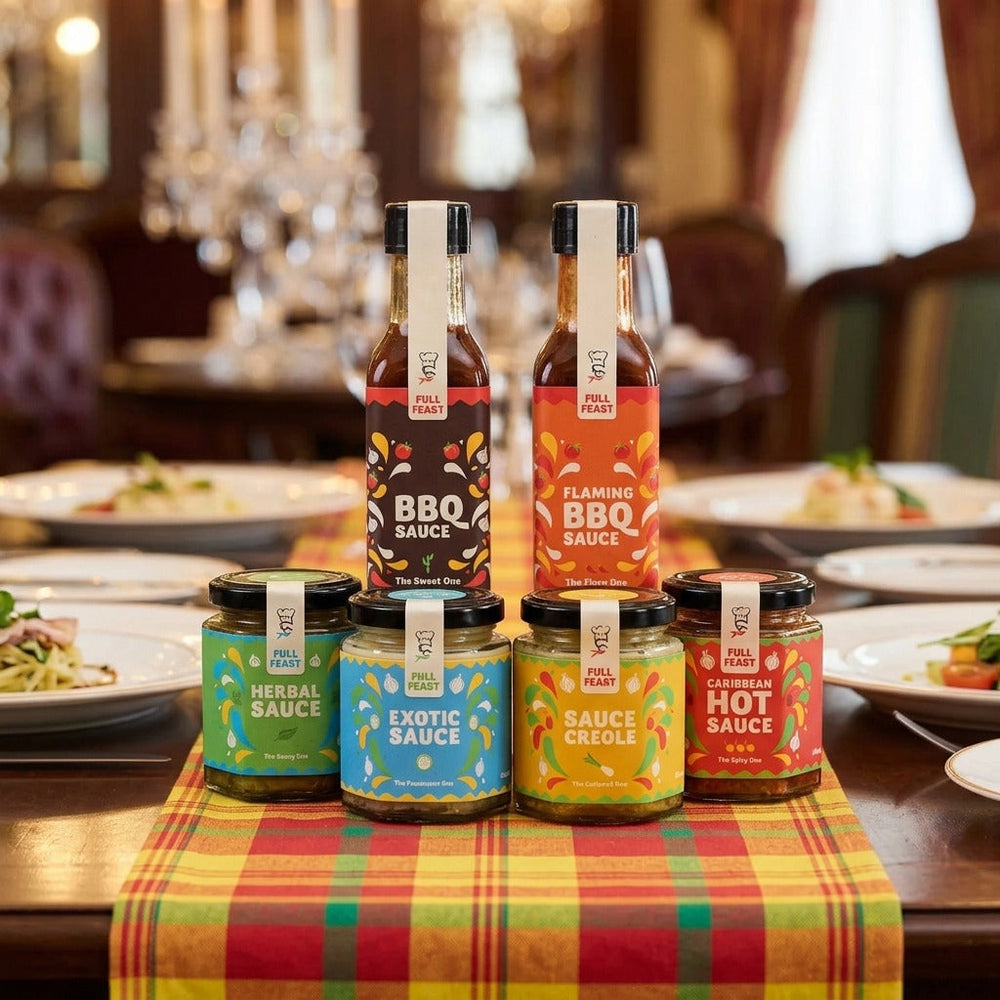
The sauce in the pan is built on my Caribbean Sauce Creole. It is mostly onion, cooked down slow with green chilli, a little vinegar and white pepper. That is exactly what a Creole fish sauce needs underneath it: sweetness, a soft heat, a bit of sharpness. You add the fresh peppers, the thyme and the tomatoes, and the jar does the work that would otherwise take you an hour of stirring onions.
For the hake and the marinade:
- 4 skin-on hake fillets, about 150 g each, pin-boned
- Juice of 1 lime
- 2 garlic cloves, finely grated
- 1 tbsp Full Feast Caribbean Sauce Creole
- ½ tsp fine salt
- ½ tsp freshly ground black pepper
- 1 tbsp cornflour, for dusting the skin
- 2 tbsp vegetable oil, for frying
For the Creole pepper sauce:
- 2 tbsp vegetable oil
- 1 large onion, halved and sliced
- 1 red pepper, deseeded and sliced into strips
- 1 green pepper, deseeded and sliced into strips
- 3 garlic cloves, sliced
- 4 spring onions, whites and greens sliced separately
- 4 sprigs of fresh thyme
- 1 bay leaf
- 4 whole allspice berries, lightly crushed
- 2 ripe tomatoes, chopped
- 4 tbsp Full Feast Caribbean Sauce Creole
- 150 ml water
- Juice of 1 lime, plus wedges to serve
- A small handful of flat-leaf parsley, chopped
How I make it
- Pat the hake fillets dry with kitchen paper. Lay them in a shallow dish, skin side up. Mix the lime juice, grated garlic, 1 tbsp of the Sauce Creole, salt and pepper, and rub it over the flesh side. Leave for 15 minutes. Not more than 30, or the lime starts to cook the fish and it goes soft.
- While the fish marinates, start the sauce. Warm 2 tbsp oil in a wide frying pan over a medium heat. Add the onion with a small pinch of salt and let it soften for 5 minutes, stirring now and then. You want it sweet and pale gold, not brown.
- Add the red and green peppers and cook for 4 minutes until they start to slump. Now the garlic, the spring onion whites, the thyme, the bay leaf and the crushed allspice. One minute. Listen to it sizzle and smell what happens to the kitchen.
- Add the tomatoes and cook for 3 minutes until they begin to break down. Stir in the 4 tbsp of Sauce Creole and the water. Bring it to a gentle bubble, then turn it down and let it simmer for 6 to 8 minutes, until the peppers are soft and the sauce is glossy and thick enough to hold a line when you drag a spoon through it. Taste it. The jar is already seasoned, so add salt only if it needs it. Keep it warm on the lowest heat.
- Now the fish. Scrape off most of the marinade with the back of a knife (the garlic will burn if you leave lumps of it). Pat the skin completely dry again. This is the part people skip, and it is the reason their skin sticks. Dust the skin side lightly with the cornflour.
- Put a second large frying pan, non-stick or well-seasoned cast iron, over a medium-high heat with 2 tbsp oil. When the oil shimmers, lay the fillets in skin side down, laying each one away from you. Press each fillet gently with a fish slice for 10 seconds so the skin stays flat.
- Leave them alone. Four minutes, no poking, no lifting. You will see the flesh turn from glassy to white, creeping up the sides. When it is white about two thirds of the way up and the skin releases easily, it is ready to turn.
- Flip each fillet and give it 1 minute on the flesh side, maybe 2 if your fillets are thick. The hake is cooked when the flesh is white all the way through and flakes when you press it, or reads 63°C in the thickest part. Take it off the heat straight away. Hake goes from perfect to dry very quickly.
- Stir the lime juice, the parsley and the spring onion greens into the pepper sauce. Spoon the sauce onto warm plates and set the hake on top, skin side up, so the skin stays crisp. Lime wedges on the side. Eat it now.

The role of Caribbean Sauce Creole in this dish
In my mother’s kitchen, a Creole sauce for fish started with onions cooked slowly in oil until they turned soft and sweet. That takes time, and on a weeknight nobody has it. The Caribbean Sauce Creole is that slow onion base already made, more than two thirds onion, with green chilli for a warmth that builds slowly instead of biting you.
It does two jobs here. A spoonful in the marinade gives the fish a savoury edge next to the sharp lime. Then four spoonfuls in the pan turn fresh peppers and tomatoes into a proper sauce, thick and glossy, in under ten minutes. The sweetness of the onion is what makes white fish sing. The chilli is gentle enough for children and present enough for me.
Tips from my kitchen
- Dry fish fries, wet fish steams. Pat the skin dry twice, once before the marinade and once after. A little cornflour on the skin finishes the job and keeps the dish gluten free.
- Fifteen minutes is enough lime. Back home we sometimes marinated a whole fish for hours, but a thin fillet is different. Leave hake too long in lime and the outside turns chalky before it ever sees the pan.
- Do not crowd the pan. If your pan cannot fit four fillets with space between them, cook them two at a time and keep the first two warm on top of the sauce, skin up.
- Same sauce, different fish. This pepper sauce is beautiful with a whole fish too. If you want to go further, try it next to my Caribbean red snapper, the way we cooked fish on the island.
- For a hotter plate, leave the seeds in a slice of fresh green chilli and add it with the garlic. The sauce can take it.
What to serve it with
In Guadeloupe, fish like this comes with white rice to soak up the sauce, and often red beans on the side. Here at home I make a pot of my rice and peas, which is my favourite of all the hake recipes with rice I know, because the coconut and the Creole peppers were made for each other.
For something crisp next to the soft fish, fry some ripe plantain. My fried plantain takes ten minutes and brings a caramel sweetness that sits beautifully against the lime. A simple green salad with avocado and a squeeze of lime keeps it fresh.
If someone at your table wants more fire, put a bottle of my Caribbean Hot Sauce on the table. A few drops on the fish, not in the pan, so everyone else can still enjoy the gentle version.

FAQ
How do you cook hake fillets in a pan without the skin sticking?
Three things. A dry skin, a hot pan and patience. Pat the skin dry, dust it with a little cornflour, and lay it into shimmering oil skin side down. Then leave it for 4 minutes. The skin sticks at first and releases by itself once it is crisp. If you try to move it early, it tears. Pan fried hake only needs a minute on the second side.
Is hake like cod?
Very like it. Hake belongs to the same wider family of white fish, and in the pan it behaves the same way: big, soft white flakes and a mild flavour. I find hake a little sweeter and a little more tender than cod, and it is usually cheaper. You can use cod loin in this recipe with the same timings.
Is hake a good fish to eat?
It is one of my favourites. It is lean, high in protein and gentle in flavour, which makes it perfect for a sauce like this one. Cornish hake has been certified sustainable by the Marine Stewardship Council since 2015, so look for the blue MSC label when you buy it.
How do you cook hake in the oven?
Marinate it the same way, then lay the fillets skin side up on an oiled tray and roast at 200°C (180°C fan) for 10 to 12 minutes, until the flesh is white and flakes easily. You lose the crisp skin, but it is a good way to cook a lot of fish at once. Make the pepper sauce on the hob and spoon it over at the end.
What allergens are in this dish?
The dish contains fish. It has no dairy, no egg, no nuts and no gluten as written, because I dust the skin with cornflour and not flour. The Caribbean Sauce Creole is lab tested gluten free and vegan; its label declares barley from the vinegar, so check it if you have a barley allergy.
Final word from me
My mother had a rule: fish meets lime first, and nobody touches the pan. Everything else in this hake recipe is just a hot kitchen and a few vegetables. Make the sauce while the fish marinates, give the skin its four minutes, and put it on the table with rice and a wedge of lime. You will taste a little bit of my island, even on a Wednesday in November. Cook it, and tell me how it went.
JP