A Sunday Joint With Creole Onion Gravy
When I was a boy in Guadeloupe, my mother used to send one of us to the butcher early on Sunday morning, before the heat came up off the road. Seven children, one mother, one piece of meat that had to feed everybody. Whoever went came back with the parcel held in both arms like a baby, and she would unwrap it on the kitchen table, look at it for a long moment, and start rubbing it with garlic, thyme, pepper and onion before any of us had eaten breakfast. By lunchtime the whole house smelled of it.
So when I first sat down to a proper English roast beef, in a pub on a grey Sunday in my first winter here, I recognised it straight away. Different meat, different weather, different gravy. Same feeling. A big piece of meat in the middle of the table, everybody waiting, somebody carving and arguing about who gets the end piece.
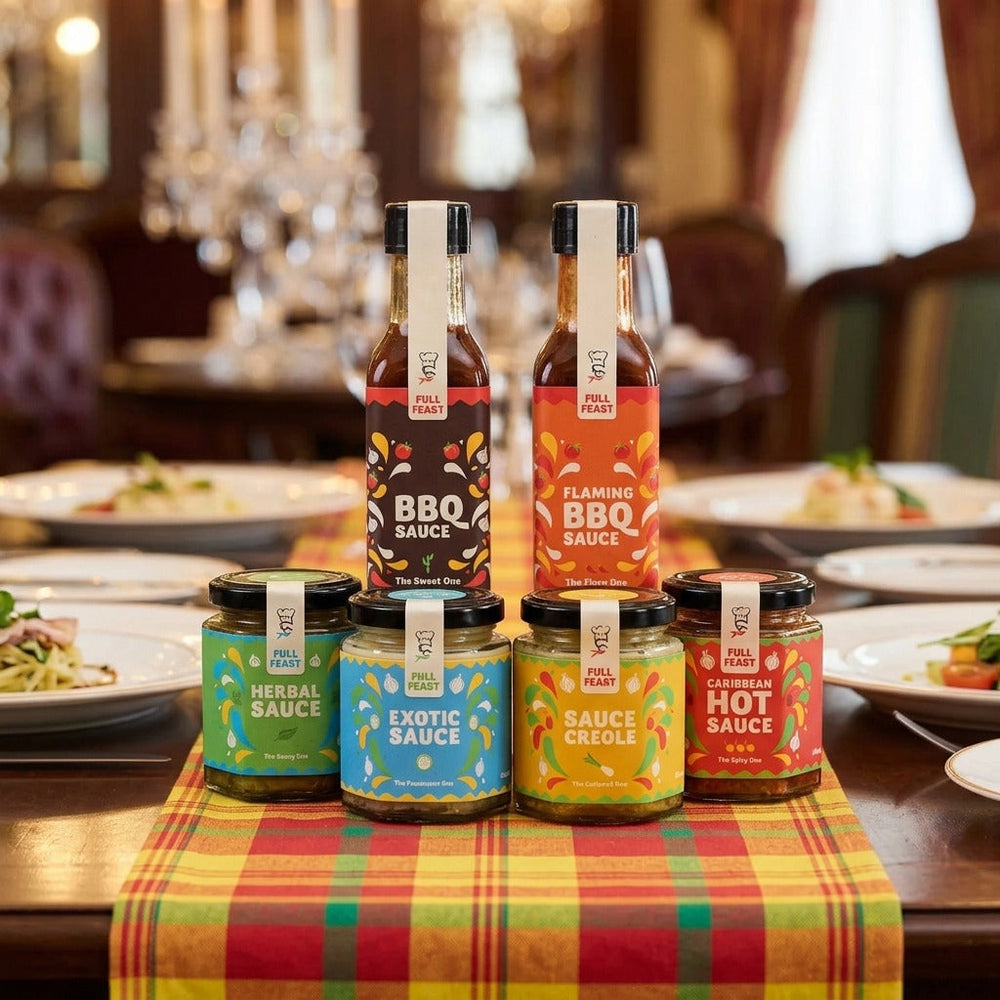
I loved it. But I am a cook from the islands, and I could not stop myself. The next time I made roast beef at home, I rubbed the joint the way my mother rubbed her Sunday meat: crushed garlic, fresh thyme, a little allspice, black pepper, and a few spoons of my Caribbean Sauce Creole, which is mostly sweet onion with a gentle green chilli warmth. Then I made the gravy from the pan juices with more of the same sauce. The beef came out pink and juicy with a dark, savoury crust, and the gravy tasted like the onions had been cooking all day.
That is the recipe I am giving you today. It is still a British roast beef, the one you know. It just remembers where I come from.
Recipe at a glance
- Cuisine: British Sunday roast with a French Caribbean twist
- Prep: 15 minutes • Cook: 1 hour 30 minutes, including resting • Total: 1 hour 45 minutes
- Serves: 6
- Featured sauce: Caribbean Sauce Creole
- Heat level: 5/10, a warm glow in the crust, nothing that fights the beef
- Diet: Gluten free and dairy free as written (use gluten free stock)
What you’ll need
Buy the best joint you can afford and ask the butcher for topside or top rump with a thin layer of fat tied on. Take it out of the fridge an hour before you cook, so the middle is not fridge cold. The rub is mostly Caribbean Sauce Creole; the garlic, thyme and allspice are mine, they go in the bowl, not in the jar.
For the beef
- 1.5 kg beef topside or top rump joint, tied
- 4 tbsp Full Feast Caribbean Sauce Creole
- 3 garlic cloves, crushed
- 1 tbsp fresh thyme leaves, plus 4 whole sprigs
- 1/2 tsp ground allspice
- 1 tsp freshly ground black pepper
- 1 tsp flaky sea salt
- 1 tbsp vegetable oil
- 2 onions, peeled and cut into thick rounds
- 2 carrots, halved lengthways
For the Creole onion gravy
- All the juices and vegetables from the roasting tin
- 3 tbsp Full Feast Caribbean Sauce Creole
- 1 tbsp cornflour mixed with 2 tbsp cold water
- 500 ml hot beef stock (gluten free if you need it)
- 1 tsp brown sugar (optional)
- Salt and black pepper, to taste
How I make it
- Wake the meat up. An hour before you cook, take the beef out of the fridge and pat it dry with kitchen paper. A dry surface browns. A wet one steams. You want brown.
- Make the rub. In a small bowl mix the 4 tbsp of Sauce Creole with the garlic, thyme leaves, allspice, pepper and oil. Rub it all over the joint with your hands, into every side and over the fat. Do not salt it yet. Leave it to sit while the oven heats.
- Heat the oven. Turn it to 220°C (200°C fan, gas 7). Lay the onion rounds, carrots and thyme sprigs in the middle of a roasting tin to make a little bed for the beef.
- Season and sear in the oven. Sprinkle the flaky salt over the beef just before it goes in. Sit it fat side up on the vegetables and roast for 20 minutes. This is where the crust comes from. You will hear it sizzle when you open the door.
- Turn it down. Lower the oven to 180°C (160°C fan, gas 4) and roast for another 45 to 50 minutes for medium rare on a 1.5 kg joint. If the vegetables start to catch, add a splash of water to the tin.
- Check it properly. A meat thermometer is the best friend a roast beef has. Push it into the thickest part: take the beef out at 52 to 54°C for medium rare, 58 to 60°C for medium. It will rise a few degrees as it rests. Every oven is different, so trust the thermometer before the clock.
- Rest it. Do not rush this part. Lift the beef onto a warm board, cover it loosely with foil and leave it for 20 to 30 minutes. The juices settle back into the meat. If you carve it now, they run all over the board and the beef goes grey and dry.
- Start the gravy. While the beef rests, put the roasting tin on the hob over a medium heat. Spoon off most of the fat, then press the soft onions and carrots with a potato masher so they give up all their sweetness.
- Build it. Stir in the 3 tbsp of Sauce Creole and let it bubble for a minute. Pour in the hot stock, scraping up every dark, sticky bit from the bottom of the tin. That is where the flavour lives.
- Thicken and strain. Simmer for 5 minutes, then stir in the cornflour paste and keep stirring until the gravy turns glossy. Strain it into a pan, pressing hard on the vegetables. Pour in any juices from the resting board.
- Taste before you salt. The sauce already carries salt, and so does the stock. Taste, then add pepper, a pinch of salt only if it needs it, and the brown sugar if you like it a little sweeter.
- Carve and serve. Cut the string, slice the beef thinly across the grain, and bring it to the table with the gravy hot in a jug.

Roast beef cooking times by weight
People ask me this more than anything else. Here is how I time a topside or top rump joint at 220°C (200°C fan) for the first 20 minutes, then 180°C (160°C fan) for the rest. The times below are for the second, lower part of the cooking, per kilo of beef.
- Rare: about 25 minutes per kg, take it out at 50°C
- Medium rare: about 30 to 33 minutes per kg, take it out at 52 to 54°C
- Medium: about 40 minutes per kg, take it out at 58 to 60°C
- Well done: about 50 minutes per kg, take it out at 68 to 70°C
So a 1.5 kg joint for medium rare is 20 minutes hot, then 45 to 50 minutes lower, then a good rest. A long thin joint cooks faster than a short fat one of the same weight, which is why I keep saying it: use a thermometer.
The role of Caribbean Sauce Creole in this dish
Most of what is in the jar is onion, slowly cooked, with green chilli and a little vinegar. That is exactly what a roast beef wants. In the rub, the sauce clings to the meat and the onion sugars catch in the hot oven, so the outside goes dark and savoury, almost like a bark. The chilli does not burn your mouth. It sits behind the beef and keeps every bite awake.
Then in the gravy it does the job most people try to do with an hour of slow-cooked onions. You stir it into the tin with the pan juices and the stock, and in ten minutes you have a gravy with the depth of something that has been on the stove all afternoon. Sweet, savoury, a little warm at the end. My mother would have approved of the shortcut. She had seven of us to feed.
Tips from my kitchen
- Choose the right joint. Topside and top rump are lean and slice beautifully when cooked pink. If you like your beef well done, buy a rib or sirloin joint instead; it has more fat to keep it moist.
- Salt at the last moment. Salt on the joint too early, before the rub has settled, pulls out moisture onto the surface and fights the crust. Sprinkle it just before the tin goes in.
- Carve thin, across the grain. Look at the lines running through the meat and cut across them. Thin slices of topside are tender. Thick slices cut the wrong way are chewy, and then you blame the beef.
- Keep the leftovers. Cold roast beef with a little Sauce Creole stirred into mayonnaise, in a soft roll with lettuce, is my Monday lunch. Or chop it into my Caribbean beef stew in the last ten minutes, just to warm through.
What to serve it with
This is a Sunday roast, so I go the whole way. Crisp roast potatoes cooked in the beef fat, my honey roast parsnips with carrots on the same tray, and a bowl of Caribbean red cabbage, sweet and sharp, braised slowly with passion fruit. Some greens, buttered or just steamed, and the gravy in a big jug.
Roast beef with Yorkshire pudding is the British way, and I will not argue with that. Just remember that the puddings are made with flour, so the plate is no longer gluten free if you add them. For anyone at the table who wants more fire, put a bottle of Caribbean Hot Sauce next to the horseradish and let them choose.
If you are feeding a crowd and some of them prefer chicken, my Caribbean Sunday roast chicken goes in the same oven and shares the same sides.

FAQ
Why is my roast beef tough?
Usually one of three things. It was cooked past medium, so a lean joint like topside dried out. It was carved straight from the oven without resting, so the juices ran away. Or it was cut with the grain instead of across it. Use a thermometer, rest it for 20 to 30 minutes, and slice it thin across the lines of the meat. That fixes almost every tough roast I have ever seen.
How long do you cook roast beef per kg?
After 20 minutes at 220°C (200°C fan), I give a topside joint about 30 to 33 minutes per kg at 180°C (160°C fan) for medium rare, 40 minutes per kg for medium and 50 for well done. The cooking times by weight above give the full picture. The thermometer always has the final word.
How do you cook roast beef medium rare?
Hot start, lower finish, and take it out of the oven when the middle reads 52 to 54°C. Then rest it under loose foil. It climbs to around 57°C while it rests, and when you cut it, it is pink all the way through with a dark crust at the edge. Whole joints of beef can be served pink because the outside, where the bacteria live, is properly cooked. Minced beef is a different story and must always be cooked through.
Can you roast beef from frozen?
I don’t. A frozen joint cooks unevenly: the outside is overdone long before the middle is safe and pink. Thaw it slowly in the fridge, on a plate, allowing about a day for every 2 to 2.5 kg, then bring it out an hour before roasting.
Is this roast beef gluten free, and what allergens are in it?
Yes, as written it is gluten free and dairy free. The thickener is cornflour, not flour, and Caribbean Sauce Creole is lab tested gluten free. Just check your stock is gluten free too, and remember that Yorkshire puddings on the side are not. The sauce’s vinegar is made from barley, which is declared on the label, so read it if you cook for someone with a cereal allergy.
Final word from me
Roast beef is one of those dishes that brings everybody to the table and keeps them there. Take your time with it. Rub it properly, let it rest, carve it thin, and make the gravy while everyone is pretending they are not hungry. Then pour it over everything, the way my mother did, and watch the plates come back clean.
Bon appétit, JP